LDS Temple Garments 2026: Complete History & Style Guide
Introduction to LDS Temple Garments
For members of The Church of Jesus Christ of Latter-day Saints (often referred to as the LDS or Mormon Church), temple garments hold profound spiritual significance. Far from being mere undergarments, they are considered sacred vestments that serve as a constant, tangible reminder of the covenants made during the temple endowment ceremony. As of 2026, the Church offers a diverse, highly refined lineup of garment styles, fabrics, and fits designed to accommodate the global, diverse, and active lifestyles of its endowed members. This comprehensive guide explores the rich history, spiritual meaning, modern 2026 styles, and practical purchasing advice for LDS temple garments.
The Sacred History and Evolution of Temple Garments
The history of the temple garment traces back to the early 1840s in Nauvoo, Illinois, when the prophet Joseph Smith first introduced the temple endowment to a small group of close associates. According to the Gospel Topics essay on Temple Garments, the original garments were one-piece, full-body union suits made of cotton or flannel, extending to the wrists and ankles. These early designs were heavily influenced by 19th-century undergarment norms but were adapted to include specific, sacred markings that symbolize divine protection and spiritual commitments.
As the decades passed and global fashion evolved, the Church made practical adjustments to the garment's design to ensure it could be worn comfortably under modern clothing. In the 1920s and 1930s, the one-piece union suit was transitioned into a two-piece design (a separate top and bottom), which remains the standard today. Sleeve lengths were shortened, and leg lengths were adjusted to accommodate changing societal dress codes, particularly for women's fashion and men's athletic wear.
Leading into 2026, the Church has continued to refine the garment's construction. Recent years have seen a massive push toward inclusive sizing, climate-specific fabrics, and adaptive designs, ensuring that every endowed member can wear the garment comfortably regardless of their physical abilities, body type, or geographical location.
Spiritual Meaning and Covenants
It is a common misconception among those outside the faith to refer to temple garments as 'magic underwear.' The Church explicitly rejects this characterization. Instead, garments are viewed similarly to religious vestments in other faiths, such as the Jewish tallit katan or the Sikh kachera. They serve as a shield and a reminder. As noted by scholars in the Encyclopedia of Mormonism, the garment represents the wearer's personal covenants with God, offering spiritual protection against temptation and evil when worn faithfully.
The markings on the garments are deeply symbolic, representing the compass (direction and purpose), the square (exactness and honor), the navel (spiritual sustenance), and the knee (reverence). These symbols are woven or embroidered into the fabric, serving as a private, intimate reminder of the wearer's dedication to living a Christ-centered life.
2026 Garment Styles, Fabrics, and Fit Guide
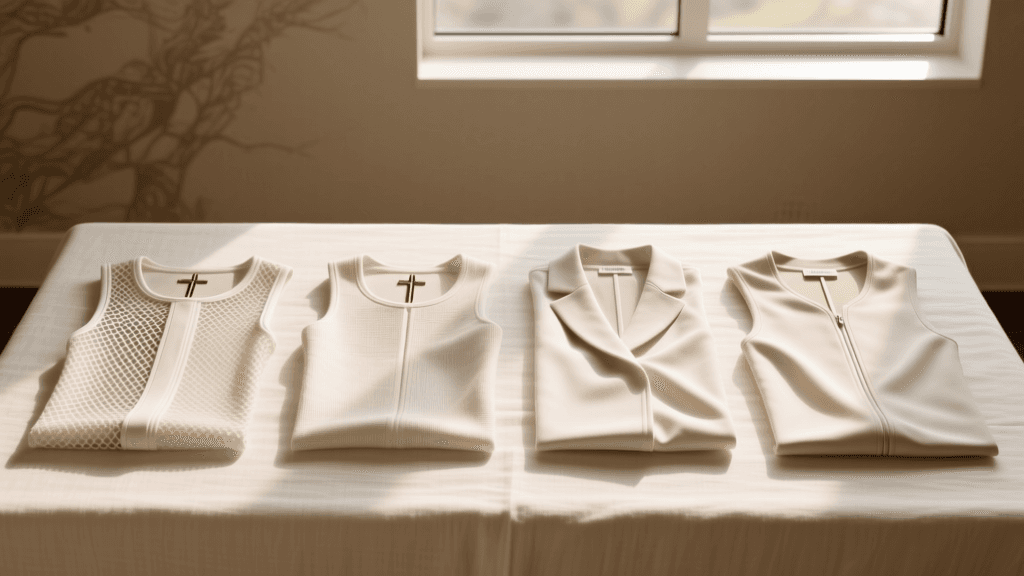
In 2026, the Church's distribution network offers an impressive array of styles and fabrics tailored to different climates, preferences, and needs. The modern lineup prioritizes breathability, durability, and modesty.
Women's Styles
- Cap Sleeve & T-Shirt: The most common everyday styles, offering full shoulder coverage.
- V-Neck & Rounded Neck: Designed to remain hidden beneath various neckline cuts.
- Camisole & Sleeveless: Approved for specific situations where shoulder coverage is impossible (e.g., certain formal wear or medical necessities), though cap sleeves are the standard.
Men's Styles
- Crew Neck & V-Neck T-Shirts: Standard tops for daily wear.
- Boxer, Brief, and Crew Length Bottoms: Available in varying inseams to accommodate everything from business suits to athletic shorts.
2026 Fabric Comparison Chart
| Fabric Type | Best For | Key Features | 2026 Price Range (USD) |
|---|---|---|---|
| 100% Cotton | Sensitive skin, moderate climates | Traditional feel, highly breathable, durable | $12 - $15 |
| Stretch Cotton | Active lifestyles, daily wear | Spandex blend for mobility, retains shape | $14 - $17 |
| Modal / Microfiber | Office wear, travel | Silky smooth, lightweight, resists shrinking | $16 - $19 |
| Performance Mesh | Tropical climates, heavy exercise | Ultra-lightweight, moisture-wicking, quick-dry | $18 - $22 |
| Maternity Panels | Pregnancy and postpartum | Expandable abdominal panels, soft support | $20 - $25 |
Adaptive and Inclusive Garments
One of the most celebrated developments available in 2026 is the expanded line of adaptive garments. Members with physical disabilities, sensory processing disorders, or those who require medical devices (such as ostomy bags or feeding tubes) can now access garments with specialized modifications. These include side-snap closures, Velcro seams, and sensory-friendly flat-lock stitching. Furthermore, the Church has expanded its size chart to include a much wider range of plus and petite sizes, ensuring that the sacred vestment is accessible to all body types without the need for unauthorized, third-party alterations.
How to Purchase Garments in 2026
Purchasing temple garments is restricted to endowed members of the Church who hold a current, valid temple recommend. The Church maintains strict control over the manufacturing and distribution to preserve the sacred nature of the items.
Where to Buy
- Online Store: The most convenient method in 2026 is through the official Church distribution website. Members must log in with their Church Account, which automatically verifies their temple recommend status via the bishop's records.
- Physical Distribution Centers: Located adjacent to most temples and in select stakes globally, these centers allow members to try on sizing samples and purchase inventory directly.
- Temple Rental/Purchase Kiosks: For members traveling to perform baptisms for the dead or attend sessions away from home, most temples have small distribution kiosks on-site.
Sizing and Measuring Tips
Garments are sized differently than standard commercial clothing. It is highly recommended to use the official 2026 digital measuring guide available on the Church's app. Key measurements include the chest, waist, hip, and inseam. If a member falls between sizes, the general rule of thumb provided by distribution specialists is to size up for comfort, as garments should not be skin-tight, which can cause premature wear on the fabric and markings.
Rules on Alterations
While members can hem the legs or sleeves of their garments for a better fit, it is strictly prohibited to alter the sacred markings, cut out the symbols, or fundamentally change the modesty lines (such as raising the hemline above the knee or cutting the sleeves above the shoulder). If a specific commercial style does not fit properly, members are encouraged to try a different cut or fabric rather than altering the garment's sacred elements.
Care, Washing, and Respectful Disposal
Proper care extends the life of the garments and maintains their modest appearance. In 2026, most stretch and performance fabrics require cold water washing and tumble drying on low heat to prevent the breakdown of elastane fibers. Bleach should be avoided, especially on modal and mesh fabrics, as it can degrade the material and obscure the sacred markings.
When garments become worn, torn, or no longer usable, they must be disposed of respectfully. The standard procedure involves cutting out the sacred markings with scissors so they are completely destroyed and unrecognizable. The remaining fabric can then be discarded in the regular trash, or if the garment is still in good condition but simply the wrong size, the markings can be removed and the fabric donated to charity or repurposed as cleaning rags. This careful disposal process underscores the reverence members hold for the covenants the garments represent.
Conclusion
The LDS temple garment is a deeply personal and sacred aspect of the Latter-day Saint faith. From its origins as a heavy, full-body union suit in the 1840s to the highly technical, inclusive, and comfortable fabrics available in 2026, the garment has evolved to meet the practical needs of a global membership while maintaining its core spiritual purpose. For endowed members, understanding the history, selecting the right 2026 fabric, and caring for the garment properly ensures that it remains a meaningful, daily reminder of their lifelong commitments to God.