LDS Garment Styles & Materials Guide 2026: Top Choices
The Sacred Significance and Modern Evolution
For members of The Church of Jesus Christ of Latter-day Saints, temple garments represent a deeply sacred commitment, serving as a personal and private reminder of covenants made in the temple. As outlined in the Gospel Topics essay on Temple Garments, these garments are intended to be worn day and night throughout a member's life. However, the physical construction, textile composition, and styling of these garments have evolved significantly over the decades to accommodate modern lifestyles, diverse global climates, and advancements in textile manufacturing.
As we navigate 2026, the Church’s distribution centers offer a highly refined selection of garment styles and materials. The days of relying solely on heavy, woven, 100% cotton fabrics are long past. Today’s members benefit from rigorous textile research that has introduced moisture-wicking meshes, ultra-soft modal blends, and adaptive designs. This comprehensive guide explores the current landscape of LDS garment styles, materials, and modern updates available in 2026, helping you make informed decisions based on your climate, activity level, and personal comfort.
2026 Temple Garment Materials: A Textile Breakdown
The choice of fabric is perhaps the most critical factor in garment comfort. In 2026, the Church offers several primary material categories, each engineered for specific environmental conditions and sensory preferences.
100% Cotton (Traditional and Lightweight)
While synthetic blends have grown in popularity, 100% cotton remains a staple for members who prefer natural fibers or have sensitive skin prone to contact dermatitis. The modern 2026 lightweight cotton weave is significantly more breathable than the heavy canvas-like cotton of the 20th century. However, cotton retains moisture and can become heavy in humid conditions, making it best suited for temperate climates or air-conditioned environments.
Modal and Spandex Blends (Stretch)
Modal, a semi-synthetic fabric made from beech tree pulp, has revolutionized garment comfort. The modal-spandex blend offers a silky, cool-to-the-touch feel with exceptional four-way stretch. This material drapes beautifully under modern, tailored clothing and resists shrinking and fading far better than pure cotton. In 2026, the modal stretch line is the most popular choice for women’s styles, as it accommodates a wider range of body movements without losing its structural integrity or compromising the sacred markings.
Athletic and Micro-Mesh Synthetics
Designed for high-output activities, the athletic mesh garments utilize advanced polyester and elastane weaves. These fabrics feature micro-perforations that promote rapid evaporation of sweat, keeping the wearer cool during intense physical exertion or in tropical climates. The 2026 updates to the athletic line have improved the softness of the inner seams, eliminating the chafing issues that plagued earlier iterations of synthetic mesh garments.
Military and Desert Fabrics
For active-duty military personnel and missionaries serving in arid, desert environments, the Church provides specialized garments in tan and sand colors. These are constructed from specialized synthetic-cotton blends that comply with military uniform regulations regarding flame resistance and color palettes, while still maintaining the required modesty and markings.
Comprehensive Guide to Current Garment Styles
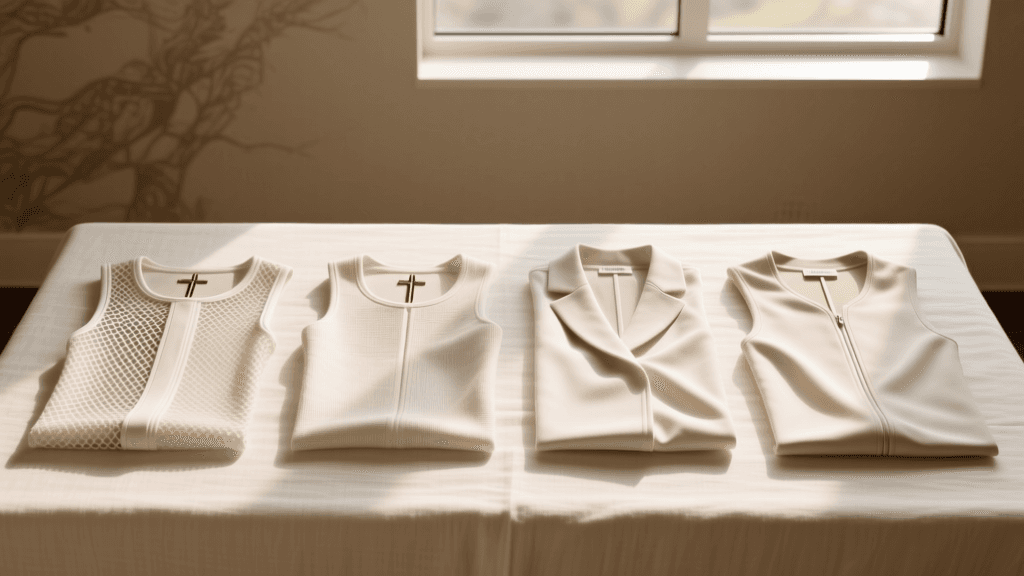
The General Handbook of the Church provides guidelines on how garments should fit and be worn, emphasizing modesty and the preservation of the sacred marks. To meet these requirements across diverse wardrobes, the 2026 catalog features several distinct cuts.
Women’s Styles
- Traditional Cap-Sleeve: The classic cut with a higher neckline and standard cap sleeve. Available in cotton and modal, it provides maximum coverage and is ideal for wearing under conservative or professional attire.
- Stretch Scoop and V-Neck: Designed for modern wardrobes, these styles feature lower necklines and wider, stretchable lace or banded hems. They allow members to wear open-neck blouses and dresses while maintaining the required coverage.
- Maternity Styles: Featuring expandable side panels and longer torsos, maternity garments accommodate a growing belly without riding up, ensuring continuous comfort and coverage throughout pregnancy.
- Adaptive and Seamless: Recent years have seen a vital expansion in adaptive clothing. The 2026 lineup includes garments with modified closures for members with limited mobility, as well as seamless options that prevent visible panty lines under form-fitting skirts and trousers.
Men’s Styles
- Crew Neck and V-Neck T-Shirts: The standard tops available in cotton, modal, and athletic mesh. The V-neck is increasingly popular for wearing under unbuttoned collared shirts.
- Boxer Briefs and Briefs: The bottom garments are available in traditional briefs or longer boxer-brief cuts. The boxer-brief style has become the standard for active men, as it prevents thigh chafing and stays securely in place during movement.
- Athletic Shorts: For sports and gym environments, athletic mesh bottoms offer the same coverage as boxer briefs but with the breathability of high-performance sportswear.
2026 Fabric and Style Comparison Chart
The following table summarizes the primary options available through the official Church distribution channels in 2026, helping you match the textile to your specific needs.
| Material / Style | Primary Fabric Blend | Best Climate / Use Case | Key Characteristics |
|---|---|---|---|
| Classic Cotton | 100% Combed Cotton | Temperate, Indoor, Sensitive Skin | Natural feel, breathable, prone to slight shrinkage |
| Stretch Modal | 92% Modal, 8% Spandex | Year-round, Professional Wardrobes | Silky, drapes well, retains shape, cool to the touch |
| Athletic Mesh | Polyester / Elastane Mesh | Hot, Humid, High Physical Activity | Moisture-wicking, quick-drying, micro-ventilation |
| Military / Desert | FR Synthetic-Cotton Blend | Arid, Military Deployment | Flame-resistant, tan/sand colors, durable weave |
Climate-Specific Recommendations
Selecting the right garment in 2026 requires an honest assessment of your daily environment. Members living in the humid Southeastern United States, Central America, or Southeast Asian mission areas are strongly encouraged to transition fully to the Athletic Mesh or Stretch Modal lines. Cotton, while soft, will trap perspiration and can lead to skin irritation or fungal issues in high-humidity zones. Conversely, members in colder, northern climates often layer lightweight cotton garments beneath thermal wear during the winter months, as cotton provides a comfortable, non-irritating base layer against the skin.
Sizing, Ordering, and Modern Distribution
The process of acquiring garments has been vastly modernized. While physical Distribution Centers located near temples and major hubs remain operational, the vast majority of members in 2026 utilize the online Church store portal. The online system features detailed measurement guides, allowing users to input their chest, waist, and inseam measurements to receive algorithmic sizing recommendations. This has drastically reduced the rate of returns and exchanges. Furthermore, the Church has improved its global logistics network, meaning members in remote areas of South America, Africa, and the Pacific Islands can now receive customized garment shipments in a fraction of the time it took a decade ago.
Proper Care for Advanced Blends
The introduction of spandex, modal, and synthetic meshes requires a departure from traditional laundry habits. To preserve the elasticity and sacred markings of your garments in 2026, follow these care guidelines:
- Wash in Cold Water: Hot water degrades elastane (spandex) fibers over time, leading to sagging and loss of shape. Always use cold or warm water settings.
- Avoid Chlorine Bleach: Bleach not only weakens synthetic and modal fibers but can also degrade the specialized threads used in the garment's markings. Use oxygen-based color-safe brighteners if necessary.
- Tumble Dry Low or Air Dry: High heat in the dryer is the enemy of stretch fabrics. Air drying is the most effective way to extend the lifespan of modal and athletic mesh garments.
- Do Not Iron Directly: If pressing is required, use a low heat setting and a pressing cloth, especially on synthetic meshes which can melt or glaze under high iron temperatures.
Conclusion
The evolution of LDS temple garments is a testament to the intersection of sacred tradition and modern textile innovation. As of 2026, members have more options than ever before to honor their covenants comfortably, regardless of their climate, profession, or physical needs. By understanding the distinct properties of cotton, modal, and athletic meshes, and by selecting the appropriate cuts for your wardrobe, you can ensure that your garments remain a comfortable, enduring, and sacred part of your daily life. Whether you are ordering your first set after attending the temple or updating your wardrobe to accommodate a new climate or lifestyle, the modern distribution system and diverse fabric options are designed to support your journey with dignity and care.