Authentic Navajo & Pueblo Garments: 2026 Sourcing Guide
The Enduring Legacy of Southwest Indigenous Dress
The Indigenous peoples of the American Southwest, particularly the Diné (Navajo) and the various Pueblo nations, possess some of the most richly documented and continuously practiced textile and garment traditions in North America. As we navigate the cultural and economic landscape of 2026, the demand for authentic, handcrafted Indigenous clothing has surged. Collectors, cultural practitioners, and museums are increasingly prioritizing direct-from-artisan acquisitions, ensuring that the economic benefits of these exquisite garments return to the tribal communities that originated them. This comprehensive guide explores the distinct regional dress traditions of the Navajo and Pueblo peoples, providing actionable insights for sourcing authentic pieces, understanding material sustainability, and identifying genuine craftsmanship in today's market.
Diné (Navajo) Sartorial Traditions: From Woven Biil to Velvet
The Navajo Nation, spanning across Arizona, New Mexico, and Utah, is globally renowned for its extraordinary weaving traditions. Navajo dress is not merely functional; it is a profound expression of cosmology, clan identity, and the sacred relationship between the people and the land. In 2026, Navajo garments remain highly sought after, with master weavers and seamstresses commanding premium prices for their meticulous, time-intensive labor.
The Woven Biil and Two-Piece Dress
The traditional Navajo woven dress, known as the biil, is a masterpiece of tapestry weaving. Historically woven on an upright loom, the biil consists of two rectangular panels woven separately and then stitched together at the shoulders and sides, leaving openings for the head and arms. The creation of a single biil requires hundreds of hours of labor, from shearing the Navajo Churro sheep to carding, spinning, dyeing with natural botanicals, and finally weaving the wool. In 2026, a fully traditional, hand-spun, and naturally dyed biil created by a recognized master weaver typically ranges from $4,500 to over $12,000, reflecting the intense labor and the rarity of high-quality, ethically sourced Churro wool.
The Velvet Shirt and Skirt Ensemble
While the woven biil represents ancient traditions, the Navajo velvet ensemble is a beloved post-contact adaptation that has become entirely Indigenous in its cultural significance. Introduced through trading posts in the late 19th century, high-pile cotton velvet was quickly adopted by Navajo women and men. Today, the velvet shirt and tiered skirt ensemble is the standard formal and ceremonial wear for Diné people, worn at graduations, powwows, and political inaugurations. In 2026, authentic velvet garments are distinguished by their intricate, hand-applied satin ribbon trim and the accompaniment of heavy, hand-stamped German silver or turquoise concho belts. Sourcing a complete, high-quality velvet ensemble directly from a Navajo seamstress generally costs between $800 and $2,500, depending on the complexity of the ribbon work and the inclusion of silver jewelry.
Pueblo Garments: The Manta and the Brocade Sash
The Pueblo tribes, including the Hopi, Zuni, Taos, and the various Rio Grande Pueblos, maintain a distinct sartorial heritage that differs significantly from their Navajo neighbors. Pueblo clothing is deeply tied to agricultural cycles, kiva ceremonies, and community governance. The garments are characterized by their structural elegance and the profound spiritual significance embedded in their woven patterns.
The Black Wool Manta
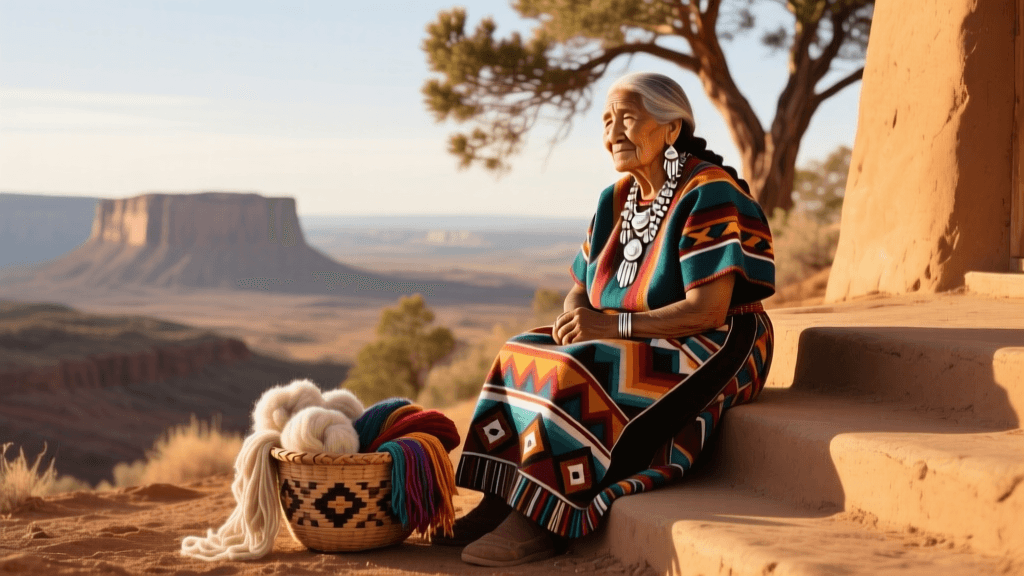
The cornerstone of traditional Pueblo women's dress is the manta, a rectangular black wool blanket dress. Unlike the Navajo biil, which is woven in two pieces, the traditional manta is often woven as a single, wide piece of fabric on a horizontal loom. It is wrapped around the body, leaving the left shoulder bare, and is secured at the right shoulder with a pin or a woven sash, while a braided wool belt cinches the waist. The deep black color is traditionally achieved using natural dyes derived from wild walnut hulls or iron-rich mud. In 2026, the manta remains a vital garment for Pueblo women during feast days and ceremonial dances. Authentic, hand-woven mantas are rare and treasured heirlooms, with newly commissioned pieces from master weavers at pueblos like Zuni or Cochiti starting around $3,000.
Woven Sashes and Ceremonial Kilts
Complementing the manta is the intricate brocade sash. Pueblo weavers, particularly among the Hopi and Zuni, are celebrated for their complex brocade and tapestry techniques. These wide, heavy sashes feature striking geometric patterns, often utilizing vibrant colors like red, green, and yellow against a white or black background. For men, woven kilts and sashes are essential components of Kachina (Katsina) dancer regalia and other sacred ceremonial attire. The knowledge required to execute the raised brocade patterns is passed down through generations, and in 2026, master weavers who specialize in these ceremonial sashes are highly revered within their communities.
Regional Comparison: Navajo vs. Pueblo Traditional Dress
To assist collectors, cultural institutions, and enthusiasts in understanding the distinct regional variations, the table below outlines the primary differences between Navajo and Pueblo traditional garments as of 2026.
| Feature | Diné (Navajo) Traditions | Pueblo Traditions (Hopi, Zuni, Rio Grande) |
|---|---|---|
| Primary Women's Garment | Biil (Two-piece woven dress) or Velvet Ensemble | Manta (Single-piece wrapped black wool dress) |
| Loom Type | Upright vertical loom | Horizontal backstrap or frame loom |
| Key Materials (2026) | Navajo Churro wool, cotton velvet, German silver | Black dyed wool, cotton brocade yarns |
| Distinctive Accessories | Concho belts, turquoise squash blossom necklaces | Brocade sashes, woven belts, silver squash blossoms |
| Average Artisan Price (2026) | $1,500 - $12,000+ (depending on garment type) | $2,000 - $8,000+ (for hand-woven mantas/sashes) |
Sourcing Authentic Garments in 2026: A Buyer’s Guide
As the global appreciation for Indigenous textile arts grows, so does the proliferation of mass-produced, counterfeit 'Native-inspired' clothing. For buyers seeking authentic pieces in 2026, due diligence and ethical sourcing are paramount.
Navigating the Indian Arts and Crafts Act
In the United States, the Indian Arts and Crafts Act (IACA) is a truth-in-advertising law that prohibits misrepresentation in the marketing of Indian arts and crafts products. It is illegal to offer or sell any art or craft product in a manner that falsely suggests it is Indian-produced, an Indian product, or the product of a particular Indian or Indian Tribe. Buyers should always consult resources like the Indian Arts and Crafts Board to verify the credentials of sellers and report suspected violations. When purchasing a high-ticket item like a hand-woven biil or manta, always request a certificate of authenticity that includes the artist's name, tribal affiliation, and the materials used.
Direct-from-Artisan Purchasing Channels
The most ethical and reliable way to source traditional garments is directly from the artisans or through verified tribal cooperatives. In 2026, major events like the Santa Fe Indian Market and the Eight Northern Indian Pueblos Arts & Crafts Show remain the premier venues for viewing and purchasing museum-quality textiles. Additionally, many master weavers and seamstresses now utilize dedicated Indigenous e-commerce platforms and verified social media channels to sell directly to the public, bypassing exploitative middlemen. Institutions like the Smithsonian National Museum of the American Indian frequently highlight contemporary Indigenous artists, providing an excellent starting point for identifying reputable, active weavers and clothing makers.
Sustainable Material Sourcing for Weavers and Makers
The authenticity of Southwest Indigenous garments is inextricably linked to the land and the animals that provide the raw materials. The revitalization of the Navajo Churro sheep—a breed nearly driven to extinction in the 19th and 20th centuries—has been a cornerstone of the cultural renaissance in Diné weaving. Organizations like Diné be' iiná (Navajo Lifeway) have been instrumental in promoting sustainable sheep herding, wool processing, and the preservation of traditional dye plants. In 2026, conscious consumers and weavers are actively supporting these grassroots initiatives by purchasing wool directly from Navajo sheep camps and participating in community shearing and skirting events. This farm-to-loom approach not only ensures the highest quality, most culturally appropriate materials but also sustains the rural Indigenous economies that keep these ancient traditions alive.
Conclusion
The traditional garments of the Navajo and Pueblo peoples are far more than mere clothing; they are wearable testaments to resilience, spiritual devotion, and artistic genius. As we move through 2026, the responsibility falls on collectors, cultural enthusiasts, and institutions to honor these traditions by prioritizing ethical sourcing, respecting intellectual property, and supporting the Indigenous artisans who dedicate their lives to preserving their regional heritage. By understanding the distinct materials, techniques, and cultural contexts of the biil, the velvet ensemble, and the manta, buyers can make informed, respectful investments that empower Indigenous communities for generations to come.