Northwest Coast Indigenous Button Blankets & Regalia 2026
Introduction to Northwest Coast Regalia in 2026
The Pacific Northwest Coast is home to some of the most visually striking, culturally profound, and technically complex Indigenous dress traditions in the Americas. As we navigate 2026, the renaissance of traditional garment-making among the Haida, Tlingit, Kwakwaka'wakw, and Nuu-chah-nulth peoples continues to gain global recognition. Far from being static historical artifacts, these garments are living, breathing expressions of clan lineage, spiritual beliefs, and community resilience. Today, Indigenous artists are blending ancestral techniques with sustainable, modern materials to create regalia that honors the past while firmly planting their culture in the present.
For collectors, cultural enthusiasts, and those looking to ethically support Indigenous artisans, understanding the nuances of Northwest Coast dress is essential. This comprehensive 2026 guide explores the anatomy of the iconic button blanket, the intricate art of cedar bark weaving, and the distinct tribal variations that define the region's textile heritage. We will also provide actionable advice on how to ethically source, commission, and care for these magnificent garments in today's market.
The Evolution and Anatomy of the Button Blanket
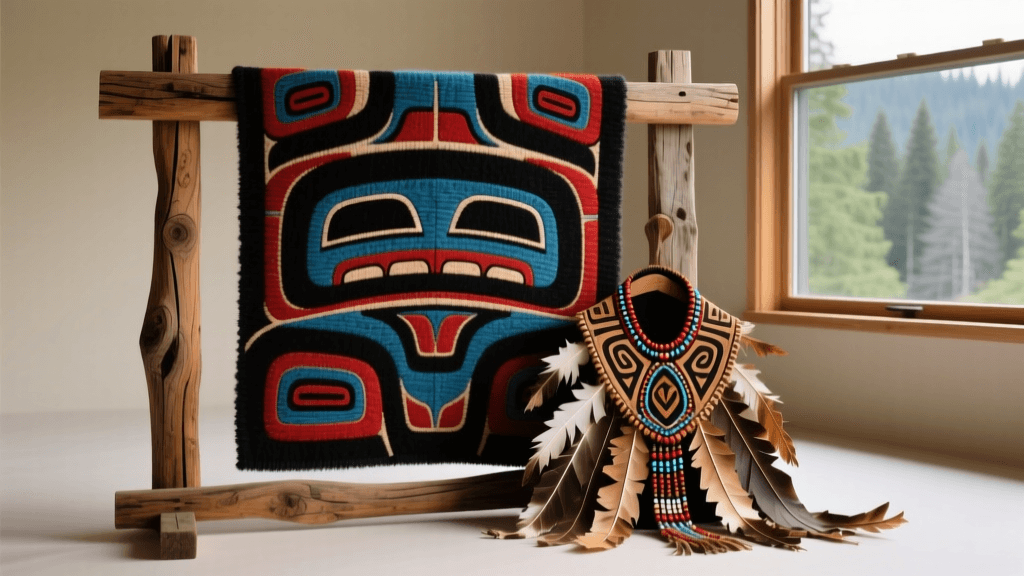
The button blanket is perhaps the most recognizable garment of the Pacific Northwest Coast. While the region is historically famous for the incredibly complex, loom-woven Chilkat and Ravenstail blankets made from mountain goat wool and cedar bark, the button blanket emerged in the 19th century following the introduction of trade goods. Indigenous artists quickly adapted European trade materials—specifically wool blankets, broadcloth, and mother-of-pearl buttons—to create a new, highly expressive form of ceremonial dress.
Unlike the woven Chilkat blankets, which can take over a year to weave on a specialized loom, button blankets are constructed through meticulous appliqué and embroidery techniques. This allowed for larger, bolder representations of family crests and clan stories. In 2026, the button blanket remains a cornerstone of potlatches, memorial feasts, and coming-of-age ceremonies. Modern artists are pushing the boundaries of this medium, incorporating LED threading, sustainably harvested shells, and upcycled textiles to address contemporary environmental concerns while maintaining strict adherence to traditional formline design rules.
Materials and Construction: 2026 Standards
Creating a button blanket requires a deep understanding of textiles and a steady hand. The base is typically a heavy, dark-colored wool, which serves as the canvas for the vibrant red, blue, and green appliqué pieces that form the crest. Below is a comparison of traditional materials versus the sustainable alternatives gaining traction among Northwest Coast artists in 2026.
| Component | Traditional / Historical Material | 2026 Contemporary & Sustainable Alternative | Average Cost (2026) |
|---|---|---|---|
| Base Fabric | Heavy Melton Wool (Navy or Black) | Recycled Wool Blends & Upcycled Military Blankets | $45 - $85 per yard |
| Appliqué Fabric | Cotton Broadcloth & Felt | Organic Cotton Canvas & Recycled PET Felt | $20 - $40 per yard |
| Buttons & Accents | Imported Mother-of-Pearl & Glass | Sustainably Harvested Local Abalone & Carved Bone | $1.50 - $8.00 per button |
| Thread & Binding | Animal Sinew & Cotton Thread | Waxed Linen & High-Tensile Polyester | $15 - $30 per spool |
Regional and Tribal Distinctions
While the button blanket is utilized across the Pacific Northwest, the specific design elements, color palettes, and accompanying regalia vary significantly from tribe to tribe. Understanding these distinctions is crucial for anyone studying or collecting Indigenous North American dress.
Haida and Tsimshian Styles
Haida button blankets are renowned for their strict adherence to the Northern Formline design system. This system relies on a complex arrangement of ovoids, U-shapes, and split U-shapes to depict animals, supernatural beings, and ancestral figures. The color palette is traditionally restricted to black (the primary formline), red (secondary elements), and blue-green (tertiary details). In 2026, Haida artists are increasingly incorporating intricate beadwork borders and heavy fringing along the bottom hem, creating a dramatic, sweeping motion when worn during dances. Organizations like the Sealaska Heritage Institute actively support Haida and Tsimshian artists in preserving these strict design languages while mentoring the next generation of textile workers.
Tlingit Variations
Tlingit regalia often features a more geometric and sometimes abstract approach to formline, with a heavy emphasis on the spiritual and shamanic elements of their culture. Tlingit button blankets may feature elaborate octopus panels, shamanic amulets, and extensive use of dentalium shells and abalone inlays. The Tlingit also heavily utilize woven sashes and intricate finger-woven belts to secure the blanket, adding a layer of textural contrast to the smooth wool. The fringe on a Tlingit blanket is often longer and denser, designed to create a specific swishing sound that accompanies the rhythmic beating of box drums during ceremonies.
Kwakwaka'wakw and Nuu-chah-nulth Expressions
Moving further south, the Kwakwaka'wakw and Nuu-chah-nulth peoples utilize a slightly different aesthetic. Kwakwaka'wakw button blankets often feature bolder, more graphic representations of crests like the Thunderbird, Sisiutl (double-headed serpent), and the Dzunukwa (wild woman of the woods). The use of copper-colored fabrics and accents is more prevalent here, reflecting the deep cultural significance of copper shields in their potlatch economy. Nuu-chah-nulth regalia frequently incorporates wolf motifs and whaling scenes, often blending traditional wool appliqué with intricate embroidery that mimics the region's historic basket-weaving patterns.
Ethical Sourcing and Commissioning in 2026
As the global appreciation for Indigenous art continues to grow, so does the market for mass-produced, culturally appropriated knockoffs. In 2026, AI-generated designs and fast-fashion replicas have flooded online marketplaces, making it more important than ever for buyers to verify the authenticity and ethical sourcing of Northwest Coast garments. The Native Arts and Cultures Foundation provides excellent resources and directories for connecting directly with verified Indigenous artisans.
How to Commission an Authentic Piece
If you are a museum, a cultural institution, or a private collector looking to commission a button blanket, be prepared for a process that requires patience, respect, and a significant financial investment. These are not mere garments; they are sacred items imbued with cultural weight.
- Timeline: Expect a wait time of 12 to 18 months. Master artists often have extensive backlogs and must balance their studio time with community obligations and ceremonial seasons.
- Cost: As of 2026, a small, child-sized dance cape or vest typically ranges from $1,200 to $2,500. A full-sized, master-crafted adult button blanket with extensive abalone button work and hand-stitched appliqué will cost between $4,500 and $12,000, depending on the complexity of the crest and the artist's reputation.
- Protocols: Some family crests are strictly owned and cannot be replicated without permission from the clan leader. Always ensure the artist has the right to reproduce the specific design you are requesting, or be open to the artist creating a universally shared or personally owned crest.
Cedar Bark Weaving and Accompanying Regalia
A button blanket is rarely worn in isolation. It is part of a larger ensemble of regalia that often includes carved wooden masks, bone chokers, ermine fur headdresses, and intricately woven cedar bark accessories. Cedar bark weaving is one of the oldest and most vital textile traditions on the Northwest Coast.
The harvesting of western red cedar bark is a highly regulated, seasonal practice. It occurs only in the late spring and early summer when the sap is running, allowing the bark to be peeled from the tree in long, continuous ribbons without killing the tree. Once harvested, the bark is soaked, pounded to separate the rigid outer layer from the soft, flexible inner core, and then split into fine strands.
In 2026, cedar bark is woven into stunning headrings, necklaces, skirts, and capes. The natural golden-brown hue of the cedar provides a beautiful, earthy contrast to the dark wool of the button blanket. Master weavers are now experimenting with natural dyes derived from local berries, lichens, and roots to introduce subtle reds, yellows, and blacks into their cedar bark work, revitalizing techniques that were nearly lost during the 20th century. Institutions like the Burke Museum of Natural History and Culture hold extensive historical collections that contemporary weavers study to revive these complex, ancient weaving patterns.
Preserving and Caring for Ceremonial Dress
Whether you are an Indigenous community member caring for ancestral pieces or a collector preserving contemporary works, proper storage and maintenance are critical. The materials used in Northwest Coast regalia—wool, broadcloth, abalone, and cedar bark—are highly susceptible to environmental damage.
- Climate Control: Store garments in a climate-controlled environment with a relative humidity of 45-55% and a stable temperature around 65°F (18°C). Fluctuations in humidity can cause the wool to expand and contract, leading to the snapping of the heavy threads used in appliqué.
- Acid-Free Storage: Never store button blankets in standard plastic bins or cardboard boxes, which off-gas harmful chemicals and trap moisture. Use archival-quality, acid-free tissue paper to pad the folds of the blanket, preventing sharp creases that can break the brittle vintage broadcloth over time.
- Cedar Protection: Store the garments in traditional bentwood cedar boxes if possible. The natural oils in the western red cedar act as a mild, natural insect repellent, protecting the wool from moth damage without the need for harsh chemical pesticides like mothballs, which can degrade the fibers and leave a permanent, noxious odor.
- Handling: Always handle regalia with clean, dry hands or wear unbleached cotton gloves. The natural oils and salts from human skin can tarnish abalone buttons and stain the wool over time.
Conclusion
The Indigenous dress traditions of the Pacific Northwest Coast are a testament to the enduring strength and adaptability of Native cultures. From the bold, graphic appliqué of the button blanket to the delicate, fragrant weave of cedar bark, these garments are masterpieces of both art and engineering. As we move through 2026, supporting authentic Indigenous artisans, respecting tribal protocols, and understanding the deep cultural significance of these textiles ensures that these vibrant traditions will continue to be worn, danced, and celebrated for generations to come.