Ojibwe & Lakota Ribbon Skirts: 2026 Artisan Guide
The Living Tradition of the Ribbon Skirt
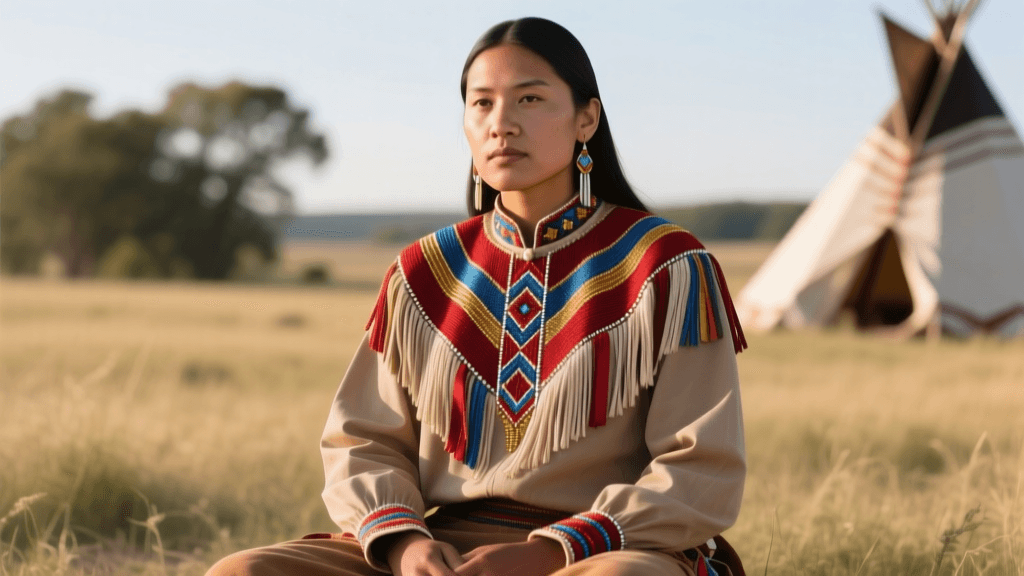
The ribbon skirt is far more than a simple garment; it is a profound, living expression of Indigenous identity, spiritual resilience, and deep connection to the earth. Across North America, the ribbon skirt has evolved from a product of 19th-century European trade goods into a central pillar of contemporary Indigenous fashion, ceremony, and political visibility. As we navigate 2026, movements centered around Missing and Murdered Indigenous Persons (MMIP) awareness, land defense, and water protection continue to gain global momentum, with the ribbon skirt serving as a powerful visual anchor for Indigenous women and Two-Spirit individuals.
For collectors, cultural enthusiasts, and those looking to support Native economies, understanding the distinct regional variations of these garments is essential. The designs, materials, and protocols surrounding ribbon skirts vary dramatically from the Great Lakes to the Great Plains. This guide explores the unique dress traditions of the Ojibwe (Woodlands) and Lakota (Plains) tribes, offering actionable advice on how to ethically source authentic, Indigenous-made ribbon skirts in today's market.
The History of the Ribbon Trade
To understand the regional variations of the ribbon skirt, one must first look at the history of the North American fur trade. In the 18th and 19th centuries, European traders—primarily from France and England—introduced silk ribbons, broadcloth, and calico to Indigenous nations in exchange for beaver pelts and other furs. Indigenous women, who were the master artisans of their communities, ingeniously adapted these new materials. They began to replace older, more labor-intensive porcupine quillwork and hide-fringe techniques with vibrant silk ribbons.
What began as a trade commodity was quickly transformed into a sacred medium for storytelling and tribal identification. By the late 1800s, ribbon work had become deeply embedded in the ceremonial dress of numerous tribes, with each region developing its own distinct aesthetic based on the local ecology, spiritual beliefs, and available trade goods.
Regional Variations: Woodlands vs. Plains
Ojibwe (Anishinaabe) Floral and Appliqué Traditions
The Anishinaabe (Ojibwe) people of the Great Lakes region possess a rich textile history heavily influenced by the fur trade and the abundant natural environment. Ojibwe ribbon skirts are renowned for their intricate floral motifs, a design language that permeates their beadwork, quillwork, and appliqué. In 2026, contemporary Ojibwe seamstresses frequently incorporate velvet yokes and bodices into their skirt designs, paying homage to the Victorian-era trade fabrics that were adapted into traditional regalia.
The ribbon application in Woodlands traditions often features curved, organic lines that mimic the growth of vines, wildflowers, and medicinal plants like sweetgrass and sage. Artisans frequently use a reverse-appliqué technique, where layers of colored fabric are cut away to reveal the colors beneath, creating a shaded, multi-dimensional floral effect. Furthermore, Ojibwe skirts are frequently paired with matching floral-beaded moccasins and a velvet shawl, creating a cohesive ensemble that speaks directly to the woodland ecology.
Lakota (Sioux) Geometric and Star Quilt Influences
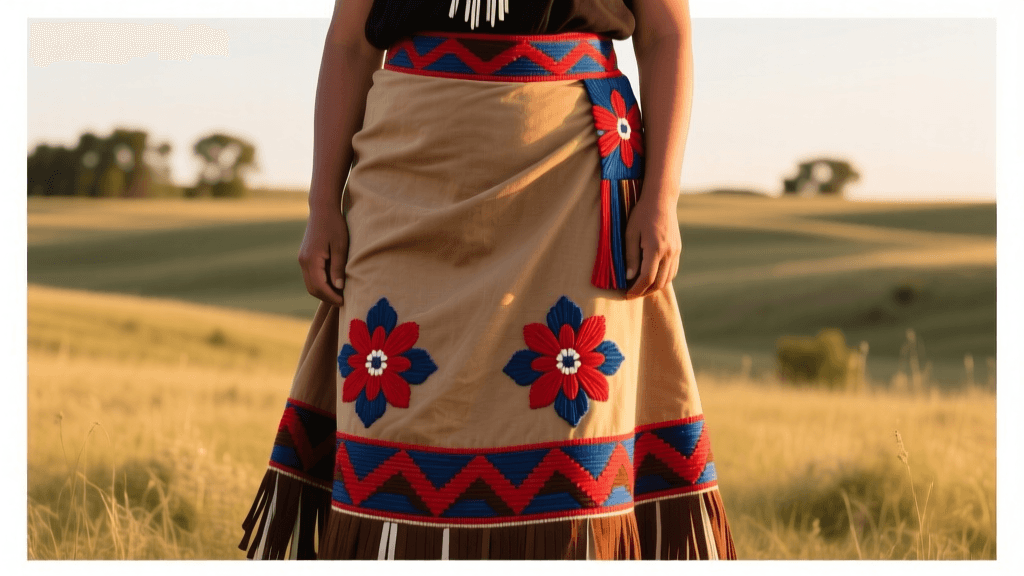
In stark contrast to the organic curves of the Woodlands, the Lakota people of the Great Plains favor bold, geometric patterns and striking color blocking. Lakota ribbon work is deeply intertwined with the region's quilting traditions, most notably the iconic Star Quilt. A traditional Lakota ribbon skirt often features wide, horizontal bands of satin or grosgrain ribbon, creating sharp, linear designs that echo the vast, unbroken horizon of the Plains.
In recent years, the 'skirt and shawl' set has become a staple at Plains powwows and ceremonial gatherings, with the ribbon patterns on the skirt perfectly mirroring the star or geometric motifs of the accompanying fringed shawl. The colors chosen are rarely random; they often represent specific familial clans, spiritual visions, or the four directions (black, red, yellow, and white). The stitching technique here is typically a meticulous top-stitch or 'fold and stitch' method, ensuring the ribbons lay perfectly flat against the broadcloth base to withstand the high winds of the Plains and the rigorous movement of powwow dancing.
Material Breakdown and Construction Standards
When evaluating a high-quality ribbon skirt in 2026, the choice of materials is paramount. Authentic artisans have largely moved away from cheap, single-faced craft ribbons that fray easily and lose their luster after washing. Instead, premium double-faced satin ribbons and grosgrain ribbons are the industry standard for custom commissions.
- Base Fabric: Cotton-polyester broadcloth is the most common base due to its durability, drape, and ability to hold a pressed hem. Calico is also used for more casual, everyday skirts.
- Yokes and Accents: Velvet, corduroy, and wool broadcloth are frequently used for the waistbands and yokes, providing structural integrity and a rich textural contrast to the shiny ribbons.
- Thread and Tension: High-quality poly-blend threads are used with precise tension to prevent the ribbons from puckering, a hallmark of a master seamstress.
2026 Comparison Table: Ojibwe vs. Lakota Ribbon Skirts
| Feature | Ojibwe (Woodlands) | Lakota (Plains) |
|---|---|---|
| Primary Motif | Organic, floral, botanical | Geometric, linear, star patterns |
| Ribbon Application | Reverse appliqué, curved layering | Top-stitched, wide horizontal bands |
| Common Base Fabric | Broadcloth, often with velvet yokes | Broadcloth, solid bold colors |
| Accompanying Garments | Floral beaded moccasins, velvet shawl | Fringed shawl, star quilt, beaded belt |
| Avg. 2026 Custom Price | $450 - $900+ (depending on beadwork) | $350 - $750 (depending on ribbon density) |
Sourcing Authentic Artisans in 2026
The market in 2026 is unfortunately flooded with mass-produced, overseas knockoffs that appropriate Native designs, often sold on fast-fashion e-commerce platforms. Purchasing these items not only violates cultural intellectual property but also directly harms Indigenous economies. To ensure you are supporting authentic makers, always verify the artisan's tribal affiliation.
The US Department of the Interior's Indian Arts and Crafts Board is an invaluable resource for understanding the legal protections of Native-made goods under the Indian Arts and Crafts Act. This federal law makes it illegal to misrepresent goods as being Indian-produced. Additionally, organizations like Indigenous Fashion Arts highlight contemporary designers who are pushing the boundaries of traditional garment making while maintaining strict cultural integrity. Museums also serve as great educational resources; for instance, the Denver Art Museum's Native Arts collection provides excellent historical context on how these regional styles have evolved over the centuries.
Actionable Sourcing Tips for 2026:
- Direct Commissions: Many artisans take commissions via Instagram or dedicated Etsy shops. Look for bios that explicitly state their tribal nation (e.g., 'Ojibwe from White Earth Nation' or 'Lakota from Pine Ridge').
- Waitlists: Authentic, hand-sewn ribbon skirts are in incredibly high demand. Expect to join a waitlist or participate in a 'drop' where the artisan releases a limited number of custom slots on a specific date.
- Ask Questions: A genuine artisan will be happy to discuss their materials, their family's sewing lineage, and the specific protocols associated with the skirt they are creating for you.
Cultural Protocols and Wearing Guidelines
It is vital to understand that the ribbon skirt is a sacred garment. While it has become a symbol of pan-Indigenous solidarity, it is fundamentally an item of Indigenous cultural heritage. For Indigenous women and Two-Spirit individuals, wearing a ribbon skirt is an act of reclaiming identity and honoring ancestors.
For non-Indigenous allies, the general consensus among tribal elders and cultural leaders is that ribbon skirts should not be worn as everyday fashion or costumes. However, there are nuanced exceptions. In specific contexts of political solidarity—such as MMIP marches or water protection camps—non-Indigenous allies have sometimes been invited to wear skirts gifted to them by Indigenous organizers as a uniform of unified resistance. If you are not Indigenous, the best way to support the tradition is to purchase authentic skirts as gifts for Indigenous loved ones, or to buy and display authentic ribbon work in your home, rather than wearing the garment yourself.
Garment Care and Preservation
Proper care ensures that a custom ribbon skirt can be passed down as a family heirloom. Because the garments combine different textiles (cotton broadcloth, satin ribbons, and sometimes velvet), machine washing can be disastrous, causing ribbons to shrink at different rates than the base fabric.
- Washing: Always hand-wash in cold water using a gentle, phosphate-free detergent. Do not wring or twist the fabric.
- Drying: Lay the skirt flat on a clean towel or drying rack. Never hang a wet ribbon skirt, as the weight of the water will distort the hem and stretch the ribbons.
- Ironing: Use a low-heat setting and always place a pressing cloth between the iron and the satin ribbons to prevent scorching or melting. Velvet yokes should be steamed, never ironed directly.
Conclusion
The ribbon skirt remains one of the most dynamic and recognizable garments in Indigenous North American culture. Whether it is the sweeping, floral appliqué of an Ojibwe skirt or the bold, geometric star patterns of a Lakota ensemble, these garments are testaments to survival, adaptability, and artistic brilliance. By understanding the deep regional differences and committing to ethical sourcing in 2026, you can help ensure that these vital textile traditions continue to thrive for generations to come.