Understanding Mormon Garments in 2026: Purpose & Care
The Sacred Purpose and Meaning of LDS Garments
For members of The Church of Jesus Christ of Latter-day Saints (often referred to as the LDS or Mormon Church), the temple garment is far more than a simple undergarment. It is a deeply sacred article of clothing that serves as a constant, physical reminder of the covenants made during the temple endowment ceremony. In 2026, as the Church continues to grow globally, understanding the theological and cultural significance of these garments provides vital insight into the daily lives of millions of adherents across the Americas and beyond.
Theologically, the garment is linked to the biblical narrative of Adam and Eve. After their expulsion from the Garden of Eden, God provided them with 'coats of skins' to clothe them and protect them. In Latter-day Saint theology, this act represents divine protection, modesty, and the introduction of sacrificial covenants. Today, the garment functions similarly as a spiritual shield and a personal sanctuary. According to the official Gospel Topics essays published by the Church, the garment 'represents the sacredness of the body and the commitment to live righteously.'
Unlike secular clothing, which is chosen for fashion or weather, the garment is worn day and night by endowed members. It is a private expression of faith, hidden beneath everyday clothing, serving to remind the wearer of their promise to live a Christ-centered life, maintain moral purity, and dedicate their time and talents to God's work.
Historical Context and Evolution of the Garment
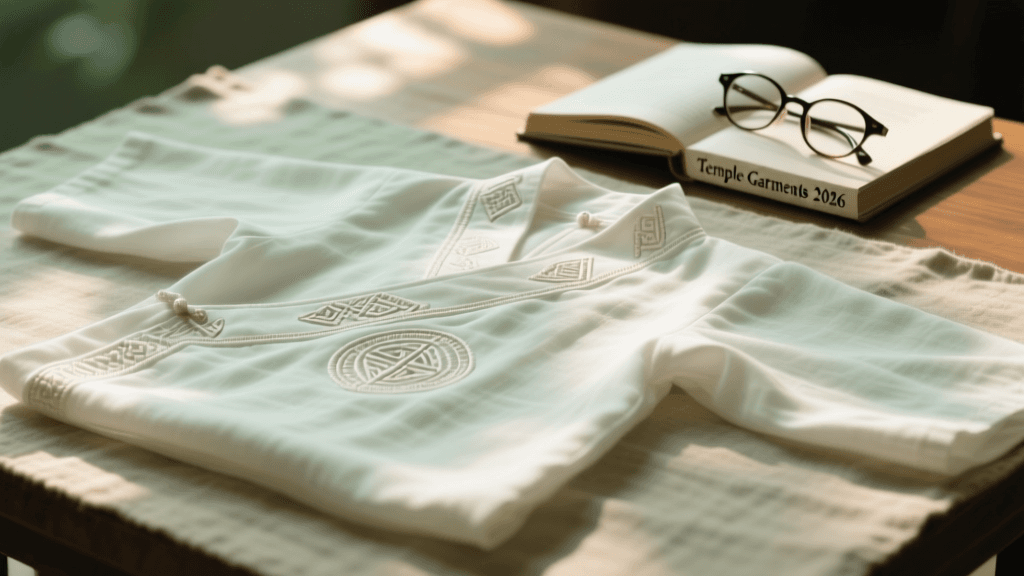
The origins of the modern temple garment trace back to the 19th century in Nauvoo, Illinois, when Joseph Smith introduced the endowment ceremony. Early garments were one-piece union suits that extended to the wrists and ankles, reflecting the modesty standards and practical needs of the 1840s. They featured specific woven or embroidered marks (symbols) that held theological meaning, representing concepts like the Son of God, the crucifixion, and divine guidance.
Over the decades, as global fashion and textile manufacturing evolved, so did the garment. By the mid-20th century, the Church authorized the transition to the two-piece design (a t-shirt and shorts) that is standard today. This shift allowed members to participate more comfortably in modern physical activities, military service, and diverse climates while maintaining their sacred commitments. As we navigate 2026, the evolution continues, with an increased emphasis on inclusive sizing, maternity options, and advanced textile engineering to accommodate the diverse lifestyles of a global membership.
Modern Garment Styles and Fabrics Available in 2026
One of the most significant developments in recent years has been the expansion of fabric choices and stylistic variations, particularly for women. In 2026, members can choose from a wide array of materials designed for specific climates, activities, and sensory needs. The Church's distribution centers have streamlined their inventory to ensure that whether a member is hiking in the humid Amazon, working in a corporate office in New York, or attending university in Mexico City, there is a garment option that provides both comfort and reverence.
Below is a comprehensive breakdown of the primary fabric types and styles available through official channels in 2026:
| Fabric Type | Best Use Case | 2026 Price Range (Per Piece) | Key Features & Benefits |
|---|---|---|---|
| 100% Cotton | Everyday wear, sensitive skin | $8.50 - $10.00 | Highly breathable, traditional feel, durable, hypoallergenic. |
| Modal Blend | Office wear, moderate climates | $10.50 - $12.00 | Exceptionally soft, drapes well, resists shrinking and fading. |
| Stretch (Spandex) | Active lifestyles, athletics | $11.00 - $13.00 | Four-way stretch, moisture-wicking, retains shape over time. |
| Performance Mesh | Extreme heat, heavy labor | $12.00 - $14.00 | Maximum airflow, lightweight, rapid sweat evaporation. |
| Maternity Panels | Pregnancy and postpartum | $12.50 - $14.50 | Expandable abdominal panels, soft waistbands, adjustable fits. |
For women, the 2026 catalog includes cap-sleeve, V-neck, and camisole-style tops, allowing for greater versatility with modern outerwear necklines while still maintaining the required coverage. Men's options include varying inseam lengths for the bottoms, ranging from mid-thigh to knee-length, accommodating everything from tailored dress trousers to athletic shorts.
How to Purchase and Size Your Garments
Purchasing temple garments is restricted to members who have received their own endowment or who are preparing to do so imminently. This restriction is enforced to maintain the sacred nature of the clothing. To buy garments, members must possess a valid temple recommend, which is verified either in person at a Church Distribution Center or digitally when logging into the official online store.
Members can purchase these directly through Church Distribution Services. The online portal features an advanced virtual sizing tool introduced in 2025, which uses basic height, weight, and fit-preference inputs to recommend the ideal size, drastically reducing return rates. For those who prefer in-person shopping, Distribution Centers located adjacent to most temples worldwide offer private fitting rooms and knowledgeable staff who can assist with sizing and fabric selection.
Bulk purchasing is common, with many members buying a 'travel pack' or a month's supply at once. The Church also offers a subsidy program for members in developing regions or those facing severe financial hardship, ensuring that the cost of garments never becomes a barrier to temple worship.
Proper Care, Washing, and Disposal Traditions
The care and maintenance of temple garments are guided by principles of respect and cleanliness. While there are no strict doctrinal mandates requiring garments to be washed separately from other laundry, many members choose to wash them in dedicated loads as a personal sign of reverence. They are typically machine washed in cold or warm water and tumble dried on low heat to preserve the integrity of the elastic and the embroidered symbols.
The disposal of old, worn-out, or damaged garments involves a highly specific and deeply respected tradition. Because the garment bears sacred marks, it is never simply thrown into the garbage or donated to thrift stores. As outlined in the temple preparation materials, when a garment reaches the end of its usable life, the member must carefully cut out the embroidered marks. These marks are then destroyed—usually by cutting them into small, unrecognizable pieces or burning them privately. The remaining fabric, now stripped of its sacred symbols, can be discarded in the regular trash or repurposed as cleaning rags. This ritualistic disposal underscores the belief that the sanctity lies in the covenant and the symbols, not in the cotton or modal itself.
Cultural Impact and Addressing Misconceptions
Despite the deeply spiritual nature of the garment, it has frequently been the subject of public misunderstanding and secular mockery. Pop culture references and early 2000s media often derogatorily labeled them 'magic underwear,' implying that members believed the fabric offered supernatural physical protection against harm or bullets. In 2026, Church leaders and members continue to actively combat this misconception through transparency and education.
The 'protection' offered by the garment is universally understood by faithful Latter-day Saints as spiritual, not physical. It serves as a psychological and spiritual boundary, reminding the wearer of their identity and commitments when faced with moral temptations or ethical dilemmas. It is a tool for mindfulness, akin to a monk's habit or a Sikh's kara, anchoring the individual to their faith in a highly secularized world.
Furthermore, the garment plays a significant role in the modesty culture prevalent within the LDS community. Because the garment covers the torso and upper thighs, members naturally gravitate toward outer clothing that accommodates it, leading to a cultural preference for higher necklines, longer sleeves, and longer hemlines. However, as fashion trends shift, the 2026 garment designs allow members to participate in contemporary styles without compromising their religious obligations.
Conclusion
The Mormon temple garment remains one of the most unique and defining elements of Latter-day Saint culture in the Americas and globally. Far from being a mere relic of the 19th century, it has adapted to the modern era through advanced textiles, inclusive sizing, and thoughtful design. For the millions who wear it in 2026, it is an intimate, sacred anchor—a daily, physical embrace of their spiritual heritage and their ongoing commitment to their faith. Understanding the meaning, care, and traditions surrounding the garment is essential for anyone looking to comprehend the lived experience of modern Indigenous and settler-descendant religious communities across the Americas.