Authentic Viking Smokkr Apron Dress Guide for 2026 Reenactments
The Evolution of Norse Reenactment Standards in 2026
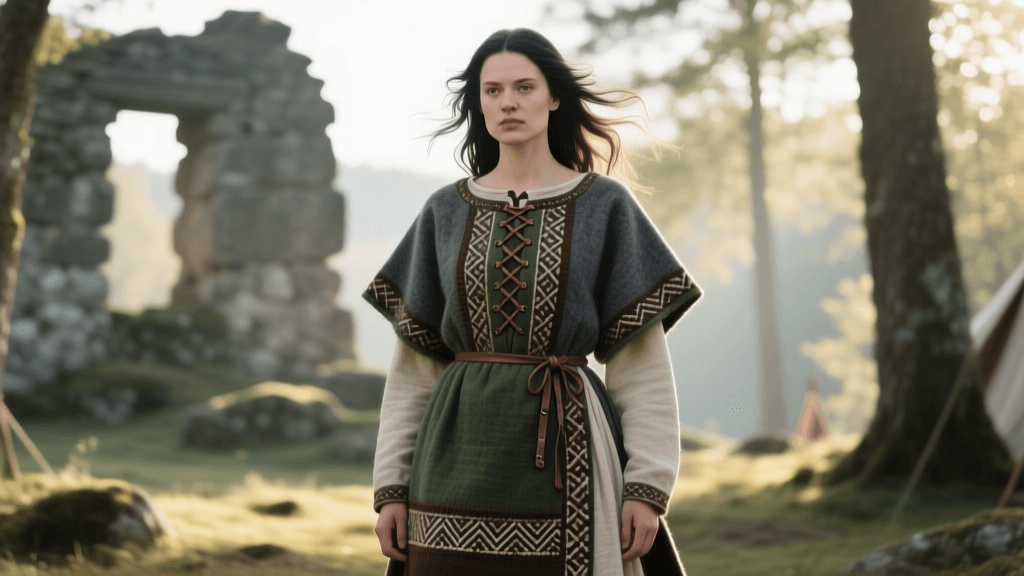
The landscape of European historical reenactment has undergone a massive transformation over the last decade. As we navigate the 2026 festival season, top-tier Viking and Norse heritage groups have completely abandoned the speculative, costume-shop aesthetics of the past. Today, organizations hosting major events like the Moesgaard Viking Moot and the Lofotr Viking Festival enforce strict, evidence-based authenticity guidelines. At the center of this revival is the meticulous reconstruction of the Smokkr, the iconic Norse apron dress worn by women during the Viking Age. This comprehensive guide will walk you through the archaeological evidence, material sourcing, and construction techniques required to build a historically accurate 10th-century Smokkr for the 2026 reenactment circuit.
Decoding the Smokkr: Archaeological Evidence
The term Smokkr is widely used in modern reenactment to describe the sleeveless, over-garment suspended by shoulder straps and oval brooches. However, the exact construction of this garment remains one of the most hotly debated topics in Viking Age textile archaeology. According to the National Museum of Denmark, the preservation of complete garments is exceedingly rare due to the acidic soils of Scandinavia. Most of our knowledge comes from textile fragments clinging to the backs of metal oval brooches found in female burials.
Three primary archaeological finds dictate modern reconstruction:
- The Hedeby Find: Fragments of a finely woven diamond twill wool dress, suggesting a fitted, tailored garment with distinct panels.
- The Køstrup Find: Famous for its distinct pleated front panel, proving that Viking Age tailoring included complex fabric manipulation and gathering techniques.
- The Birka Finds: Numerous grave sites revealing linen and wool blends, alongside intricate tablet-woven trims and silver wire embroidery.
For the 2026 season, the most accepted and historically defensible approach is to avoid the modern 'A-line' princess seams and instead rely on rectangular and gored panel construction, which minimizes fabric waste and aligns with historical weaving widths.
Selecting Authentic Materials for the 2026 Artisan
Diamond Twill and Herringbone Wools
The foundation of any high-quality Smokkr is the textile. Machine-woven, solid-color worsted wools are no longer acceptable for strict authenticity. You must source wool woven in a diamond twill or herringbone pattern, reflecting the broken twill weaves found in Viking Age graves. In 2026, specialized weavers in Estonia and Lithuania dominate the market, producing hand-woven and historically accurate pit-loom wools. Look for a fabric weight between 250 and 300 grams per square meter, which provides the necessary drape and durability for outdoor festivals.
Natural Dyes: Woad, Madder, and Weld
Synthetic aniline dyes are strictly prohibited by elite reenactment guilds. The Viking Age color palette was derived from nature, and achieving these hues requires plant-based dyeing. According to extensive research documented by Hurstwic, the most common and historically accurate colors for a high-status Norse woman's Smokkr include:
- Woad (Isatis tinctoria): Produces a range of blues, from pale sky to deep navy, depending on the vat strength and number of dips.
- Madder Root (Rubia tinctorum): Yields rich brick reds, terracottas, and deep oranges. Madder requires a mordant, typically alum, to bind the color to the wool fibers.
- Weld (Reseda luteola): Provides vibrant, colorfast yellows and golds, often over-dyed with woad to create authentic period greens.
Pattern Drafting and Historical Construction
The Tube vs. Panel Debate
When drafting your pattern, you will encounter two main schools of thought: the closed tube dress and the open panel dress. The closed tube theory suggests the Smokkr was a single, continuous cylinder of fabric gathered at the front. The panel theory, supported by the Hedeby fragments, suggests a dress made of distinct front, back, and side gores. For the 2026 reenactment standard, the paneled approach with side gores is highly recommended as it allows for better movement and a more accurate silhouette when paired with the underlying linen shift (serk).
Stitching with Historical Accuracy
Machine sewing is entirely forbidden in authentic garment construction. All seams must be sewn by hand using waxed linen or wool thread. The most common stitches utilized in Norse garment construction include:
- Running Stitch: Used for basic seams and gathering fabric, such as the pleats in a Køstrup-style front panel.
- Backstitch: Employed in high-stress areas like the armholes and the base of the shoulder straps to prevent tearing.
- Flat-Felled Seam: The gold standard for finishing raw edges. The fabric edges are folded inward and stitched down, creating a clean, durable interior that prevents fraying and adds structural integrity to the dress.
Accessorizing: Oval Brooches and Tablet Weaving
No Smokkr is complete without its hardware and trim. The oval brooches, often mistakenly called tortoise brooches, are not merely decorative; they are the structural linchpins of the garment, holding the shoulder straps to the front panels and serving as anchors for suspension loops.
2026 Market Guide to Oval Brooches
When sourcing brooches for the 2026 season, avoid stamped sheet brass, which is considered 'low-tier' by modern authenticity standards. Invest in sand-cast bronze replicas based directly on archaeological typologies. Below is a comparison of the most historically accurate styles available from master casters this year:
| Brooch Typology | Historical Era | Art Style | Approx. 2026 Cost (EUR) |
|---|---|---|---|
| P37 (Berre Style) | Early 9th Century | Animal Interlace | 85 - 110 |
| P51 (Jelling Style) | Mid 10th Century | Ribbon Animals | 95 - 130 |
| P74 (Urnes Style) | Late 11th Century | Figure-Eight Loops | 120 - 160 |
Tablet Weaving: The Finishing Touch
To elevate your Smokkr from a basic garment to a high-status representation, you must incorporate tablet-woven trim. Tablet weaving was ubiquitous in the Viking Age, used to create strong, decorative bands for hems, necklines, and cuffs. The most authentic technique for a 10th-century Smokkr is the 3/1 twill band, woven using the 'missing hole' technique to create intricate, diamond-shaped geometric patterns. Use fine, hand-spun wool or worsted yarn in contrasting natural dye colors. Attaching this trim to the neckline and hem of your Smokkr not only hides the flat-felled seams but also adds the necessary historical weight and visual richness demanded by 2026 festival judges.
Conclusion
Crafting a historically accurate Norse Smokkr is a labor of love that requires patience, research, and a dedication to traditional craftsmanship. By sourcing authentic diamond twill wools, utilizing natural plant dyes, and mastering historical hand-sewing techniques, you can create a garment that truly honors the women of the Viking Age. As the standards for European folk dress and historical reenactment continue to rise in 2026, your meticulously constructed apron dress will stand as a testament to the enduring legacy of Nordic textile arts. For further reading on Viking Age exhibitions and historical context, the Moesgaard Museum remains an invaluable resource for understanding the cultural environment in which these garments were originally worn.