Schuhplattler Dance Costumes: Authentic Tracht Guide 2026
The Heartbeat of the Alps: Schuhplattler and Tracht in 2026
When the rhythmic stamping of leather-soled shoes echoes through the Alpine valleys and the vibrant, pleated skirts of the Dirndl flare into perfect bells, you are witnessing the Schuhplattler. This traditional folk dance, native to Bavaria, Tyrol, and Salzburg, is far more than a tourist attraction; it is a living, breathing expression of regional identity. As we enter the 2026 festival season, marked by highly anticipated events like the Gaufest and the autumn Almabtrieb, the demand for authentic, dance-ready Tracht (traditional garments) has reached unprecedented heights.
For members of Trachtenvereine (traditional costume associations) and serious folk dancers, the garments worn on the dance floor must meet rigorous standards of historical accuracy, durability, and kinetic mobility. The days of mass-produced, polyester 'beer-tent' costumes are firmly rejected by serious practitioners. In 2026, the focus is entirely on hyper-local tailoring, natural fibers, and historically documented patterns. According to the Bayerischer Trachtenverband, recent 2026 guidelines have further standardized the use of region-specific embroidery and natural materials for competition-level folk dance costumes.
Why Dance Tracht Differs from Festival Fashion
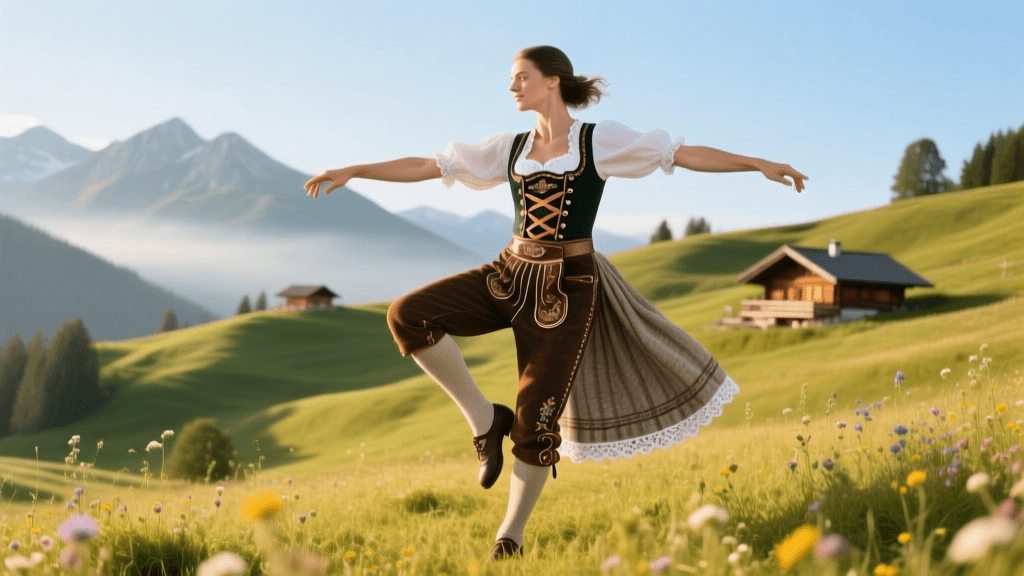
To the untrained eye, a Dirndl is a Dirndl and Lederhosen are Lederhosen. However, the biomechanics of the Schuhplattler demand specialized engineering. The male dance involves vigorous slapping of the thighs, knees, and shoe soles (the Plattln), while the female dance requires continuous, rapid spinning (the Drahn) to create the iconic visual effect of the flying skirt.
Authentic dance Tracht, often referred to as Vereinstracht, is constructed to withstand immense physical stress. Seams are reinforced, fabrics are weighted for optimal swing, and leathers are selected for their specific stretch and breathability. In 2026, master tailors in Miesbach and Innsbruck report a surge in commissions for bespoke dance garments that prioritize historical 19th-century cuts over modern, slimmed-down fashion silhouettes.
The Buam’s Uniform: Lederhosen Engineered for Movement
For the male dancer (Buam), the Lederhosen is a highly functional piece of athletic wear disguised as traditional folk dress. The requirements for a dance-specific Lederhosen are vastly different from those meant for casual festival wear.
Leather Selection and Tanning
Authentic dance Lederhosen are crafted almost exclusively from Hirschleder (deer leather) or high-grade Rehleder (roe deer). In 2026, due to stricter environmental regulations on traditional brain-tanning (Sämischgerbung) processes in European tanneries, premium Hirschleder has become a luxury material, with bespoke pairs starting at €950 and frequently exceeding €1,400. The leather must be incredibly soft, supple, and breathable. When a dancer executes a high kick or a deep squat, the leather must stretch without restricting blood flow or chafing the skin.
The Cut and Embroidery
Dance Lederhosen are typically cut slightly higher on the thigh than casual variants to allow for maximum leg extension. The iconic drop-front (Latz) is secured with sturdy horn or antler buttons. Crucially, the embroidery (Stickerei) on dance Lederhosen is kept relatively flat and tightly woven. Raised or heavily padded embroidery, while beautiful, can cause severe friction burns on the dancer's hands during the rapid, repetitive thigh-slapping sequences of the Schuhplattler.
Hosenträger (Suspenders)
The suspenders are not merely decorative; they bear the weight of the heavy leather during vigorous jumping. Cross-braces are standard, featuring a central sliding connector (Schuber) that allows the leather to shift dynamically with the dancer's torso movements.
The Diandl’s Grace: Dirndl Construction for the Spin
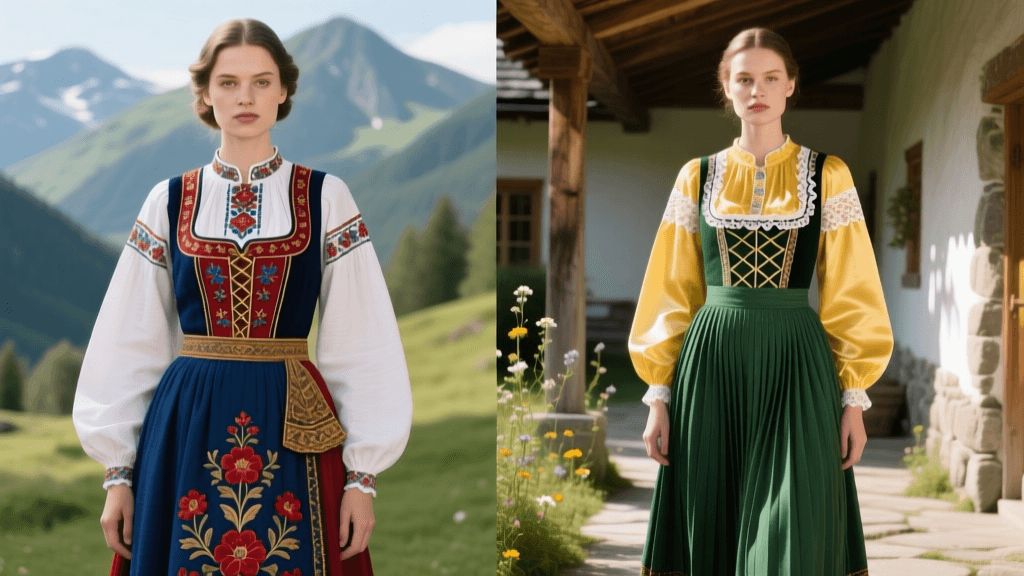
The female dancer (Diandl) wears a Dirndl that is a marvel of kinetic engineering. The goal of the female role in the Schuhplattler is to spin continuously, creating a seamless, floating disc of color. Achieving this requires precise tailoring.
The Rock (Skirt) and Unterrock (Petticoat)
The most critical component is the Rock. An authentic dance skirt is cut in a full circle or features deep, calculated cartridge pleating at the waistband. In 2026, master seamstresses utilize a blend of fine merino wool and structured cotton poplin to provide the necessary weight. If the fabric is too light, it will tangle around the dancer's legs; if it is too heavy, it will not achieve the horizontal lift required during the spin. Beneath the skirt, a specialized cotton Unterrock (petticoat) with a reinforced hem is worn to push the skirt outward and protect the delicate outer fabric from the dancer's shoes.
The Mieder (Bodice)
Unlike the corset-style bodices of modern fashion Dirndls, the traditional dance Mieder is structured to provide lumbar support. The rapid spinning and sudden stops place significant strain on the core and lower back. The bodice is lined with sturdy cotton canvas and features a deep, square or round neckline, historically accurate to the specific Alpine valley the dancer represents. The front is laced tightly with silk or linen cords, allowing for micro-adjustments in fit and breathing room during performances.
The Schürze (Apron)
The apron must be precisely the same length as the skirt hem. For dance, it is often pinned discreetly at the sides or tied with a specialized, flat knot that will not come undone or whip the dancer's partner during close-proximity choreography.
Footwear: Haferlschuhe and the Rhythm of the Stamp
No Schuhplattler performance is complete without the percussive stamping of traditional footwear. For men, the Haferlschuh is mandatory. This shoe features a distinctive side-lacing system and a thick, nailed leather sole that acts as a percussion instrument against the wooden dance floors. In 2026, cobblers specializing in Trachtenschuhe have introduced subtle, hidden arch-support inserts to combat the joint fatigue associated with hours of stamping on hard surfaces, without altering the external historical silhouette.
Women wear soft, low-heeled Trachtenschuhe, typically made of brushed suede or smooth calfskin, featuring a secure Mary-Jane style strap. The sole must be flexible enough for the rapid pivoting required in the Drahn, yet durable enough to withstand the friction of constant turning.
2026 Market Comparison: Beer-Tent Fashion vs. Authentic Tanztracht
Understanding the investment required for authentic folk dance garments is crucial for anyone looking to join a Trachtenverein or participate seriously in Alpine cultural festivals. Below is a comparison of the current 2026 market landscape.
| Feature | Wiesn-Mode (Festival Fashion) | Vereinstracht (Authentic Dance Wear) |
|---|---|---|
| Primary Material | Polyester blends, faux leather, synthetic lace | 100% Merino wool, brain-tanned Hirschleder, pure linen |
| Skirt/Leather Cut | Slim-fit, limited pleating, restrictive thigh cut | Full-circle swing skirt, high-cut thigh for deep squats |
| Embroidery | Machine-printed or heavily raised, prone to snagging | Hand-stitched flat silk thread, regionally documented motifs |
| Average Price (2026) | €80 - €250 (Full Outfit) | €1,200 - €2,500+ (Full Bespoke Outfit) |
| Lifespan & Durability | 1-2 Seasons, degrades with washing | Decades, often passed down as a family heirloom |
Sourcing, Pricing, and Maintenance for the 2026 Season
Acquiring authentic Tanztracht requires patience and a willingness to invest in heritage craftsmanship. According to insights from the Bayerisches Trachtenkulturzentrum, the revival of hyper-local, village-specific Tracht has led to extensive waitlists for master tailors. If you are commissioning a bespoke dance outfit for the 2026 or 2027 festival season, it is highly recommended to begin consultations at least eight to twelve months in advance.
Care and Maintenance
Maintaining dance Tracht is an art form in itself. The rigorous physical exertion of the Schuhplattler means garments will be exposed to sweat, friction, and environmental elements.
- Lederhosen Care: Never wash Hirschleder with water or chemical detergents, as this strips the natural oils and causes the leather to stiffen and crack. After a performance, brush the leather with a specialized suede brush and hang it in a well-ventilated, climate-controlled room. Traditionalists recommend occasional treatment with pure deer tallow to maintain suppleness.
- Dirndl Maintenance: The wool skirt should be dry-cleaned only by specialists familiar with historical textiles. The linen blouse (Bluse) and cotton apron can be hand-washed in cool water with mild, pH-neutral soap. Never wring the pleated skirt; it must be hung damp and the pleats re-pinned by hand to dry, ensuring the cartridge pleating retains its structural integrity for the next spin.
- Footwear Upkeep: The nailed soles of Haferlschuhe require regular inspection. Cobblers recommend checking the leather pegs and nails every 30 hours of dance time to prevent floor damage and ensure the dancer's safety during high-impact stamps.
Preserving the Rhythm of the Alps
The Schuhplattler is a profound dialogue between the human body and the cultural history of the Alps. As noted by researchers at Tiroler Volkskultur, the garments worn during these dances are not mere costumes; they are the physical embodiment of regional pride, historical continuity, and communal identity. By investing in authentic, properly constructed Tanztracht, dancers do more than just improve their performance—they actively participate in the preservation of a vibrant, living heritage. Whether you are preparing for a local Maibaumaufstellen (Maypole dance) or a major regional Gaufest, understanding the intricate engineering behind the Lederhosen and Dirndl ensures that the rhythm of the Alps will continue to resonate for generations to come.