The Woven Threads of Heritage: Understanding Tartan Clan Identities
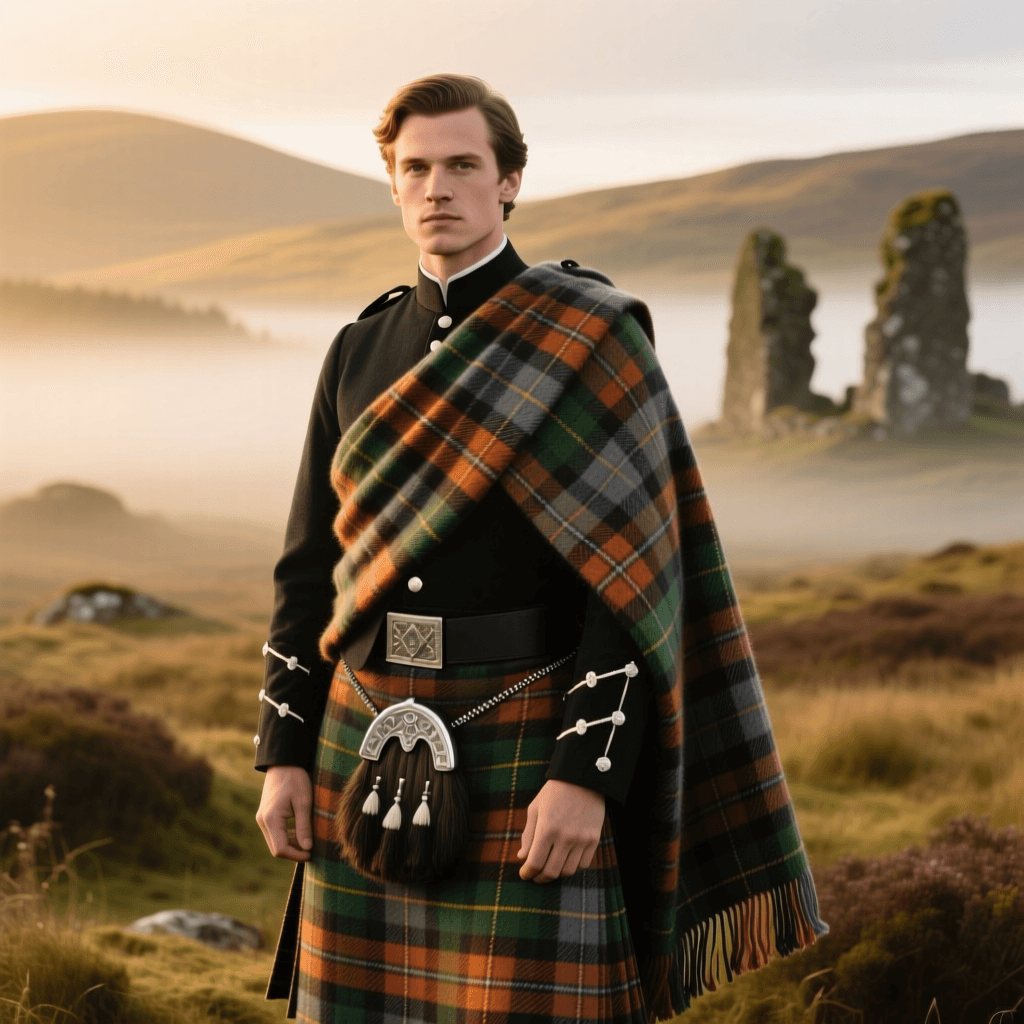
Few textiles in the history of human civilization carry the profound sociological weight and immediate visual recognition of tartan. To the untrained eye, it is merely a striking geometric pattern of intersecting horizontal and vertical bands. Yet, within the cultural tapestry of Scotland, tartan is a complex visual language—a woven heraldry that speaks of kinship, geography, rebellion, and enduring pride. The concept of tartan clan identities represents one of the most fascinating intersections of textile craftsmanship and social organization in the world. When we examine the grid of a traditional plaid, we are not just looking at dyed wool; we are reading the ancestral ledger of the Scottish Highlands. This article delves deep into the heritage of tartan clan identities, exploring how regional weaving traditions evolved into global symbols of familial and national pride. For those interested in the broader context of traditional garments, our comprehensive Scottish wool heritage guide provides an excellent foundation for understanding the raw materials that make these patterns possible.
The Historical Roots of Tartan and Clan Kinship
To understand how tartan became inextricably linked to specific clans, one must first understand the Highland clan system itself. The word 'clan' derives from the Gaelic clann, meaning children or descendants. These were not merely extended families; they were complex socio-political entities, functioning as local governments, military units, and economic cooperatives. Loyalty to the clan chief was paramount, and identity was deeply rooted in the shared land and shared lineage.
In the earliest days of Highland dress, tartan patterns were not strictly aligned with specific family names. Instead, they were regional. The weavers in a particular glen or island would use the local flora to dye their yarns, resulting in distinct color palettes that identified the wearer’s geographic origin rather than their specific surname. A man wearing a particular pattern was recognized as hailing from a specific district, which, given the tight-knit nature of Highland society, often meant he belonged to the dominant clan of that area.
The transformation from regional district tartans to strictly defined clan tartans was a gradual process, heavily influenced by political upheaval. Following the mid-eighteenth-century Jacobite risings, the government enacted the Dress Act, which sought to dismantle the Highland way of life by banning the wearing of tartan and Highland dress. This proscription lasted for several decades. Paradoxically, the suppression of the garment only heightened its symbolic power. When the ban was eventually repealed, the Highland elite and the romanticized vision of Scotland began to formalize the connection between specific patterns and specific surnames.
The early nineteenth century saw a massive surge in the codification of clan tartans. Societies, historians, and tailors worked to assign definitive patterns to ancient names. While some of these assignments were based on genuine historical continuity, others were retroactively applied to satisfy a growing demand for ancestral connection. Regardless of their precise origins, these codified patterns became the undeniable visual markers of clan identity, transforming the traditional kilt into a banner of familial allegiance.
The Craftsmanship of the Weave: Colors, Dyes, and Setts
Creating a clan tartan is a masterclass in textile engineering and artisanal craftsmanship. At the heart of every tartan is the 'sett'—the foundational sequence of colored threads that forms the repeating pattern. The sett is written as a formula of thread counts, dictating exactly how many strands of each color are used in both the warp & weft. Because traditional tartan is woven in a balanced twill weave, the intersection of the longitudinal and transverse threads creates the characteristic diagonal ribbing and the blended, cross-hatched colors that give tartan its unique depth.
Historically, the colors of a clan’s tartan were dictated by the local environment. Before the advent of synthetic dyes, Highland weavers relied on the natural world to color their spun wool. Madder root provided deep reds, while indigo or woad yielded blues. Yellows and greens were extracted from weld, broom, and various local lichens. The mordants used to fix these dyes—often alum or iron-rich peat water—also played a crucial role in the final hue. This reliance on local botany is why early regional tartans often featured softer, more muted tones that blended seamlessly with the heather, bracken, and moorlands of the Highlands.
The Industrial Revolution brought synthetic dyes to the weaving industry, radically altering the visual landscape of clan tartans. Chemical dyes allowed for much brighter, more colorfast, and highly saturated hues. This divergence gave birth to the classifications we use today: 'Ancient' tartans refer to the softer, naturally dyed color palettes of the past, while 'Modern' tartans utilize the bold, vibrant synthetic colors. For a deeper dive into how these textiles are tailored into iconic garments, explore our guide to highland dress styling, which details how the drape of the wool interacts with these intricate patterns.
The craftsmanship extends beyond the dye vat to the loom itself. Weaving a complex sett requires immense concentration and mathematical precision. A single error in the thread count can throw off the symmetry of the pattern, ruining yards of expensive cloth. Today, while much of the commercial tartan is woven on power looms, heritage mills in the Scottish Borders and the Highlands still employ traditional methods, ensuring that the tactile quality and historical integrity of the clan tartan are preserved.
Regional Variations and the Geography of the Grid
While the clan system provides the primary framework for tartan identity, geography continues to play a vital role in the variations and sub-categories of these patterns. The rugged topography of Scotland necessitated different types of garments and, consequently, different variations of clan tartans to suit various environments and occasions.
One of the most prominent regional distinctions is found between the mainland Highlands and the Hebridean Islands. Island tartans often reflect the stark, windswept beauty of their environment. The integration of undyed, natural wool colors—creamy whites, oatmeals, and deep browns—is more prevalent in island weaves, reflecting the limited availability of certain dye plants on the rocky archipelagos. Furthermore, the famous Harris Tweed, while distinct from traditional clan tartan in its weaving regulations, shares the same geographic DNA, utilizing the same rugged, weather-resistant wool and earthy color palettes that define island heritage.
Within a single clan, variations of the primary tartan were developed to serve specific practical purposes. The 'Hunting' tartan is a prime example. Designed for camouflage while stalking game on the moors, hunting tartans replace the bright reds and yellows of the standard clan sett with muted greens, deep browns, and navy blues. This allowed clansmen to blend into the Highland foliage while still wearing their ancestral pattern.
Conversely, 'Dress' tartans were designed for formal occasions, ceilidhs, and Highland games. These variations typically involve replacing one of the prominent background colors of the standard sett with white, resulting in a brighter, more striking pattern that stands out in a crowd or a ballroom. Understanding these variations is essential for anyone looking to curate an authentic wardrobe, a topic we cover extensively in our tartan accessories guide, where we discuss how to match flashes, ties, and sashes to the appropriate tartan variation.
Cultural Significance and the Romanticization of the Highlands
The cultural significance of tartan clan identities cannot be overstated; it is a symbol that has survived suppression, diaspora, and the relentless march of modernity. The romanticization of the Scottish Highlands in the nineteenth century played a pivotal role in elevating tartan from a regional ethnic dress to a global phenomenon. Literature, poetry, and royal patronage transformed the Highlander from a feared warrior into a noble, romantic figure, and his tartan became the uniform of this idealized hero.
As the Scottish diaspora spread across the globe—driven by the Clearances and economic migration—tartan became a vital tether to the homeland. In North America, Australia, and New Zealand, descendants of the clans used tartan to maintain a connection to an ancestral past that many had never actually seen. Tartan became the focal point of Burns suppers, St. Andrew’s societies, and Highland games held thousands of miles from the Scottish glens. In this context, the clan tartan transcended its original function as a marker of local kinship and became a badge of global Scottish identity.
Furthermore, tartan has consistently been adopted by various subcultures as a symbol of rebellion & non-conformity. From punk rock movements to high-fashion runways, the bold, disruptive geometry of the clan tartan has been used to challenge the status quo. Yet, even when appropriated by global fashion houses, the underlying power of the pattern relies on its authentic heritage. The wearer is borrowing the gravity, history, and rebellious spirit of the Highland clans, proving that the cultural weight of the tartan is just as potent today as it was centuries ago.
Modern Preservation and the Future of Clan Tartans
In the contemporary era, the preservation of tartan clan identities is managed through a combination of ancestral pride, legal frameworks, and dedicated cultural institutions. The establishment of the national tartan registry in the early twenty-first century was a landmark moment for textile heritage. This official database records the thread counts, color palettes, and historical provenance of thousands of tartans, ensuring that the authentic setts of ancient clans are protected from commercial distortion.
Clan societies also play a crucial role in modern preservation. These organizations, often led by a recognized clan chief, act as the custodians of their specific tartans. They educate members on the proper usage of their patterns, commission new weaves for modern applications, and ensure that the history of their kin is passed down to the next generation. When a new branch of a family is recognized, or when a diaspora community wishes to formalize a regional variation, the clan society works with master weavers and the national registry to design and record the new sett.
The future of tartan clan identities lies in the balance between reverence for tradition and adaptation to modern life. Sustainable weaving practices, the revival of heritage natural dyeing techniques, and the integration of tartan into contemporary, everyday fashion are ensuring that the cloth remains relevant. Tartan is not a relic confined to a museum; it is a living, breathing textile that continues to evolve while remaining firmly anchored to the bloodlines & landscapes of Scotland.
Frequently Asked Questions
Can anyone wear any clan tartan?
The short answer is yes; there are no legal restrictions preventing an individual from wearing any tartan they choose. However, within the context of Scottish heritage and etiquette, it is highly encouraged to wear a tartan to which you have a genuine connection. This could be through a direct surname link, a maternal lineage, or a historical connection to a specific region of Scotland. If you do not have a Scottish lineage, you are always welcome to wear 'universal' tartans, such as the Royal Stewart, the Black Watch, or the Isle of Skye, which are open to everyone. Wearing a specific clan tartan without a connection is not illegal, but it may be viewed as a faux pas at formal Highland gatherings.
What is the difference between ancient, modern, and weathered tartans?
These terms refer to the color palettes used to weave the exact same sett (pattern). 'Ancient' tartans use lighter, softer colors intended to mimic the natural vegetable dyes used before the industrial era. 'Modern' tartans use darker, more vibrant, and highly saturated colors that became possible with the invention of synthetic chemical dyes. 'Weathered' (sometimes called 'Reproduction') tartans are designed to look as though the fabric has been exposed to the harsh Highland elements for decades, featuring muted, grayish-brown, and faded tones. The choice between them is entirely a matter of personal aesthetic preference and the formality of the occasion.
How are new clan tartans created and registered today?
Creating a new clan or family tartan is a meticulous process that involves both artistic design and historical research. A designer will draft a unique sett, ensuring it does not infringe upon or too closely resemble existing patterns. Once the design is finalized and woven into a physical sample, it must be submitted to the official national registry. The registry checks the thread count and color palette against their database to verify its uniqueness. If approved, the tartan is officially recorded, and the clan society or family trust becomes the recognized custodian of that specific pattern, granting them the authority to dictate its commercial production and usage.
Are Irish and Welsh tartans historically authentic?
The concept of specific family or county tartans is uniquely and historically Scottish. While Ireland and Wales have rich textile traditions, the assignment of specific tartan patterns to Irish surnames or Welsh counties is a relatively modern phenomenon, largely developing in the late twentieth century to cater to the Celtic diaspora's desire for visual heritage markers similar to the Scottish system. While these modern Irish and Welsh tartans are beautiful and widely worn at cultural festivals, they do not possess the centuries-old historical continuity or the traditional clan-system provenance that authentic Scottish Highland tartans possess. They are celebrated as modern expressions of Celtic solidarity rather than ancient historical artifacts.