Silk Road Archaeology 2026: Tarim Basin Textile Finds
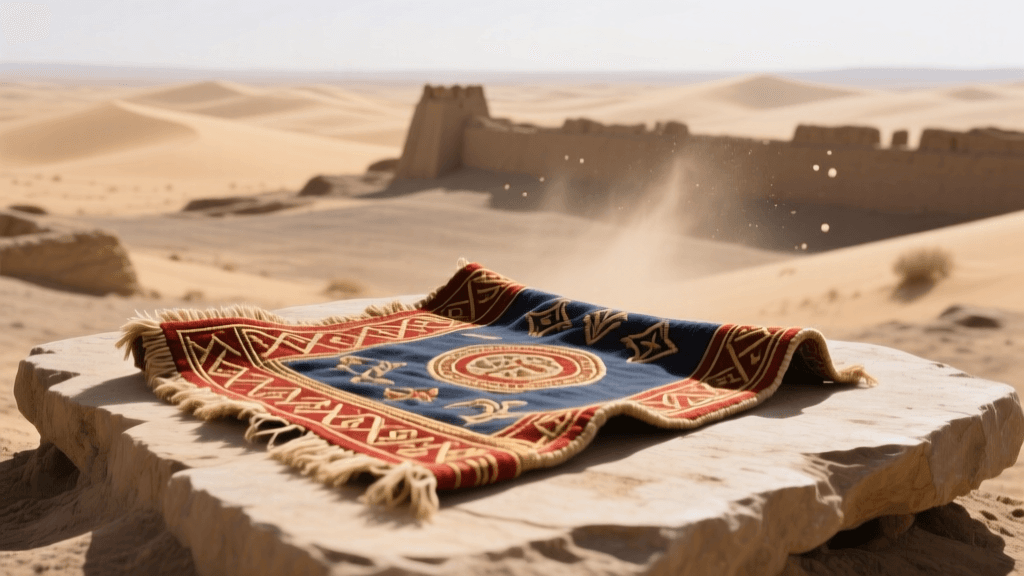
The Crossroads of Antiquity: Tarim Basin Textile Archaeology in 2026
The Taklamakan Desert, located in the heart of the Tarim Basin in Xinjiang, China, has long been recognized as one of the most formidable yet historically rich landscapes on Earth. For centuries, its hyper-arid climate and alkaline sands have acted as a natural vacuum seal, preserving organic materials that would have otherwise decomposed in more humid environments. As of 2026, the Tarim Basin remains the premier archaeological crucible for understanding early trans-Eurasian textile exchanges. Recent excavations and the re-analysis of legacy finds using cutting-edge, non-destructive technologies have fundamentally rewritten our understanding of Silk Road fashion, trade networks, and weaving technologies. According to the UNESCO Silk Roads Programme, the integration of these oasis towns created a unique synthesis of Han Chinese, Sogdian, Hellenistic, and nomadic steppe sartorial traditions. This article delves into the most significant textile discoveries from the region, focusing on the legendary Yingpan Man and the 2026 breakthroughs in spectroscopic dye analysis that continue to astound the global archaeological community.
The Yingpan Man: A Masterclass in Ancient Trans-Eurasian Layering
Discovered in the late 1990s but continually subjected to advanced material analysis well into 2026, the Yingpan Man (dating to roughly the 3rd or 4th century CE) provides an unparalleled snapshot of Silk Road cosmopolitanism. Buried in a painted wooden coffin, the male figure was interred in a staggering array of layered garments that demonstrate the immense wealth and cross-cultural connectivity of the Tarim Basin elite. His ensemble is a masterclass in ancient layering, combining local resources with imported luxury goods.
The outermost layer consists of a magnificent woolen coat, woven in a complex weft-faced compound twill (samite-like structure) featuring Hellenistic motifs, including putti and bulls, which strongly suggest origins in the Sogdian or Bactrian weaving centers of Central Asia. Beneath this, he wore a silk-faced jacket and hemp trousers, highlighting the integration of Eastern Han Chinese agricultural textiles with Western pastoralist wool traditions. The silk used for his inner garments features warp-faced compound tabby weaves, a technique that requires the sophisticated drawloom technology native to the Chinese heartland. The juxtaposition of these garments on a single body perfectly encapsulates the physical reality of the Silk Road: it was not merely a conduit for raw materials, but a vibrant corridor where finished garments, weaving techniques, and aesthetic philosophies collided and merged. The International Dunhuang Project continues to catalog and digitize related textile fragments from the broader Tarim and Turfan regions, providing researchers in 2026 with high-resolution multispectral scans that reveal hidden weave structures and faded pigments invisible to the naked eye.
2026 Analytical Breakthroughs: AI and Non-Destructive Spectroscopy
Historically, the study of ancient dyes and fibers required destructive sampling—removing tiny threads to dissolve them for liquid chromatography. In 2026, this paradigm has been entirely overturned by the widespread adoption of portable Raman spectroscopy and AI-assisted Fourier Transform Infrared (FTIR) imaging. These non-destructive techniques allow archaeologists to map the molecular composition of fragile, 1,500-year-old textiles directly in the museum archive or even on-site at excavation facilities.
Recent 2026 studies utilizing these methods on Tarim Basin textiles have identified trace organic compounds that reveal complex, multi-stage dyeing processes previously unknown in early Central Asian weaving. For instance, researchers can now detect the presence of mordants like alum and iron at a microscopic level, mapping exactly how ancient dyers prepared wool fibers to accept color. Furthermore, AI-driven thread-count mapping software can now analyze high-macro photography of desiccated fabrics to reconstruct the exact tension and loom setups used by ancient weavers, providing actionable data for modern experimental archaeologists attempting to recreate these lost textiles.
Decoding the Chromatic Silk Road: Advanced Dye Analysis
The colors of the Silk Road were its most valuable currency. The 2026 spectroscopic analyses of Tarim Basin garments have yielded a precise chemical fingerprint of the botanical and insect-based dyes that traversed the continent. Below is a structured breakdown of the primary dyes identified in recent Tarim Basin textile analyses, their chemical markers, and their geographical origins.
| Dye Source | Common Name | Primary Chemical Marker | Probable Origin / Trade Route |
|---|---|---|---|
| Rubia tinctorum | Madder Root | Alizarin / Purpurin | Local Tarim cultivation / Persian trade |
| Polygonum tinctorum | Japanese Indigo | Indigotin | Eastern Han Chinese import |
| Kerria lacca | Lac Insect | Laccaic Acids | Indian subcontinent / Southern route |
| Reseda luteola | Weld | Luteolin / Apigenin | Western Eurasian / Steppe trade |
| Crocus sativus | Saffron | Crocin | Persian / Sogdian luxury import |
The presence of lac insect dyes on woolen tapestries found in the Tarim Basin is particularly significant. Because lac is native to the tropical and subtropical regions of India and Southeast Asia, its appearance in the hyper-arid deserts of Xinjiang confirms the robust nature of the southern, high-altitude Silk Road routes that bypassed the Taklamakan via the Tibetan plateau and the Himalayan passes. Similarly, the detection of weld (Reseda luteola) alongside local madder indicates a sophisticated blending of Western Eurasian and local dye palettes to achieve specific shades of orange and gold.
The Loom Divide: Warp-Weighted vs. Drawloom Technologies
Beyond color and material, the structural analysis of Tarim Basin textiles in 2026 highlights a fascinating technological clash between two distinct weaving traditions. The woolen garments, particularly the tapestry-woven trousers and coats, exhibit the hallmarks of the warp-weighted loom and the horizontal ground loom. These looms, prevalent in Central Asia, the steppes, and the Mediterranean, are ideal for creating weft-faced structures where the horizontal threads (weft) completely cover the vertical threads (warp), allowing for intricate, pictorial, and geometric designs.
Conversely, the silk fragments recovered from the same burial sites are overwhelmingly warp-faced, produced on the complex Han Chinese drawloom. This technology relies on a system of harnesses and drawboys to lift specific warp threads, creating shimmering, repetitive patterns that catch the light. The discovery of hybrid textiles in the Tarim Basin—such as woolen fabrics woven with warp-faced compound structures—proves that local weavers were actively reverse-engineering Chinese drawloom technology to apply it to their native sheep and camel wool. This technological synthesis represents one of the most significant intellectual property exchanges of the ancient world, predating the eventual westward transmission of silk sericulture itself.
Modern Conservation Protocols Informed by 2026 Discoveries
The extreme desiccation that preserved the Tarim Basin textiles for millennia also renders them incredibly brittle and susceptible to rapid degradation once exposed to modern atmospheric conditions. The insights gained from 2026 spectroscopic analyses have directly informed updated conservation protocols for museums housing Silk Road collections globally. Based on recent data regarding the hygroscopic behavior of ancient madder-dyed wool and Han silk, conservationists now adhere to strict micro-climate parameters.
- Relative Humidity (RH): Maintained strictly between 45% and 50%. Fluctuations beyond 5% within a 24-hour period cause differential expansion between the silk warps and wool wefts in hybrid textiles, leading to catastrophic fiber shearing.
- Temperature Control: Kept at a stable 18°C (64°F). Higher temperatures accelerate the oxidation of ancient organic mordants, causing the vibrant reds and purples to brown and degrade.
- Light Exposure: Lux levels are capped at 30 lux for displayed items, with complete UV filtration. Recent FTIR imaging has shown that even brief exposure to unfiltered UV light causes irreversible chain-scission in 1,500-year-old silk fibroin proteins.
- Support Mounting: Textiles are no longer suspended. They are supported on custom-carved, acid-free Ethafoam mounts covered in washed, unbleached cotton muslin to distribute gravitational stress evenly across fragile weave intersections.
As researchers at institutions referenced by The British Museum Collection and global heritage labs continue to refine these protocols, the survival of these irreplaceable garments is ensured for future generations. The Tarim Basin textile finds are not merely relics of a bygone era; they are the physical blueprints of globalization, proving that the exchange of aesthetics, technology, and materials has been the driving force of human cultural evolution for over two millennia. Through the lens of 2026's advanced archaeological science, the threads of the Silk Road continue to speak, revealing a world that was vastly more interconnected, vibrant, and technologically sophisticated than previously imagined.