Kimono Preservation & Storage 2026: Archival Care Guide
The 2026 Climate Reality for Silk Preservation
As we navigate the environmental shifts of 2026, preserving antique and contemporary silk kimono requires more vigilance than ever before. Fluctuating global humidity levels and increasingly extreme seasonal temperature variations pose a severe threat to organic protein fibers like silk. For collectors, curators, and enthusiasts, proper kimono storage preservation is no longer just about keeping garments clean; it is a rigorous practice of collection management and micro-climate control. Whether you own a single vintage uchikake or a sprawling collection of Edo-period kosode, implementing modern archival standards is essential to prevent irreversible degradation, dye bleeding, and fiber shattering.
Silk is a highly reactive material. When exposed to high humidity, the fibers absorb moisture, leading to mold growth and the activation of acidic degradation processes. Conversely, excessively dry conditions cause the silk to become brittle, leading to micro-tears along the fold lines. According to the Victoria and Albert Museum's textile conservation guidelines, maintaining a stable environment is the single most critical factor in extending the lifespan of historical garments. In 2026, the integration of smart home climate technology with traditional Japanese storage methods offers collectors the ultimate defense against environmental decay.
Establishing the Archival Baseline: Temperature and Humidity
Before investing in storage containers, you must secure the room where your collection will reside. The ideal environment for silk kimono storage is a dark, interior room with minimal temperature fluctuation. The target temperature should be maintained between 18°C and 20°C (64°F to 68°F), while the relative humidity (RH) must be strictly kept between 50% and 55%.
In 2026, relying on analog hygrometers is no longer sufficient for serious collection management. We recommend deploying networked smart sensors, such as the latest SensorPush or Govee Wi-Fi models, which provide real-time alerts to your smartphone if the RH deviates by more than 3%. Pairing these sensors with a smart dehumidifier and humidifier combo ensures that your storage space remains within the safe archival zone year-round, regardless of external weather anomalies.
The Kiribako Advantage: Traditional Paulownia Wood Storage
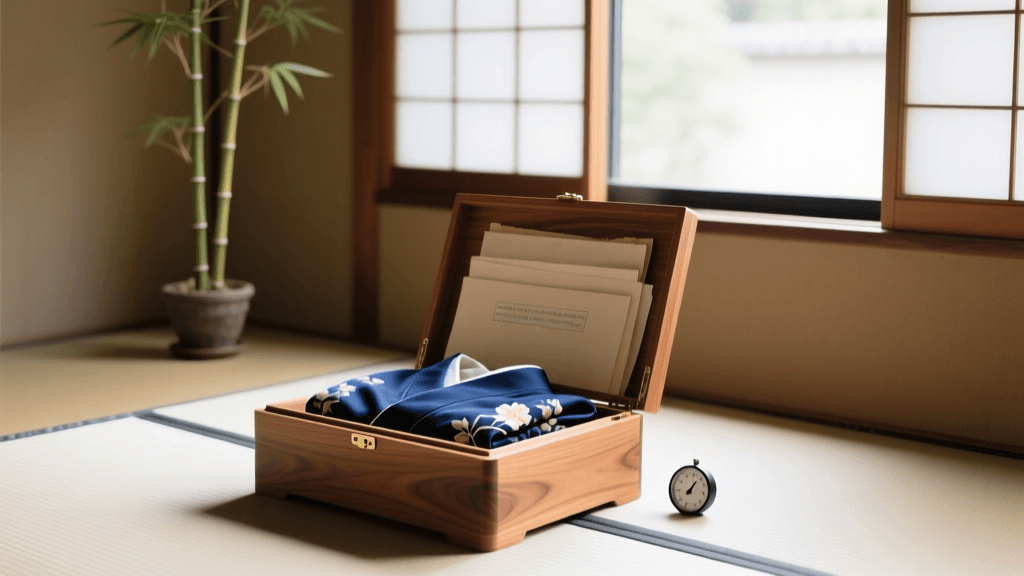
For centuries, the Japanese have relied on kiribako (paulownia wood boxes) for storing precious kimono. This is not merely a cultural tradition; it is a scientifically sound preservation method. Paulownia wood (Paulownia tomentosa) possesses unique cellular properties that make it an exceptional material for textile conservation. As documented by the Royal Botanic Gardens, Kew, paulownia is highly resistant to warping, naturally fire-retardant, and remarkably lightweight.
More importantly for kimono preservation, paulownia wood acts as a natural humidity buffer. When the ambient humidity rises, the wood absorbs excess moisture from the air inside the box, protecting the silk. When the air becomes too dry, the wood releases moisture back into the micro-environment. In 2026, authentic, untreated Japanese kiribako remain the gold standard for high-end collection management, though they command a premium price, often ranging from $300 to $800 per box depending on the craftsmanship and joinery techniques used.
Storage Material Comparison for 2026
| Storage Material | Humidity Regulation | Archival Safety | Cost & Accessibility |
|---|---|---|---|
| Kiribako (Paulownia) | Excellent (Natural Buffer) | High (If untreated/undyed) | High ($300 - $800+) |
| Acid-Free Corrugated Board | Poor (Requires external control) | High (Museum Standard) | Low ($40 - $90) |
| Plastic Bins (Polypropylene) | None (Traps moisture) | Low (Risk of off-gassing/mold) | Very Low ($15 - $30) |
| Cedar Wood Chests | Moderate | Risky (Oils can stain silk) | Moderate ($150 - $400) |
Note: Never store silk kimono in plastic bins or standard cedar chests. Plastic traps moisture and promotes mold, while the natural oils and acids in cedar can transfer to the silk, causing permanent yellowing and staining.
Archival Wrapping and Hon-Datami Folding
The way a kimono is folded and wrapped is just as crucial as the box it lives in. The traditional folding method, known as hon-datami, is specifically designed to align the seams and distribute the bulk of the fabric evenly, preventing hard, permanent creases that can lead to fiber shattering over time.
Once folded, the kimono must never touch the bare wood of the kiribako or the cardboard of an archival box. It must be wrapped in tatou—traditional Japanese archival paper. Authentic tatou is made from unbleached, acid-free mulberry fibers (kozo). It is soft, breathable, and chemically stable. Avoid modern wood-pulp papers, which contain lignin and will become acidic over time, transferring damaging compounds to the silk.
Step-by-Step Wrapping Protocol
- Step 1: Lay the tatou paper flat on a clean, dry surface. Ensure your hands are washed and free of lotions or oils.
- Step 2: Place the hon-datami folded kimono in the center of the paper.
- Step 3: Fold the left and right sides of the paper over the garment, followed by the bottom and top flaps. Do not use tape, glue, or staples to secure the paper.
- Step 4: Use a strip of unbleached cotton twill tape or a dedicated silk tie to gently secure the wrapped bundle. Never tie it tightly; the goal is simply to keep the paper from unfolding.
- Step 5: Place the wrapped bundle into the kiribako. Leave at least an inch of space around the edges to allow for air circulation.
Pest Management Without Harsh Chemicals
Textile pests, particularly webbing clothes moths and carpet beetles, are a constant threat to organic collections. Historically, collectors relied on chemical mothballs containing naphthalene or paradichlorobenzene. In 2026, these chemicals are strictly avoided in professional conservation. Not only are they toxic to humans, but their off-gassing can react with metallic threads, gold leaf, and certain dyes, causing irreversible tarnishing and discoloration.
The American Institute for Conservation (AIC) Textile Wiki emphasizes integrated pest management (IPM) over chemical interventions. For kimono storage, this involves the following strategies:
- Natural Repellents: Use shou-no (natural camphor) or dried cloves placed in small, breathable cotton sachets. Keep these sachets in the corners of the kiribako, ensuring they never directly touch the silk.
- Pheromone Traps: Place sticky pheromone traps in the storage room (not inside the boxes) to monitor for male moth activity. This provides an early warning system before an infestation can take hold.
- The Freezing Method: If you acquire a vintage kimono or suspect a pest issue, isolate the garment in a sealed polyethylene bag and place it in a deep freezer at -20°C (-4°F) for 72 hours. This safely kills all life stages of textile pests without the use of chemicals. Allow the garment to thaw slowly at room temperature before opening the bag to prevent condensation.
The Ritual of Mushiboshi: Airing the Collection
Even in the best climate-controlled environments, kimono must be periodically removed from storage to air out—a traditional practice known as mushiboshi (literally 'insect airing'). In 2026, with the increasing prevalence of sealed, energy-efficient homes, intentional airing is vital to prevent stagnant air and localized humidity pockets.
'Airing your collection is not just about pest prevention; it is an opportunity to inspect the structural integrity of the silk, check for early signs of dye migration, and appreciate the artistry of your garments.' — Textile Conservation Best Practices, 2026 Edition.
Schedule your mushiboshi during the dry, crisp days of late autumn or early winter. Avoid humid summer days or rainy seasons. Lay the kimono flat on a clean, dry cotton sheet or hang them on specialized wide wooden kimono hangers (yofuku) in a shaded, well-ventilated room. Never expose silk to direct sunlight, as UV radiation will rapidly degrade the fibers and fade the dyes. Allow the garments to breathe for 4 to 6 hours before refolding and returning them to their kiribako.
Digital Collection Management in 2026
As collections grow, relying on memory or physical index cards becomes a liability. Modern collection management requires a robust digital cataloging system. In 2026, private collectors and small institutions are leveraging customizable database platforms like Airtable or Notion to track their kimono inventory.
A comprehensive digital record should include:
- High-Resolution Photography: Capture the front, back, interior lining, and any crests (kamon) or metallic detailing.
- Provenance and Dating: Record the estimated era (e.g., Taisho, Showa), the acquisition date, and any known history of the previous owner.
- Condition Reports: Document any existing flaws, such as spots, tears, or weakened seams, updating this log after every mushiboshi session.
- Rotation Tracking: Use date-stamped fields to ensure no garment sits untouched for more than a year, preventing permanent crease-set and fiber memory fatigue.
Conclusion
Kimono storage preservation is a harmonious blend of ancient Japanese wisdom and modern archival science. By investing in authentic paulownia kiribako, utilizing acid-free tatou paper, maintaining strict environmental controls, and embracing digital cataloging, you ensure that these magnificent textiles survive for future generations. As we move through 2026 and beyond, the responsibility of the collector is not merely to own these garments, but to act as a steward of the cultural and artistic heritage woven into every silk thread.