Kimono Mindfulness: Slow Fashion Kitsuke Rituals 2026
The Intersection of Kimono, Mindfulness, and Slow Fashion
In the wellness landscape of 2026, the pursuit of mental clarity has moved beyond digital meditation apps and into the tactile, grounding realm of slow fashion. As consumers increasingly reject the hyper-accelerated trend cycles of the early 2020s, traditional garments are experiencing a renaissance—not merely as historical artifacts, but as active tools for mental health and sensory regulation. At the forefront of this movement is the Japanese kimono. Far from being a rigid or outdated costume, the kimono offers a profound framework for mindfulness, particularly through the deliberate, meditative practice of dressing, known as kitsuke.
Today, textile therapy and wardrobe wellness are recognized by holistic health practitioners as vital components of a balanced lifestyle. The physical weight of the silk or cotton, the structured wrapping of the obi, and the earthy scent of natural dyes engage the parasympathetic nervous system, lowering cortisol levels and anchoring the wearer in the present moment. By embracing the kimono as a slow fashion staple, we reconnect with intentional living, honoring the time, craftsmanship, and natural resources required to bring these garments to life.
Kitsuke as a Meditative Practice: Step-by-Step Grounding
Kitsuke is often misunderstood in the West as a complicated or restrictive chore. However, when approached as a mindfulness ritual, the step-by-step process of wrapping the body becomes a moving meditation. In 2026, wellness retreats in Kyoto and online slow-fashion communities globally are teaching kitsuke not for ceremonial perfection, but for somatic grounding.
1. Preparation and Posture (Shisei)
The ritual begins before you even touch the fabric. Stand with your feet shoulder-width apart, knees softly unlocked. Take three deep, diaphragmatic breaths. This initial posture, or shisei, aligns the spine and signals to your nervous system that you are transitioning from the chaos of the day into a space of deliberate, quiet focus. Ensure your kimono is laid out flat, inspecting the seams and patterns as an exercise in visual mindfulness.
2. The Juban (Undergarment) and Sensory Awareness
Slip on the juban (under-kimono) and tie the koshihimo (waist tie). Pay close attention to the sensation of the fabric against your skin. In 2026, many practitioners opt for vintage, breathable hemp or organic cotton juban to enhance tactile awareness. Notice the temperature of the cloth and the gentle pressure of the tie, which should be firm enough to hold the garment but loose enough to allow deep, unobstructed breathing.
3. Wrapping the Kimono: Left Over Right
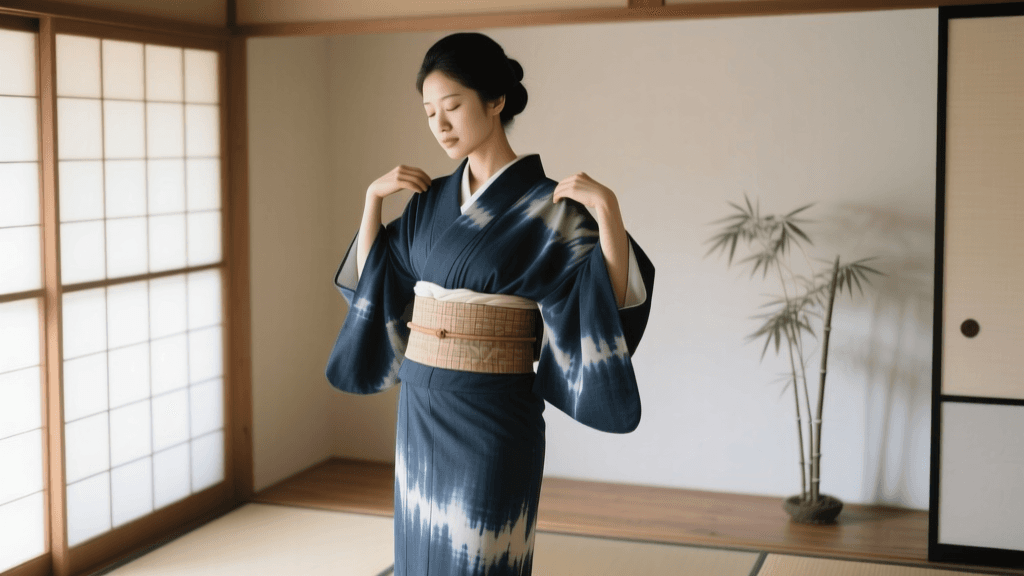
Drape the kimono over your shoulders, letting the hem fall to your ankles. Reach down and grab the edges of the collar. Pull the right side across your body first, followed by the left side over the right. This specific sequence is deeply rooted in Japanese tradition and requires a crossing of the arms and a gentle twisting of the torso, promoting physical awareness and bilateral coordination. As you smooth the fabric down your hips, visualize smoothing away mental clutter.
4. Tying the Obi: The Anchor of Breath
The obi (sash) is the anchor of the kimono and the focal point of the kitsuke meditation. Wrap the obi around your waist or hips, depending on the formality of the garment. As you pull the fabric taut, exhale fully. The gentle, even compression around the core provides deep pressure stimulation, similar to a weighted blanket, which is proven to reduce anxiety and promote a sense of physical security. Tying the final knot, or musubi, requires intense focus and fine motor control, effectively quieting the brain's default mode network and halting rumination.
Aizome (Indigo Dyeing): Sensory Wellness and Skin Health
The mindfulness of the kimono extends beyond how it is worn to how it is created. Aizome, the traditional Japanese art of natural indigo dyeing, is a cornerstone of the 2026 slow fashion movement. Unlike synthetic dyes that dominate fast fashion, natural aizome is created through a living fermentation process using the leaves of the Persicaria tinctoria plant. This process yields a dye that is not only visually stunning but inherently beneficial to human health.
Natural indigo possesses well-documented antibacterial, anti-inflammatory, and UV-blocking properties. For individuals suffering from eczema, psoriasis, or general skin sensitivities, wearing an aizome-dyed cotton kimono or yukata acts as a soothing, therapeutic second skin. Furthermore, the earthy, slightly herbal scent of authentic fermented indigo serves as an olfactory grounding tool, instantly evoking a sense of calm and connection to nature.
Comparing Textile Wellness: Synthetic vs. Natural Aizome
| Feature | Synthetic Indigo (Fast Fashion) | Natural Aizome (Traditional Fermented) |
|---|---|---|
| Skin Interaction | Can cause contact dermatitis; traps heat | Antibacterial, soothes inflammation, breathable |
| Scent Profile | Chemical, harsh, or artificially masked | Earthy, grounding, subtly herbal |
| Environmental Impact | High water pollution, microplastic shedding | Biodegradable, zero-waste, supports soil health |
| 2026 Market Sourcing | Mass-market retailers, rapid trend cycles | Specialized slow-fashion artisans, vintage markets |
| Longevity & Patina | Fades unevenly, degrades quickly | Ages beautifully, develops a rich, living patina |
Building a 2026 Slow Fashion Kimono Wardrobe
Participating in the kimono wellness movement does not require purchasing brand-new, expensive silk garments. In fact, the ethos of slow fashion heavily promotes the recycling, upcycling, and cherishing of existing textiles. The vintage kimono market in 2026 is thriving, offering accessible entry points for those looking to build a mindful wardrobe.
- Start with Vintage Cotton: Look for mid-century kasuri (ikat) or shijira (seersucker) cotton kimonos. These are highly breathable, easy to care for, and typically range from $40 to $80 USD on curated online vintage platforms.
- Embrace the Yukata for Summer: For warmer months, an unlined, aizome-dyed cotton yukata provides the perfect balance of cooling comfort and mindful dressing, without the complex layering of formal winter kitsuke.
- Invest in Reusable Accessories: Instead of buying new, mass-produced ties, source vintage koshihimo or repurpose soft, leftover silk scraps from local tailors to use as waist ties, reducing textile waste.
- Practice 'Mushiboshi' (Airing Out): Dedicate a crisp, dry weekend morning twice a year to air out your kimono collection. Hanging the garments in the shade, gently brushing the silk, and folding them with intention is a powerful seasonal mindfulness ritual that honors the life of the garment.
Expert Perspectives on Textile Therapy
The integration of traditional garments into modern wellness routines is supported by a growing body of psychological research surrounding 'enclothed cognition'—the phenomenon where the clothes we wear influence our psychological processes. When you don a kimono, you are not just putting on fabric; you are adopting a posture of grace, patience, and historical continuity. The physical restrictions of the obi and the straight seams of the kimono naturally encourage slower, more deliberate movements, forcing the wearer to decelerate their physical pace, which in turn slows down the racing mind.
As we navigate the complexities of 2026, the kimono stands as a resilient symbol of slow living. It asks us to pause, to breathe, and to appreciate the profound beauty of taking our time. Whether you are tying an obi in your bedroom or running your hands over the textured weave of a vintage aizome jacket, the kimono offers a sanctuary of mindfulness woven into every thread.