Complete Hanfu Ensembles: A Guide to Jade Hair Pins
The Anatomy of a Complete Hanfu Ensemble
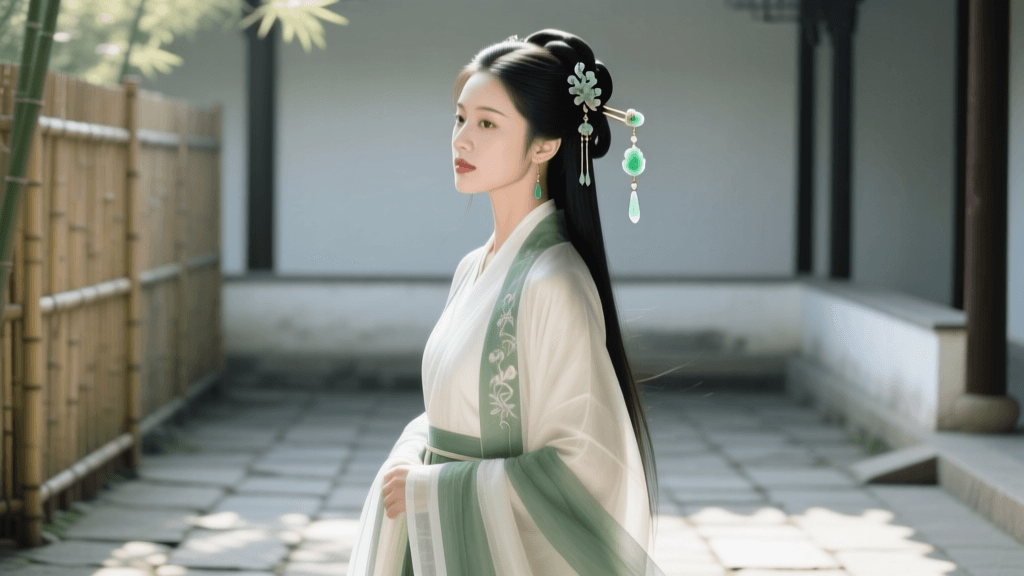
When historians, cultural revivalists, and modern enthusiasts discuss traditional Chinese clothing, the conversation often centers on the primary garments: the flowing skirts of the ruqun, the dignified wrap-robes of the shenyi, or the pleated elegance of the mamianqun. However, a truly complete hanfu ensemble extends far beyond the textiles draped over the body. In traditional Chinese aesthetics, an outfit is not considered finished until the hair is properly styled and adorned with shoushi (headwear and accessories). The crowning glory of any historical Chinese silhouette is the intricate arrangement of hair, secured and elevated by ornamental pins, combs, and crowns.
Building a complete hanfu wardrobe requires an understanding of layering and proportion. While a silk pibo (stole) or an embroidered doupeng (cloak) adds seasonal functionality and visual depth, it is the hair accessories that frame the face and signify social status, marital status, and the formality of the occasion. Among the myriad materials used in Chinese metalwork and carving—ranging from gold and silver to lacquer and enamel—jade holds an unparalleled, sacred position. Integrating jade hair accessories into your hanfu styling elevates the ensemble from a mere historical reproduction to a deeply culturally resonant practice.
The Cultural and Spiritual Weight of Jade
To understand why jade is the premier choice for traditional hair ornaments, one must look to ancient Chinese philosophy. Jade is not merely a decorative stone; it is the physical embodiment of moral integrity. According to the Liji (Book of Rites), an ancient Confucian text, a gentleman would never part with his jade ornaments without a profound reason, as the stone's qualities mirrored human virtues. Its smooth, rounded texture represented benevolence; its density and hardness symbolized wisdom; and its sharp edges, which somehow never cut, stood for justice and righteousness.
The Metropolitan Museum of Art notes that Chinese jade carving is one of the oldest continuous artistic traditions in the world, dating back to the Neolithic period. By the time of the Han and Tang dynasties, jade hairpins and combs were essential markers of nobility and refinement. Wearing jade in the hair was believed to protect the wearer from negative energy, promote longevity, and maintain a cool, clear mind—making it the perfect material for ornaments placed at the crown of the head.
Essential Jade Hair Accessories for Hanfu Styling
When sourcing accessories to complete your hanfu ensemble, it is crucial to understand the specific terminology and structural purpose of each piece. Here are the foundational jade hair ornaments every enthusiast should know:
1. Zanzi (簪子) - The Single-Pronged Hairpin
The zanzi is the most fundamental hair stick in Chinese history. Used to secure buns and anchor heavier ornaments, a standard jade zanzi measures between 14cm and 18cm in length. The shaft tapers to a smooth, rounded tip measuring roughly 2mm to 4mm in diameter to ensure it glides through thick hair without snagging or breaking individual strands. The head of the pin is often carved into auspicious motifs like lotus flowers, ruyi clouds, or bamboo. Cost: A simple, uncarved Xiuyan jade stick costs around $25–$45, while intricately carved Hetian nephrite pieces can range from $300 to over $2,000.
2. Buyao (步摇) - The Step-Sway Ornament
Translated literally as 'step-sway,' the buyao features a rigid base (often a zanzi or a multi-pronged chai) topped with delicate, dangling elements. Historically crafted from gold wire holding jade drops, pearls, and kingfisher feathers, modern hanfu interpretations often feature carved jade leaves or cabochons suspended on metal springs. The design dictates that the ornament sways gently with the wearer's footsteps, encouraging a graceful, measured gait. Because of the dangling components, buyao are usually worn on special occasions or in formal hanfu ensembles like the Tang Dynasty qixiong ruqun.
3. Shubi (梳篦) - Ornamental Combs
While originally used for grooming, by the Tang and Song dynasties, combs had evolved into prominent fashion statements inserted into the front of the hair bun. Jade shubi are typically carved into a crescent moon shape. The teeth of the comb grip the hair securely, while the wide, curved spine sits flush against the head, displaying intricate carvings of phoenixes or peonies. When styling a complete ensemble, a jade comb is often placed at the very top or front-center of the bun to draw the eye upward.
Jade Material Comparison and Buyer's Guide
Not all 'jade' is created equal. In the gemological and Chinese antiquities markets, the term jade encompasses two distinct minerals: Nephrite and Jadeite, alongside several regional stones that have been used historically. The Gemological Institute of America (GIA) provides extensive data on the physical properties of these stones, which directly impact their durability when used as hair accessories.
| Material | Mineral Type | Mohs Hardness | Historical Origin | Price Range (USD) | Best Use in Hanfu |
|---|---|---|---|---|---|
| Hetian Jade | Nephrite | 6.0 - 6.5 | Xinjiang, China | $150 - $5,000+ | Formal Guan (crowns), heirloom Zanzi |
| Xiuyan Jade | Serpentine | 2.5 - 5.5 | Liaoning, China | $20 - $100 | Everyday hair sticks, practice accessories |
| Feicui | Jadeite | 6.5 - 7.0 | Myanmar (Burma) | $200 - $10,000+ | Qing Dynasty reenactments, high-end Buyao drops |
| Dushan Jade | Epidote/Feldspar | 6.0 - 6.5 | Henan, China | $50 - $300 | Carved Shubi (combs), multi-colored ornaments |
Buyer's Tip: For beginners building their first complete hanfu ensemble, Xiuyan jade (often sold simply as 'Chinese jade') is an excellent, budget-friendly starting point. It offers the traditional translucent green aesthetic but is much softer than nephrite. Handle Xiuyan combs with care, as dropping them on a hard surface can easily chip the delicate teeth.
Step-by-Step: Styling a Traditional Half-Up Bun
Allocating 15 to 20 minutes for a secure, historically inspired hairstyle ensures the weight of your jade accessories is properly distributed, preventing headaches and hair damage. Here is how to style a classic Song Dynasty-inspired half-up bun (banfan) using a jade zanzi and a shubi comb.
- Preparation (3 mins): Start with day-old hair or apply a light texturizing spray. Traditional Chinese hairstyles rely on grip; freshly washed, silky hair will cause heavy jade pins to slip out.
- Sectioning (2 mins): Part the hair cleanly down the middle. Gather the top half of your hair (from the temples up to the crown) and secure it loosely at the nape of the neck with a clear elastic.
- Creating the Base (5 mins): Twist the gathered section tightly and wrap it into a flat coil or a small, tight bun against the back of the head. Secure it with 3-4 U-shaped hairpins (bobby pins) matched to your hair color.
- Inserting the Jade Zanzi (3 mins): Take your 15cm jade zanzi. Push the tapered tip through the right side of the bun, catching a small section of hair near the scalp for leverage, and weave it horizontally through the center of the bun, exiting on the left side. This 'locking' technique uses the hair's tension to hold the heavy stone in place without adhesives.
- Placing the Shubi Comb (2 mins): Take your crescent-shaped jade comb and insert the teeth directly into the top of the bun, angling it slightly downward so the teeth grip the elastic base. The carved spine should face forward, acting as the visual centerpiece of the ensemble.
Caring for Your Jade Hair Accessories
Jade is deeply intertwined with the concept of longevity, and with proper care, your hair accessories can become genuine family heirlooms passed down through generations. Encyclopedia Britannica highlights that while nephrite is incredibly tough due to its interlocking fibrous structure, it is still susceptible to chemical damage and extreme thermal shock.
- Avoid Ultrasonic Cleaners: Never use ultrasonic jewelry cleaners or harsh chemical solvents on carved jade hairpins. The high-frequency vibrations can fracture internal faults in the stone, and chemicals can strip the natural oils and historical waxes used to polish the jade.
- Gentle Wiping: After wearing your jade zanzi or buyao, wipe it down with a soft, lint-free microfiber cloth to remove natural hair oils, sweat, and styling products.
- Proper Storage: Store jade accessories in individual silk or velvet pouches. Jade can scratch softer gemstones, and conversely, diamonds or harder metals can scratch jade. Keep them away from direct, prolonged sunlight, which can dehydrate certain treated jades and cause them to become brittle.
- Hydration: If your Hetian or Xiuyan jade begins to look dull or 'dry' after months of storage, you can gently rub a tiny drop of natural, unscented mineral oil or baby oil into the stone with your fingers to restore its温润 (wenrun - warm and lustrous) glow.
Conclusion: The Final Touch of Tradition
A complete hanfu ensemble is a holistic expression of history, art, and personal elegance. By understanding the structural purpose of the zanzi, the kinetic beauty of the buyao, and the profound moral symbolism of jade, you do more than just dress up—you participate in a living cultural dialogue. Whether you are attending a Hanfu convention, celebrating a traditional festival, or simply enjoying a quiet moment of cultural appreciation, the cool touch of a jade hairpin anchoring your silhouette connects you to thousands of years of Asian tradition.