Styling Modern Hanbok Jeogori With Streetwear in 2026
The Renaissance of the Saenghwal Hanbok in 2026
The global fashion landscape in 2026 has fully embraced the integration of heritage garments into daily rotation, moving far beyond the realm of ceremonial wear or costume. At the forefront of this movement is the Saenghwal Hanbok (everyday hanbok), a modernized iteration of Korea’s traditional dress that prioritizes mobility, contemporary textiles, and seamless wardrobe integration. While the Hallyu wave initially introduced global audiences to the visual splendor of historical Korean dramas, today’s fashion enthusiasts are actively deconstructing these garments to build sophisticated, hybrid wardrobes.
According to Encyclopedia Britannica, the traditional hanbok is defined by its vibrant colors and simple lines without pockets, historically consisting of the jeogori (jacket) and chima (skirt) for women, or baji (pants) for men. In 2026, the structural integrity of these pieces remains, but the styling rules have been entirely rewritten. Mixing traditional Asian pieces with modern streetwear and office attire is no longer an avant-garde experiment; it is a staple of contemporary global style.
Deconstructing the Modern Jeogori for Daily Wear
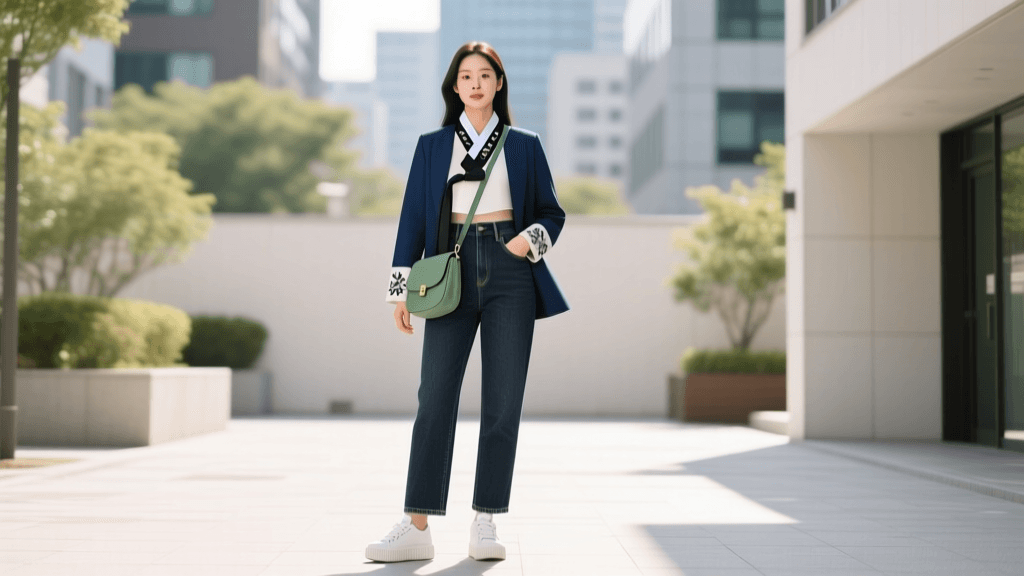
The jeogori is arguably the most versatile piece of the hanbok for modern wardrobe integration. Historically, the jeogori’s length fluctuated depending on the era and social status, but the modern 2026 iteration is predominantly cropped, designed to sit precisely at the natural waistline. This silhouette mimics the proportions of a modern bolero, cropped cardigan, or structured shrug, making it an ideal layering piece.
Fabric Innovations and Closures
Traditional hanbok relies heavily on crisp silks and ramie, which require meticulous care and restrict movement. The 2026 Saenghwal Hanbok utilizes advanced matte crepes, washable vegan silks, and structured cotton-linen blends. These fabrics offer the drape and luster of heritage textiles but withstand the rigors of urban commuting.
Furthermore, the traditional goreum (the long, flowing ribbon ties at the chest) has been reimagined. While purists still appreciate the hand-tied knot, contemporary designers frequently replace the goreum with hidden magnetic snaps, minimalist toggle buttons, or ultra-thin, detachable ribbons. This prevents the chest area from looking overly bulky when layered under modern outerwear like trench coats or oversized blazers.
Office-Ready: Tailoring and Proportions
Integrating a jeogori into a professional or smart-casual office wardrobe requires a keen understanding of proportions. The goal is to honor the garment's traditional high-waisted illusion while adhering to modern tailoring standards.
- The High-Waisted Trouser Pairing: Pair a cropped, structured cotton jeogori with high-waisted, wide-leg wool trousers. Ensure the trouser rise is at least 12 inches so the waistband meets the bottom hem of the jeogori seamlessly. This elongates the legs and maintains the traditional hanbok silhouette without the need for a traditional chima skirt.
- Layering for Climate Control: In cooler months, layer a sleek, fine-gauge merino wool turtleneck underneath the jeogori. The contrasting textures of the matte wool and the subtle sheen of the jeogori create a sophisticated, high-fashion look suitable for creative corporate environments.
- The Blazer Overlay: For a boardroom-appropriate ensemble, wear a tailored, single-breasted blazer over the jeogori. Allow the collar and the modernized, simplified goreum to peek out from the blazer’s lapels. This frames the face and introduces a subtle cultural accent to a standard Western business suit.
Streetwear Fusion: Baji Pants and Chunky Sneakers
While the jeogori dominates smart-casual styling, the baji (traditional pants) have found a permanent home in 2026 streetwear. The voluminous, relaxed silhouette of the baji perfectly aligns with the ongoing dominance of parachute pants, wide-leg denim, and oversized bottoms in global street fashion.
Modern baji are often constructed from lightweight nylon, washed denim, or heavy cotton twill. They feature a dropped crotch and tapered or elasticized ankles, historically designed to accommodate the daenim (ankle ties). In a streetwear context, the tapered ankle allows the pants to stack perfectly over chunky, mesh-runner sneakers—such as the ASICS Gel-Kayano 14 or New Balance 1906R—creating a dynamic, voluminous profile from the waist down.
To balance the volume of the baji, streetwear enthusiasts pair them with fitted, ribbed tank tops or cropped graphic tees, allowing the high waistband of the baji to take center stage. Adding a modernized, oversized jeogori as an outer layer completes the look, bridging the gap between heritage Korean design and contemporary Tokyo or Seoul street style.
The Couture Korea Influence on Modern Styling
The confidence to mix these garments in 2026 stems from years of high-fashion validation. The landmark Couture Korea exhibition, hosted by the Asian Art Museum, was pivotal in demonstrating how traditional Korean garments could be deconstructed and fused with Western fashion paradigms. By showcasing how legendary designers like Jin Teok and Karl Lagerfeld historically reinterpreted the hanbok's structural lines, the exhibition laid the cultural groundwork for today's accessible, everyday styling. Today’s consumers are not appropriating a costume; they are participating in a living, evolving textile tradition that has been actively engaging with global fashion for decades.
2026 Wardrobe Integration Guide
To help you visualize how to mix these pieces, refer to the comparison chart below detailing traditional elements versus their 2026 modern adaptations and ideal pairings.
| Garment Element | Traditional Form | 2026 Modern Adaptation | Ideal Modern Pairing |
|---|---|---|---|
| Jeogori (Top) | Silk, long flowing goreum, curved sleeves | Matte crepe, hidden magnetic closures, 14-inch shoulder seam | High-waisted wool trousers, tailored blazers |
| Chima (Skirt) | Floor-length, voluminous, tied at the chest | Midi-length, A-line cut, side-zip with elastic back panel | Fitted turtlenecks, leather moto jackets, ankle boots |
| Baji (Pants) | White ramie or cotton, tied at waist and ankles | Washed denim or nylon, elastic waist, tapered jogger cuff | Oversized graphic tees, chunky mesh-runner sneakers |
| Durumagi (Overcoat) | Heavy silk, worn for warmth and formality | Lightweight wool-blend, lapel collar, single-button closure | Dark wash denim, Chelsea boots, minimalist streetwear |
Fabric Care for Mixed Wardrobes
One of the primary barriers to mixing traditional garments with daily wear is the fear of damaging delicate textiles. Traditional hanbok requires specialized dry cleaning and careful storage to maintain its stiff, structured silhouette. However, the 2026 Saenghwal Hanbok is engineered for modern laundering, provided you follow specific care protocols.
- Washing: Always use a mesh laundry bag to protect the delicate seams and any modernized hardware (like magnetic snaps). Wash on a gentle cycle with cold water (below 30°C / 86°F) using a pH-neutral, color-safe detergent. Avoid bleach or fabric softeners, which can degrade the structural integrity of vegan silks and matte crepes.
- Drying: Never tumble dry your modern hanbok pieces. The high heat can warp the hidden interfacing that gives the jeogori its shape. Instead, reshape the garment while damp and lay it flat on a drying rack away from direct sunlight to prevent the modern synthetic dyes from fading.
- Ironing: Use a steam iron on a low-to-medium setting. Always place a cotton pressing cloth between the iron and the garment, especially when pressing the collar (git) and the sleeve cuffs (kkeutdong), to avoid creating unwanted shine on the fabric.
Conclusion: Embracing a Living Tradition
Mixing traditional Asian pieces with modern wardrobes in 2026 is a testament to the adaptability and enduring beauty of Korean textile design. By understanding the anatomy of the jeogori, respecting the volume of the baji, and utilizing contemporary fabrics and styling techniques, you can seamlessly integrate the Saenghwal Hanbok into your daily life. Whether you are pairing a cropped, matte-crepe jacket with tailored office trousers or styling voluminous denim baji with chunky streetwear sneakers, the key is to approach the garments not as historical artifacts, but as dynamic, living components of a modern global wardrobe. As always, prioritize purchasing from authentic Korean designers and heritage brands to support the artisans who continue to innovate this magnificent tradition.