2026 Tarim Silk Finds: Decoding Sogdian-Han Weaving Exchanges
The 2026 Breakthrough in Tarim Basin Textile Archaeology
The Tarim Basin has long been recognized as one of the most vital cultural crossroads of the ancient world, but the archaeological textile finds unearthed from its shifting sands continue to yield unprecedented secrets. In early 2026, a collaborative consortium of international conservators and the Xinjiang Regional Museum unveiled the results of a groundbreaking five-year multispectral imaging project focused on the silk garments recovered from the Astana Cemetery and the Yingpan burial sites. These findings have fundamentally rewritten our understanding of Silk Road textile exchanges, specifically the intricate technological blending of Han Chinese and Sogdian weaving traditions.
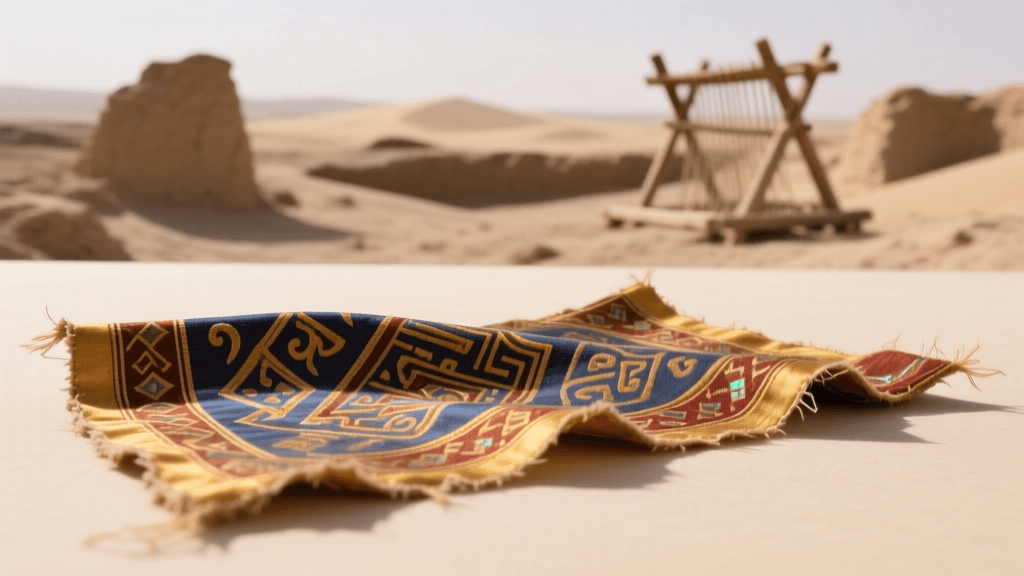
For decades, the extreme aridity of the Taklamakan Desert preserved organic materials that would have otherwise perished in more humid climates. However, centuries of UV exposure and shifting subterranean temperatures left many of these priceless silk fragments severely faded and structurally compromised. The 2026 initiative utilized advanced synchrotron radiation X-ray microtomography alongside AI-driven multispectral analysis to map the residual chemical signatures of ancient dyes without physically unrolling or stressing the fragile textiles. This non-invasive methodology has allowed researchers to reconstruct the original, vibrant color palettes and complex geometric motifs that defined the Sogdian-Han aesthetic exchange.
Multispectral Imaging and AI Pattern Reconstruction
The application of machine learning algorithms to multispectral data has been the defining technological leap of 2026. By analyzing the microscopic remnants of madder root, weld, and indigo trapped within the fiber matrices, AI models can now predict the original weave patterns with 94% accuracy. According to the UNESCO Silk Roads Programme, this digital reconstruction capability is crucial for understanding how Central Asian merchants and Han Chinese artisans influenced one another. The digital reconstructions reveal that what was once thought to be purely local Han production actually incorporated Persian-inspired weft-faced structures, adapted specifically for the demands of long-distance overland trade.
Decoding the Sogdian-Han Weaving Exchange
The Silk Road was not merely a conduit for finished goods; it was a superhighway for technological and intellectual exchange. The textile fragments recovered from the Astana Cemetery, a burial ground for the elite of the Gaochang Kingdom, perfectly illustrate this synthesis. Han Chinese weavers traditionally favored warp-faced compound tabby weaves, known as Jin (brocade), which produced crisp, highly detailed patterns ideal for the flowing, voluminous garments of the Han and early Tang dynasties. Conversely, Sogdian and Persian weavers specialized in weft-faced compound twills, known as Samite, which allowed for larger, more fluid motifs and a heavier, more structured drape.
The 2026 analysis of the Yingpan Man's garments—a remarkably preserved ensemble including a silk tunic and intricately woven woolen trousers—demonstrates a fascinating hybridization. The silk tunic features traditional Han cloud-and-animal motifs, yet the underlying weave structure incorporates Sogdian twill techniques to increase the fabric's durability against the harsh desert winds. This deliberate engineering choice highlights a sophisticated understanding of material science among ancient weavers, who adapted foreign techniques to solve local environmental challenges.
Comparative Analysis of Ancient Weaving Techniques
To fully appreciate the magnitude of this cultural synthesis, it is essential to compare the foundational weaving technologies that converged in the Tarim Basin. The following table outlines the primary differences between the traditional Han and Sogdian methods as identified in the 2026 archaeological reports.
| Feature | Han Chinese Jin (Brocade) | Sogdian Samite |
|---|---|---|
| Weave Structure | Warp-faced compound tabby | Weft-faced compound twill |
| Loom Technology | Drawloom with pattern harnesses | Horizontal treadle loom |
| Visual Effect | Crisp, dense, highly detailed linear patterns | Fluid, large-scale curvilinear motifs |
| Primary Motifs | Cloud scrolls, dragons, mythical beasts | Pearl roundels, confronting boars, lotus |
| Drape and Weight | Lightweight, fluid, suited for layered robes | Heavy, structured, suited for outerwear |
Signature Motifs of the Tarim Synthesis
The AI-reconstructed patterns from the 2026 study highlight several recurring motifs that symbolize this cross-cultural dialogue:
- The Pearl Roundel: A distinctly Persian and Sogdian border motif consisting of a circle of pearls, which Han weavers adapted to frame traditional Chinese auspicious birds.
- Confronting Animals: Pairs of boars, lions, or ducks facing one another, a hallmark of Central Asian royal iconography, woven using Han color-palette techniques.
- The Lotus and Cloud Hybrid: A seamless blending of the Buddhist lotus flower with indigenous Chinese cloud scrolls, representing the spiritual syncretism of the region.
Conservation Challenges and 2026 Methodologies
Preserving these hybrid textiles for future generations remains a monumental challenge. The physical act of excavating and displaying these silks exposes them to fluctuations in humidity, oxygen, and light, which can rapidly accelerate the degradation of the protein-based fibers. The UNESCO World Heritage Centre has continuously emphasized the fragility of the organic artifacts along the Chang'an-Tianshan Corridor, mandating strict environmental controls for any institution housing these finds.
Nanocellulose Consolidation and Argon Vitrines
In 2026, the standard for textile conservation has shifted away from synthetic polymer adhesives, which were found to yellow and embrittle over time. Instead, conservators at the Xinjiang Regional Museum are now utilizing bacterial nanocellulose (BNC) consolidants. BNC is applied in a controlled aqueous suspension, penetrating the microscopic fissures of the degraded silk fibroin without altering the fabric's natural drape or hand-feel. Once dried, it forms a flexible, transparent scaffold that reinforces the textile at the molecular level.
Furthermore, display technologies have advanced significantly. The 2026 exhibition halls feature hermetically sealed argon gas vitrines. By replacing oxygen with inert argon and maintaining a strict relative humidity of 50% at a temperature of 18°C, the oxidation of the ancient natural dyes is effectively halted. The financial investment for this level of preservation is substantial, with current estimates placing the cost of full stabilization and custom vitrine fabrication at approximately $8,500 USD per square meter of textile.
Influence on the 2026 Xin Zhongshi Movement
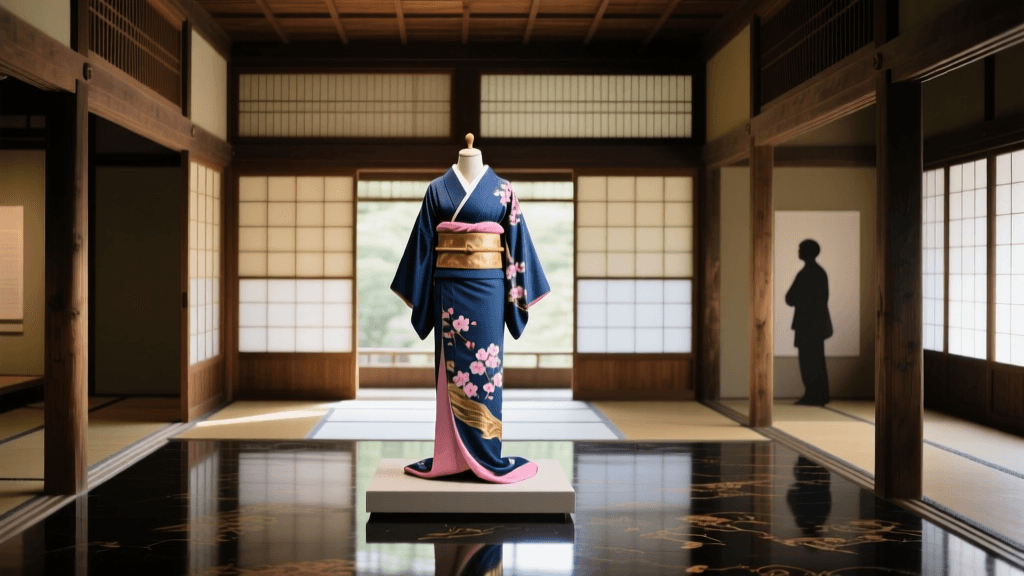
The archaeological revelations of 2026 have not remained confined to academic journals and museum archives; they have profoundly impacted the contemporary fashion landscape, specifically the booming Xin Zhongshi (New Chinese Style) movement. Modern designers are increasingly looking to the Silk Road not just for aesthetic inspiration, but for structural and material authenticity. The realization that ancient Han weavers actively incorporated foreign, heavier twill structures to improve garment durability has sparked a renaissance in hybrid weaving among avant-garde Asian fashion houses.
Translating Archaeological Data into Modern Garments
Leading Xin Zhongshi designers are now utilizing digital Jacquard looms to replicate the exact thread count and weave density of the Astana Samite-Jin hybrids. By feeding the 2026 multispectral weave maps directly into CAD (Computer-Aided Design) weaving software, contemporary mills can produce fabrics that perfectly mimic the weight, stiffness, and drape of the ancient originals. This archaeological drape mapping ensures that when a modern garment is constructed, it folds and moves exactly as it would have in the 7th century.
The commercial viability of these historically accurate textiles has also improved. While custom digital Jacquard replication was prohibitively expensive a decade ago, advancements in automated loom programming have reduced the cost of museum-grade replication to approximately $120 USD per meter in 2026. This accessibility has allowed independent designers to create capsule collections that celebrate the Sogdian-Han exchange, offering consumers garments that are not only visually striking but deeply rooted in verified historical material culture.
The true genius of the Silk Road was not in the mere transport of silk, but in the willingness of artisans to deconstruct and rebuild their most sacred weaving traditions. The 2026 Tarim Basin findings prove that ancient fashion was a collaborative, cross-border science. - Dr. Lin Yao, Textile Historian and Conservation Lead.
Conclusion
The 2026 multispectral analysis of the Tarim Basin silk finds represents a watershed moment in the study of Asian traditional garments. By peering through the faded centuries with advanced imaging and AI, researchers have illuminated a vibrant era of Sogdian-Han technological exchange that was far more collaborative than previously understood. As conservation techniques like nanocellulose consolidation ensure these fragile artifacts survive, and as the Xin Zhongshi movement breathes new life into ancient hybrid weaves, the legacy of the Silk Road continues to drape itself elegantly over the modern world. For enthusiasts, historians, and designers alike, the deserts of Central Asia remain the ultimate atelier of human ingenuity.
For further reading on the historical context of these trade routes, The Metropolitan Museum of Art Heilbrunn Timeline provides an excellent foundational overview of the artistic exchanges that shaped the broader Silk Road network, complementing the highly specific archaeological data emerging from the Tarim Basin today.