2026 Kimono Storage & Silk Preservation Master Guide
The Evolution of Kimono Preservation in 2026
As we navigate the environmental shifts and climate anomalies of 2026, preserving organic textiles has never been more challenging or more vital. For collectors, curators, and enthusiasts of vintage and antique Japanese garments, kimono storage preservation and collection management require a delicate balance between honoring traditional methods and embracing modern conservation science. Silk, the lifeblood of the kimono, is a protein fiber highly susceptible to humidity fluctuations, UV degradation, and acidic off-gassing. In this comprehensive 2026 guide, we explore the definitive protocols for safeguarding your collection, ensuring these masterpieces of Asian textile art survive for future generations.
The Science of Silk Degradation
To properly store a kimono, one must first understand the material. Silk is composed primarily of fibroin and sericin proteins. When exposed to excessive moisture, the peptide bonds within these proteins undergo hydrolysis, leading to a catastrophic loss of tensile strength known as 'silk shattering.' Conversely, excessively dry environments cause the fibers to become brittle and snap under the weight of heavy embroidery or metallic threads. Furthermore, silk is highly sensitive to alkaline substances and prolonged exposure to ultraviolet light, which causes irreversible yellowing and photochemical degradation. According to guidelines published by the Canadian Conservation Institute, maintaining a stable microclimate is the single most effective way to halt these chemical degradation pathways in historic textiles.
Essential Archival Materials for Silk Kimonos
The materials that physically touch your kimono dictate its longevity. In 2026, museum-standard archival supplies are more accessible than ever, but collectors must be wary of purchasing the wrong type of tissue paper.
Unbuffered vs. Buffered Acid-Free Tissue
Never use buffered acid-free tissue for silk. Buffered tissue contains an alkaline reserve, usually calcium carbonate, designed to neutralize acids in wood-pulp paper. However, because silk is a protein fiber, alkaline environments accelerate its degradation. You must exclusively use unbuffered, acid-free, lignin-free tissue paper for all silk garments. Use this tissue to stuff the sleeves and bodice, preventing deep, permanent creases that can lead to fiber splitting over time.
Archival Enclosures and Boxes
While traditional paulownia wood chests (tansu) are beautiful, they can off-gas volatile organic compounds (VOCs) if not properly seasoned or lined. For ultimate protection, store folded kimonos in acid-free, lignin-free archival document boxes or custom-built Tyvek sleeves. Tyvek is a flash-spun high-density polyethylene fiber that is chemically inert, waterproof, and breathable, making it the gold standard for textile wrapping in 2026.
2026 Climate Control & Smart Humidity Management
The ideal storage environment for a vintage silk kimono is a temperature of 65°F (18°C) with a relative humidity (RH) strictly maintained between 45% and 50%. Fluctuations in RH are actually more damaging than a steady, slightly suboptimal level, as the fibers constantly expand and contract, causing mechanical fatigue.
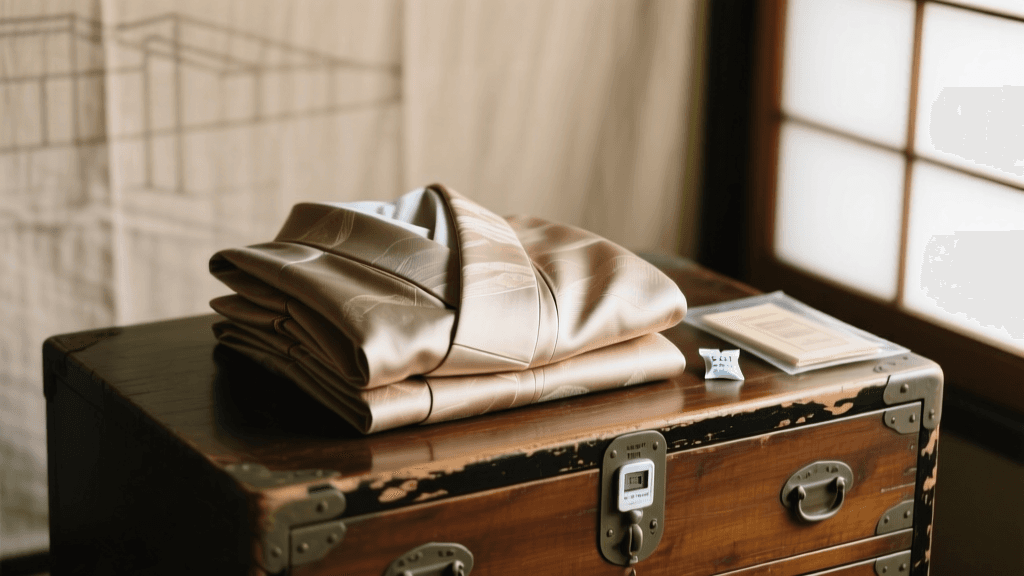
In 2026, smart home integration allows collectors to monitor these metrics with unprecedented precision. Devices like the SensorPush HX15 and the latest Govee WiFi Thermohygrometers provide real-time alerts to your smartphone if the RH deviates by more than 2%. For dedicated collection rooms, integrating these smart sensors with automated HVAC dehumidifiers and ultrasonic humidifiers ensures the microclimate remains perfectly stable, even during extreme seasonal weather events.
The Correct Folding Technique: Hondatami
Unlike Western garments that are often hung on padded hangers, kimonos are designed to be folded. Hanging a heavy, vintage silk kimono can cause irreversible distortion of the shoulders and stress on the delicate hand-stitched seams. The traditional Japanese folding method, known as Hondatami, is specifically engineered to align the seams and distribute the fabric's weight evenly.
Step-by-Step Hondatami Folding
- Step 1: Lay the kimono face down on a clean, flat surface covered with a washed cotton sheet. Smooth out any wrinkles with your hands.
- Step 2: Fold the right side of the body inward along the back center seam, ensuring the edge aligns perfectly with the left side.
- Step 3: Fold the right sleeve back over the folded body, aligning its outer edge with the center back.
- Step 4: Fold the left side of the body inward, overlapping the right side, and fold the left sleeve back in the same manner.
- Step 5: Fold the bottom hem up to meet the collar, creating a long, narrow rectangle. Pad the collar area with unbuffered tissue to prevent sharp creases.
- Step 6: Fold the rectangle in half or thirds, depending on the length of the garment and the size of your storage box. Place sheets of unbuffered tissue between every fold.
Handling and Transport Protocols
The American Institute for Conservation emphasizes that improper handling is a leading cause of textile damage. When moving or inspecting your kimonos, always wear clean, lint-free cotton or nitrile gloves. The natural oils, salts, and acids present on human skin can transfer to the silk, leaving invisible stains that oxidize and turn brown over time. Never lift a kimono by the shoulders or sleeves; instead, support the entire weight of the garment from underneath using a rigid archival board or a clean cotton sling.
Pest Prevention Without Toxic Chemicals
Webbing clothes moths and carpet beetles are the natural enemies of protein fibers. Historically, collectors relied on toxic chemical mothballs containing naphthalene or paradichlorobenzene. In 2026, these chemicals are widely recognized as hazardous to human health and can actually react with metallic threads and dyes, causing severe tarnishing and discoloration.
Modern integrated pest management (IPM) relies on non-toxic, proactive strategies:
- Pheromone Traps: Deploy sticky pheromone traps in your storage area to monitor and capture male moths, disrupting the breeding cycle.
- Natural Repellents: Use untreated cedar blocks or lavender sachets, but ensure they never directly touch the silk, as the essential oils can cause lipid stains. Wrap them in acid-free tissue.
- Freezing Protocol: For any newly acquired vintage kimono, isolate the garment in a sealed polyethylene bag and freeze it at -20°C (-4°F) for 72 hours. This safely eradicates any dormant eggs or larvae without the use of chemicals.
Comparison Table: Traditional Tansu vs. Modern Archival Storage
| Feature | Traditional Paulownia Tansu | 2026 Archival Micro-Climate Box |
|---|---|---|
| Material | Paulownia wood (naturally humid-resistant) | Acid-free corrugated board / Coroplast |
| Off-Gassing Risk | Moderate (requires airing and lining) | None (chemically inert) |
| Humidity Buffering | Excellent (wood absorbs/releases moisture) | Poor (requires external environmental control) |
| Pest Resistance | Good (tight joinery deters insects) | Excellent (when sealed with Tyvek tape) |
| Cost (2026) | $1,500 - $5,000+ | $40 - $120 per box |
The 2026 Quarterly Maintenance Schedule
Even in a perfect environment, textiles require periodic attention. The traditional Japanese practice of mushiboshi (airing out garments) remains a cornerstone of collection management. As noted by the Victoria and Albert Museum, regular inspection allows curators to catch early signs of mold, pest activity, or structural weakness before they become catastrophic.
Twice a year—ideally in the dry, crisp days of late autumn and the breezy days of early spring—remove your kimonos from their storage enclosures. Unfold them carefully and drape them over padded, clean cotton lines or breathable mesh racks in a shaded, well-ventilated room away from direct sunlight. Allow them to breathe for 24 to 48 hours. This process releases any trapped VOCs, equalizes moisture content, and gives you a vital opportunity to inspect the seams, linings, and embroidery for any signs of stress or biological activity.
Conclusion
Preserving a kimono collection in 2026 is an act of cultural stewardship. By combining the ancestral wisdom of the Hondatami folding method with cutting-edge smart climate sensors and chemically inert archival materials, collectors can halt the march of time on these delicate silk masterpieces. Whether you are housing a single family heirloom or curating a museum-grade archive, strict adherence to these preservation protocols ensures that the vibrant colors, intricate weaves, and profound history of Asian traditional garments will endure for centuries to come.