The Ultimate Guide to Hanfu Ensembles and Jade Hair Accessories
The Renaissance of the Complete Hanfu Ensemble
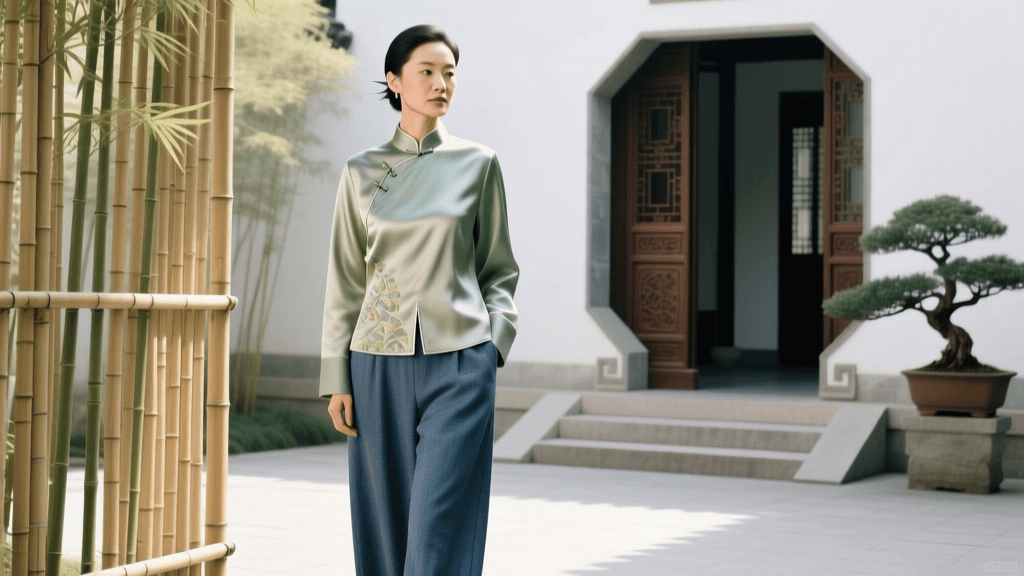
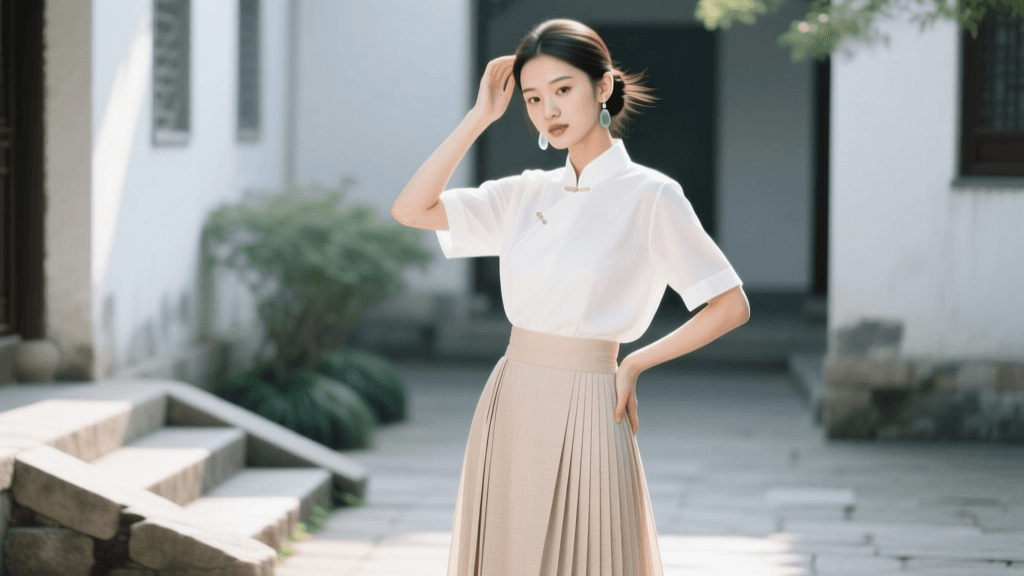
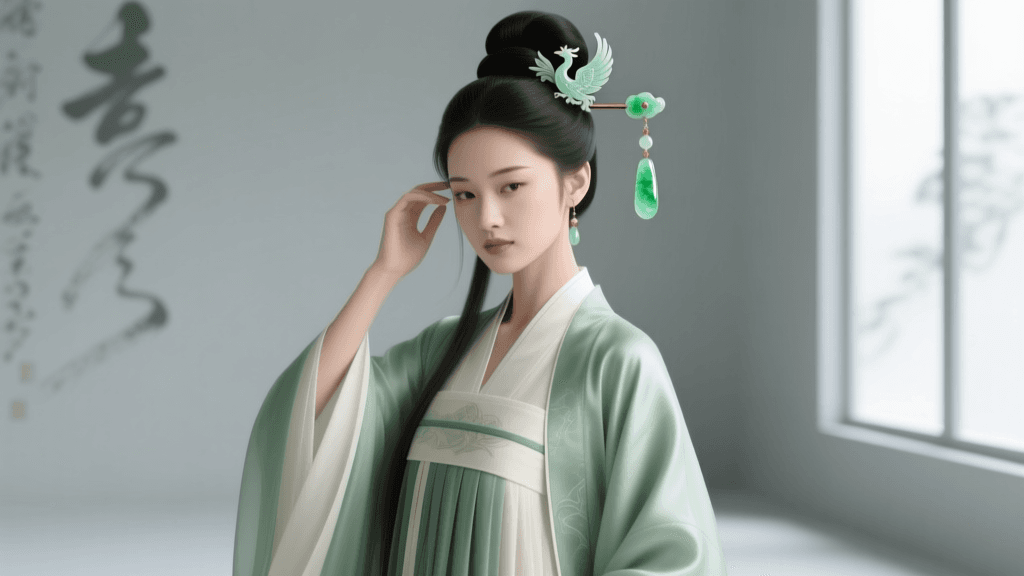
The global revival of Hanfu (traditional Han Chinese clothing) has evolved significantly over the past decade. What began as a niche interest in historical garment reconstruction has blossomed into a comprehensive lifestyle movement. Today, wearing Hanfu is not merely about donning a cross-collared robe or a pleated skirt; it is about curating a complete, historically grounded ensemble. At the very pinnacle of this aesthetic hierarchy is shoufu (headwear and hair accessories). Among the myriad materials used in traditional Chinese adornment, jade remains the undisputed sovereign. Integrating authentic jade hair accessories into your Hanfu wardrobe elevates the outfit from a simple costume to a profound expression of cultural heritage, elegance, and historical continuity.
The Spiritual and Material Weight of Jade
In Chinese culture, jade (yu) is far more than a precious stone; it is a moral compass and a spiritual shield. Confucius famously compared the qualities of jade to the virtues of a gentleman: its polish represents benevolence, its hardness represents wisdom, and its edges, which do not cut, represent justice. When styling a complete Hanfu ensemble, incorporating jade is a nod to these ancient philosophies. According to The Metropolitan Museum of Art's Heilbrunn Timeline of Art History, jade has been carved in China since the Neolithic period, initially for ritual objects and later for personal adornment, symbolizing immortality and heavenly connection. Understanding this historical weight is crucial when selecting pieces to complement your traditional garments.
Hetian vs. Xiuyan: A Buyer’s Comparison Chart
When shopping for jade hairpins, you will predominantly encounter two types of stone marketed as "Chinese Jade": Hetian Jade (Nephrite) and Xiuyan Jade (Serpentine). While both hold cultural significance, their mineral compositions, durability, and price points vary drastically. As noted by Encyclopædia Britannica's comprehensive guide on Jade, true jade is classified into two distinct minerals: nephrite and jadeite. Hetian jade is a premium nephrite, whereas Xiuyan is a softer serpentine often used as an accessible alternative.
| Feature | Hetian Jade (Nephrite) | Xiuyan Jade (Serpentine) |
|---|---|---|
| Mineral Composition | Calcium Magnesium Silicate | Magnesium Silicate |
| Mohs Hardness | 6.0 - 6.5 (Highly durable) | 2.5 - 5.5 (Prone to scratching) |
| Visual Characteristics | Greasy luster, opaque to translucent, mutton-fat white to deep spinach green | Waxy luster, highly translucent, pale yellow-green to deep green |
| Average Cost (Hairpin) | $150 - $1,500+ USD | $20 - $80 USD |
| Best Application | Heirloom Zan, intricate Buyao, formal Ming dynasty styling | Everyday Chai, beaded hair vines, casual Song dynasty styling |
Anatomy of Traditional Jade Hair Accessories
To build a functional and historically inspired hair toolkit, you must understand the structural differences between traditional hairpins. Each serves a specific mechanical purpose in securing complex Hanfu hairstyles.
1. The Zan (Single-Prong Hairpin)
The Zan is the foundational pillar of Chinese hairstyling. It is a single-pronged stick used to anchor the bulk of the hair bun. For structural integrity, a high-quality jade Zan should measure between 16cm and 18cm in length, with a shaft diameter of 0.8cm to 1.1cm. Thinner jade shafts (under 0.6cm) are highly susceptible to snapping under the tension of thick hair. When inserting a Zan, always pierce the hair at a 45-degree angle, catching the scalp-hair closest to the crown for maximum leverage.
2. The Chai (Double-Prong Hairpin)
Unlike the Zan, the Chai features two prongs, resembling a modern hair fork. It is primarily used to secure the outer layers of a hairstyle or to anchor decorative hairpieces. A standard jade Chai has a prong span of 1.2cm to 1.8cm and a total length of about 14cm. Because serpentine (Xiuyan) is easier to carve into delicate, unified shapes, it is frequently used for Chai designs featuring intertwined lotus or phoenix motifs at the base.
3. The Buyao (Step-Sway)
The Buyao is a complex, multi-component accessory featuring a rigid base (often gilded metal or carved wood) with suspended jade pendants, beads, and tassels. The defining characteristic of the Buyao is its kinetic nature; the jade droplets are meant to sway gently with the wearer's steps. For a complete Hanfu ensemble, ensure the suspended jade beads are no larger than 8mm in diameter; anything heavier will cause the hairpin to tilt and slip out of the hairstyle throughout the day.
Dynasty-Specific Styling: Ming vs. Song
A complete Hanfu ensemble requires harmony between the garment's silhouette and the chosen hair accessories. The two most popular dynasties in the modern Hanfu revival—Ming and Song—require vastly different approaches to jade styling.
Ming Dynasty Elegance: Opulence and Structure
Ming dynasty Hanfu is characterized by its structured, voluminous silhouettes, most notably the Mamianqun (horse-face skirt) and the Aoqun (cross-collared or round-collared long jackets). The aesthetic is regal, heavy, and highly ornamented. To complement a Ming ensemble, your jade accessories should be substantial. Opt for a thick, mutton-fat white Hetian jade Zan, paired with a gold-and-jade Buyao featuring intricate filigree. The hairstyles are typically elaborate buns positioned high on the head, requiring multiple structural Zans to support the weight of the jade ornaments and the dense hair.
Song Dynasty Minimalism: Slender and Understated
In stark contrast, Song dynasty fashion champions intellectual minimalism, slender silhouettes, and muted, earthy tones. The quintessential Song garment is the Beizi, a parallel-collared, open-front jacket worn over a camisole and skirt. The hair accessories for a Song ensemble should reflect this quiet elegance. Choose slender, unadorned Xiuyan jade hairpins in pale celadon greens. A simple, low-swept bun secured with a single, elegantly carved jade Chai and a minimalist jade bead tassel perfectly captures the refined, scholarly spirit of the Song era.
Practical Sourcing, Budgeting, and Authenticity
Building a collection of jade Hanfu accessories requires a discerning eye and a strategic budget. The market is flooded with glass, resin, and dyed quartz masquerading as jade. When sourcing authentic pieces, keep the following actionable tips in mind:
- The Temperature Test: Genuine nephrite and serpentine have high thermal inertia. When held against the cheek or inner wrist, real jade will feel distinctly cold and take several seconds to warm to your body temperature. Glass and resin will warm almost instantly.
- Visual Inspection: Look for internal structures. Real Hetian jade often contains subtle, cloud-like fibrous inclusions (often described as "mutton fat"). If the stone is perfectly flawless, highly transparent, and contains perfectly spherical air bubbles, it is almost certainly glass.
- Budget Allocation: If you are building your first complete Hanfu ensemble, allocate your budget wisely. Invest in one high-quality Hetian jade Zan ($150–$300) as your primary structural anchor, and supplement your styling with more affordable, historically accurate Xiuyan or agate decorative pieces ($30–$60).
- Hardware Check: Ensure the metal components connecting the jade to the hairpin shaft are made of brass, copper, or sterling silver, rather than cheap zinc alloys that will tarnish and stain your hair and garments.
Conclusion
Mastering the art of the complete Hanfu ensemble is a journey through history, material culture, and personal expression. By understanding the mineralogical differences between Hetian and Xiuyan jade, respecting the structural mechanics of the Zan, Chai, and Buyao, and aligning your accessories with the specific aesthetic of your chosen dynasty, you transform your wardrobe into a living museum. Jade is not merely an accessory; it is the enduring soul of traditional Chinese adornment, waiting to be woven into your modern revival.