Children's Kimono and Coming-of-Age Milestones in Japan
The Significance of Milestone Kimonos in Japan
In Japan, the transition from childhood to adulthood is not marked by a single event, but rather by a series of deeply significant rites of passage. These milestones are intrinsically tied to the traditional garment, serving as visual markers of growth, community belonging, and spiritual protection. From the tender age of three to the cusp of adulthood, the kimono acts as a canvas for cultural heritage and familial hope. According to cultural archives maintained by the Agency for Cultural Affairs, Government of Japan, these sartorial traditions are considered vital intangible cultural properties that connect modern Japanese youth to their Edo-period ancestors. For parents and young adults navigating these ceremonies, understanding the specific garments, measurements, and etiquette is essential for a seamless and respectful experience.
Shichi-Go-San: Celebrating Childhood Milestones
Shichi-Go-San, which literally translates to 'Seven-Five-Three,' is a traditional rite of passage held annually on November 15th to celebrate the growth and well-being of young children. The tradition originated during the Edo period (1603–1867) when infant mortality rates were high, and children were not considered fully 'human' or registered in official family ledgers until they reached certain ages. Families visit Shinto shrines to express gratitude to the ujigami (local guardian deities) for their children's survival and to pray for future health.
Age Three: The First Hair and the Hifu
At age three, both boys and girls traditionally participate in the kamioki (hair-leaving) ceremony, marking the time when infants, who historically had their heads shaved, were allowed to grow their hair. For modern three-year-old girls, the focal point of this milestone is the hifu. The hifu is a padded, sleeveless silk vest worn over a standard child's kimono. It is designed to be soft, forgiving, and easy for a toddler to wear, eliminating the need for a tightly bound obi (sash). Actionable tip for parents: When renting a hifu ensemble, ensure the accompanying zori (sandals) have soft, fabric straps to prevent blisters on a toddler's sensitive skin.
Age Five: The First Hakama
At age five, boys celebrate the chakuko (first wearing of hakama) ceremony. The boy wears a formal kimono, often adorned with the family crest (kamon), layered beneath a stiff, pleated hakama and a short jacket called a haori. The hakama represents the transition into boyhood and the assumption of early social responsibilities. The ensemble is completed with white tabi socks and formal zori. Because five-year-old boys are highly active, parents should use traditional hakama clips or safety pins hidden beneath the haori to keep the pleats intact during shrine visits.
Age Seven: The First Obi
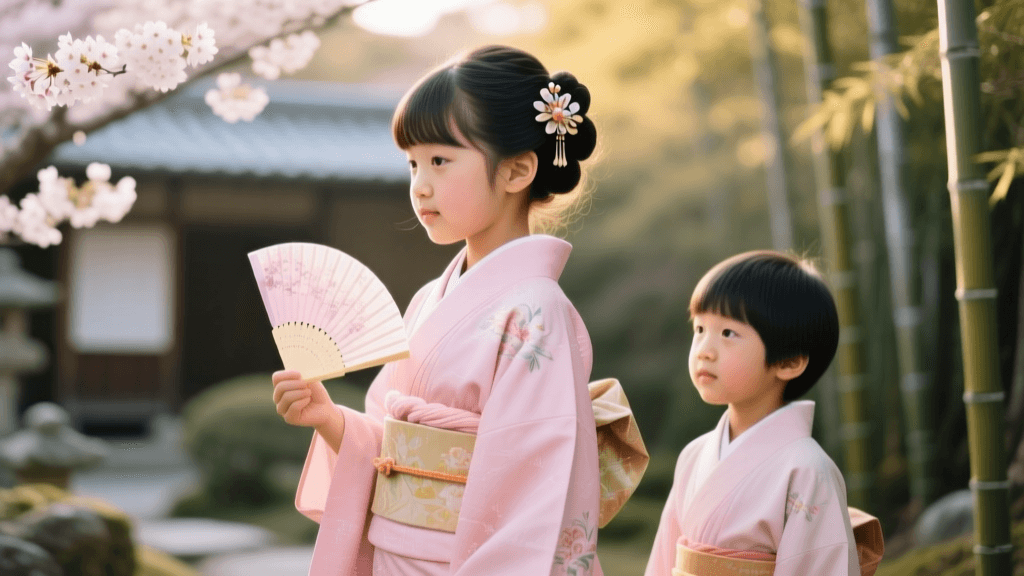
At age seven, girls undergo the obitoki (obi-tying) ceremony. This marks the transition from wearing simple, cord-like sashes to wearing a formal, woven obi similar to that of an adult woman. The seven-year-old's kimono features vibrant, auspicious motifs such as cranes, cherry blossoms, or traditional toys. The dressing process (kitsuke) for a seven-year-old is complex and often requires a professional dresser, as the obi must be tied in a decorative knot, such as the fukura-suzume (plump sparrow) or a simplified otaiko drum knot.
The Mechanics of Children’s Kimono: Tucks and Adjustments
Unlike adult kimonos, which are tailored to precise measurements, children's kimonos are designed to grow with the child through a system of strategic tucks. This is highly practical for families purchasing vintage kimonos or using hand-me-downs. The two primary adjustments are:
- Kataage (Shoulder Tucks): Fabric is folded and stitched horizontally across the shoulders to shorten the sleeve drop and bodice length. As the child grows, the stitches are released to add length.
- Koshiage (Waist Tucks): A deep horizontal fold is taken at the waist to adjust the overall length of the kimono, ensuring the hem falls perfectly at the child's ankles.
When purchasing a child's kimono, always measure the child from the base of the neck, over the shoulder, down to the ankle. Subtract this from the kimono's full back-length (mitake) to determine exactly how deep the koshiage tuck needs to be.
Seijin-shiki: The Coming-of-Age Furisode
Seijin-shiki (Coming-of-Age Day) is held on the second Monday of January to welcome young adults into society. Historically celebrated at age 20, this milestone has recently undergone significant shifts. As highlighted by societal reports on Nippon.com, Japan's Civil Code was revised in April 2022, lowering the legal age of adulthood from 20 to 18. However, because 18-year-olds are typically consumed by rigorous university entrance examinations, many municipalities and families still opt to hold the ceremony and wear the traditional garments at age 20, or alternatively, schedule local ceremonies during the summer months when students have a break.
Anatomy of the Furisode
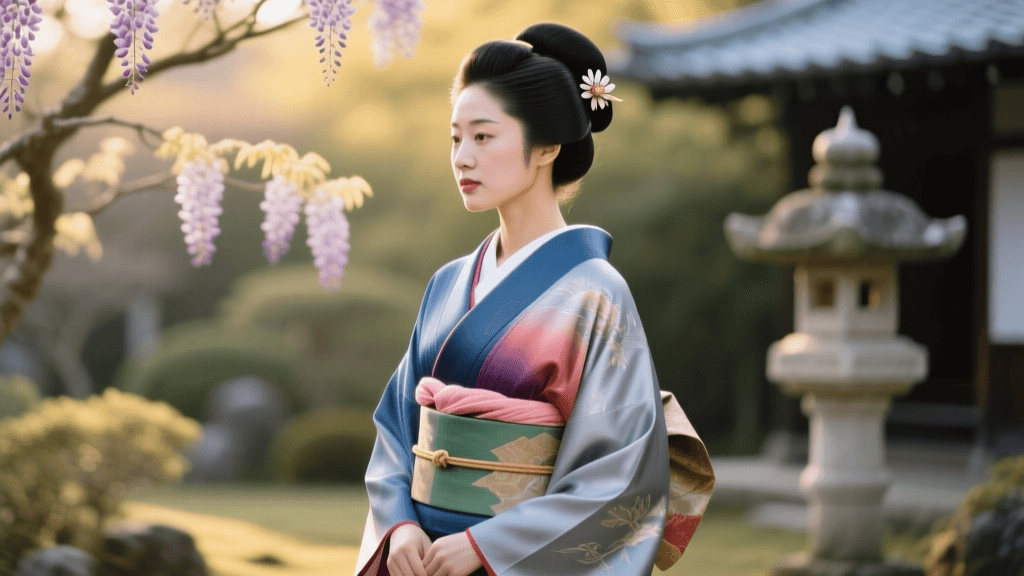
The undisputed star of Seijin-shiki is the furisode, a formal kimono characterized by its long, swinging sleeves. In Japanese folklore, the act of swinging the long sleeves was believed to ward off evil spirits and attract good fortune and suitors. Furisode sleeves come in three standard lengths:
- Oburisode (Large Furisode): Sleeves measuring approximately 114 cm. This is the most formal and dramatic option, often seen on brides or those seeking a highly traditional, opulent look.
- Chuburisode (Medium Furisode): Sleeves measuring around 100 cm. This is the most popular and versatile choice for Coming-of-Age ceremonies.
- Koburisode (Small Furisode): Sleeves measuring about 85 cm. A slightly more subdued and modern option, offering greater ease of movement.
When selecting a furisode, young women often look for motifs that reflect their personal aspirations. The shochikubai (pine, bamboo, and plum) motif is a classic choice representing resilience and prosperity, while modern artisans increasingly incorporate geometric patterns and Western floral motifs.
Cost, Timing, and Planning Guide
Planning for these milestone events requires significant foresight, particularly for Seijin-shiki, where premium garments are booked up to a year in advance. Below is a comprehensive comparison chart detailing the financial and logistical requirements for these traditions, based on data aggregated by the Japan National Tourism Organization and domestic industry standards.
| Milestone | Target Age | Primary Garment | Avg. Rental Cost (JPY) | Avg. Purchase Cost (JPY) | Booking Lead Time |
|---|---|---|---|---|---|
| Shichi-Go-San | 3 | Hifu / Kimono | ¥10,000 - ¥15,000 | ¥30,000 - ¥50,000 | 2 - 3 Months |
| Shichi-Go-San | 5 | Hakama / Haori | ¥12,000 - ¥18,000 | ¥40,000 - ¥70,000 | 2 - 3 Months |
| Shichi-Go-San | 7 | Full Kimono / Obi | ¥15,000 - ¥25,000 | ¥50,000 - ¥100,000 | 2 - 3 Months |
| Seijin-shiki | 20 (Trad.) | Furisode | ¥50,000 - ¥150,000 | ¥300,000 - ¥1,000,000+ | 6 - 12 Months |
Practical Advice for Kimono Rental and Purchase
For most families, renting is the most practical and cost-effective route, especially for children who will quickly outgrow their garments. When visiting a rental studio, look for 'all-inclusive' packages. A standard Seijin-shiki package should include the furisode, nagajuban (undergarment), obi, obijime (decorative cord), zori, bag, tabi socks, professional dressing (kitsuke), hair styling, and makeup.
Crucial Contract Tips: Always read the fine print regarding damage and staining. Reputable shops will include a basic 'stain insurance' fee that covers minor spills from food or makeup. However, tears or burns (from hair styling tools) will incur heavy penalties. Furthermore, ensure the shop provides a 'return the next day' option for January ceremonies, as rushing to undress and return the kimono on the same evening can be exhausting and stressful.
Etiquette and Shrine Visits
When visiting the shrine for Shichi-Go-San, families participate in a purification ritual and receive a blessing from the Shinto priest. It is customary to offer hatsuhoryo (prayer money) in a special envelope called a shugibukuro, typically ranging from ¥5,000 to ¥10,000. In return, children are gifted chitose-ame (thousand-year candy), long red and white sticks of taffy packaged in ornate bags featuring cranes and turtles, symbolizing longevity and good health. For young women attending Seijin-shiki, etiquette dictates maintaining modest posture, keeping the knees together when sitting, and using a specialized handkerchief to protect the silk collar from makeup and oils when eating or drinking.
Conclusion
The traditions of Shichi-Go-San and Seijin-shiki are far more than mere photo opportunities; they are profound cultural anchors. The meticulous layering of a child's hifu, the structured pleats of a boy's hakama, and the sweeping elegance of a young woman's furisode all tell a story of resilience, community, and the passage of time. By understanding the history, mechanics, and modern logistics of these garments, participants can honor the past while stepping confidently into their future.