Hanfu Tourism: Styling for Xi'an and Viral Social Media Content
The Cultural Revival Meets Digital Storytelling
The intersection of traditional Chinese clothing and modern digital content creation has birthed a phenomenal travel trend known as Hanfu tourism. Nowhere is this more evident than in Xi'an, the ancient capital of the Tang Dynasty. What began as a niche hobby has evolved into a massive cultural and economic force. According to historical analyses of the Hanfu movement, the revival is deeply intertwined with a growing sense of cultural confidence among younger generations, who now view these garments not as costumes, but as living heritage. For content creators and travelers alike, Xi'an offers a cinematic backdrop that transforms a simple vacation into a viral social media portfolio. This guide will walk you through the practicalities of garment selection, the economics of local rentals, and the photographic techniques required to capture breathtaking, algorithm-friendly content.
Selecting Camera-Ready Hanfu: Fabrics and Silhouettes
When shooting for platforms like Douyin, Xiaohongshu, or Instagram, the way fabric interacts with light and wind is paramount. While 100% mulberry silk is historically luxurious, it wrinkles easily during travel and can look flat on camera under harsh midday sun. Instead, opt for polyester-blend jacquards or high-density chiffon. These materials hold their structure, resist wrinkling, and catch the wind beautifully for dynamic slow-motion shots.
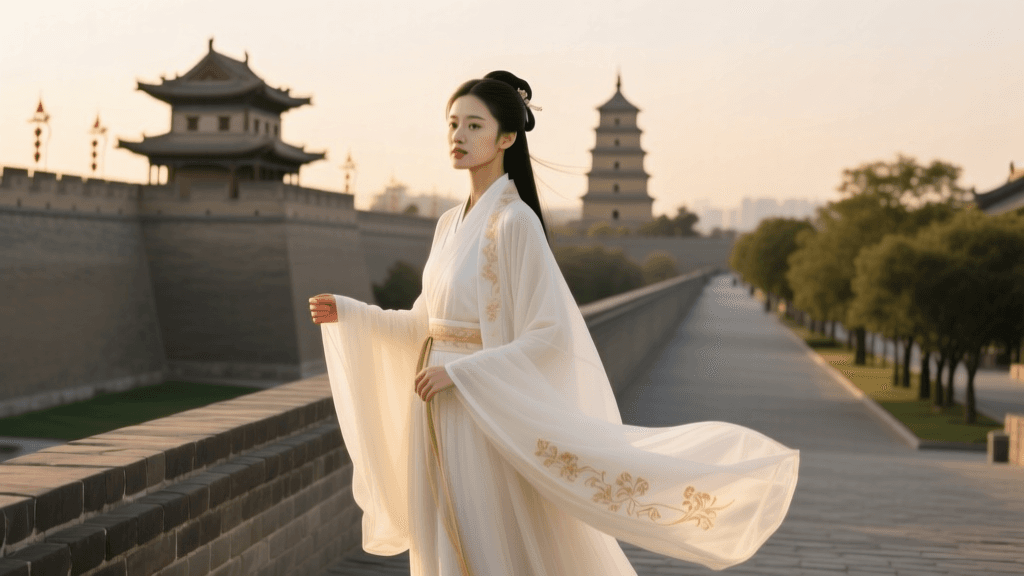
For Xi'an, the definitive silhouette is the Tang Dynasty Ruqun, specifically the Qixiong (chest-high) variant. This style features a high-waisted skirt tied above the bust, paired with a sheer, wide-sleeved drape called a Pibo. The voluminous sleeves are essential for the 'sleeve toss' posing technique, while the high waist elongates the legs on camera. When selecting colors, jewel tones like pomegranate red, emerald green, and saffron yellow contrast stunningly against Xi'an's grey city walls and warm wooden architecture.
The Economics of Hanfu Travel: Renting vs. Packing
One of the most common dilemmas for Hanfu tourists is whether to pack their own garments or rent locally. Xi'an's tourism infrastructure has adapted brilliantly to this demand, with hundreds of 'Zaoxing' (styling) studios clustered near the Bell Tower and the South Gate. Below is a comparison to help you decide based on your travel style and budget.
| Factor | Bringing Your Own Hanfu | Renting at a Xi'an Studio |
|---|---|---|
| Cost (Approx.) | High initial ($80 - $300+ per set) | Low daily ($25 - $85 / 150 - 598 RMB) |
| Makeup & Hair | DIY or hire separate artist ($100+) | Usually included in premium packages |
| Convenience | Low (steaming, packing, carrying) | High (walk in, get styled, walk out) |
| Authenticity | High (access to niche, accurate brands) | Variable (often theatrical or fantasy-style) |
| Time Required | 45-60 mins for self-styling | 1.5 - 2 hours for professional studio styling |
Pro Tip: If you choose to rent, look for studios that advertise 'Ming Dynasty' or 'Tang Dynasty' specific historical accuracy rather than generic 'ancient costume' (Guzhuang). Expect to pay around 398 RMB ($55 USD) for a premium package that includes a high-quality garment, intricate historical makeup, hair extensions, and a set of props.
Top Cinematic Locations in Xi'an for Viral Content
Location scouting is half the battle in social media photography. Xi'an offers diverse architectural styles that cater to different aesthetic moods.
- Datang Everbright City: This sprawling pedestrian complex is the undisputed king of night photography. As explored in the Metropolitan Museum of Art's landmark exhibition on Chinese aesthetics and cinematic influence, the integration of traditional motifs with modern lighting creates a surreal, dreamlike atmosphere. Shoot here during the 'blue hour' (just after sunset) to capture the neon lanterns glowing against the twilight sky. Focus on the stone bridges and the central plaza for wide, symmetrical shots.
- Xi'an City Wall: Best visited during the golden hour (16:30 - 18:00). Rent a bicycle and have your photographer shoot from a low angle on the ramparts. The ancient watchtowers and hanging red lanterns provide a gritty, historical contrast to the flowing elegance of the Hanfu.
- Daci'en Temple (Wild Goose Pagoda): For a more serene, monastic aesthetic, visit the temple grounds in the early morning to avoid crowds. The red walls and bamboo groves offer perfect framing for close-up portrait shots utilizing negative space.
Mastering the Douyin Aesthetic: Gear, Posing, and Timing
To achieve the viral 'Douyin look', you need to move beyond static posing and embrace dynamic, video-first storytelling. The algorithm favors high-retention, visually striking movement.
Essential Gear
Leave the heavy tripods behind. A motorized smartphone gimbal (like the DJI Osmo Mobile) or a mirrorless camera with a 35mm or 50mm prime lens is ideal. The 35mm lens allows you to capture the grand architecture while keeping the subject sharp, while the 50mm provides beautiful bokeh for intimate, emotional portraits.
Signature Poses and Movements
- The Sleeve Toss: Shoot at 60fps or 120fps. Flick your wrists outward and upward, allowing the Pibo and wide sleeves to billow. Slow the footage down in post-production for a graceful, ethereal effect.
- The Over-the-Shoulder Glance: Walk slowly away from the camera, then pause and look back over your shoulder. This creates a sense of narrative and longing, highly favored in historical drama edits.
- Prop Interaction: Use a round silk fan to partially obscure your face, or hold an oil-paper umbrella to frame your silhouette against the sky.
Zaoxing: The Art of Historical Hair and Makeup
A beautiful Hanfu will look entirely out of place if paired with modern, messy hair. 'Zaoxing' (styling) is a critical component of the Hanfu tourism experience. Tang Dynasty makeup is characterized by its bold, expressive nature. Key elements include the Huadian (a floral or geometric decal applied to the center of the forehead) and sweeping, elongated eyeliner that mimics the shape of a phoenix eye.
Hair is typically styled into elaborate updos utilizing padded hairpieces to create volume, adorned with Buyao (step-shake hairpins) that sway delicately with every movement. When booking a studio, explicitly request 'historical Tang styling' to avoid the generic, plastic-heavy fantasy styles that are common in cheaper tourist traps. Authentic metal and enamel hairpins catch the light beautifully on camera and elevate the overall production value of your content.
Conclusion: Respecting the Culture While Creating
As Hanfu tourism continues to boom in destinations like the magnificent Datang Everbright City and beyond, it is vital to approach the tradition with respect. Understanding the historical context of the garments you wear, adhering to modesty guidelines inherent in traditional styling, and supporting local artisans and accurate rental studios ensures that this digital renaissance remains a positive force for cultural preservation. By blending meticulous preparation with modern cinematic techniques, your social media content will not only go viral but will also serve as a beautiful, respectful homage to China's sartorial heritage.