Ainu Attush and Ryukyuan Ryusou: Japan's Indigenous Dress
Beyond the Kimono: Japan's Indigenous and Minority Textiles
When the world envisions traditional Japanese clothing, the image that almost universally comes to mind is the Yamato kimono. However, the Japanese archipelago is home to a rich tapestry of indigenous and ethnic minority cultures, each with distinct sartorial heritages shaped by their unique environments, spiritual beliefs, and historical trade networks. Far from the silk-weaving centers of Kyoto and Nishijin, the indigenous Ainu people of Hokkaido and the Ryukyuan people of Okinawa developed extraordinary textile traditions that stand in stark contrast to mainland Japanese fashion. Exploring these garments is not merely an exercise in fashion history; it is a vital step toward understanding the diverse cultural mosaic of Japan.
This guide delves deep into two of Japan's most remarkable indigenous textile traditions: the Ainu's sacred elm-bark cloth, known as Attush, and the subtropical elegance of the Ryukyuan Ryusou. We will explore the meticulous craftsmanship behind these garments, their profound cultural significance, and provide actionable advice for collectors, travelers, and textile enthusiasts seeking to source and care for these authentic pieces today.
Ainu Attush: The Sacred Elm Bark Cloth of Hokkaido
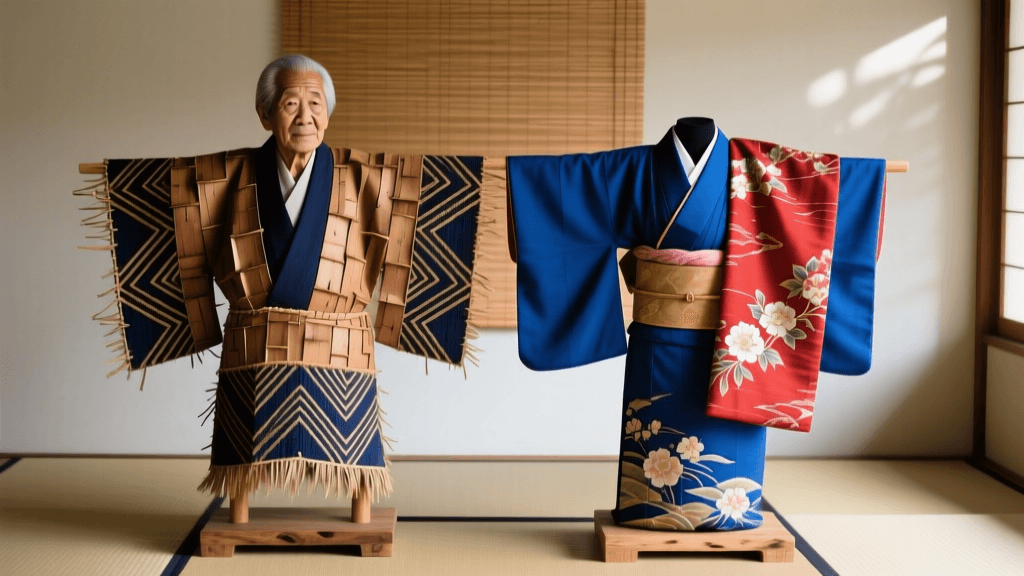
The Ainu, the indigenous people of Hokkaido, Sakhalin, and the Kuril Islands, developed a material culture deeply intertwined with the harsh, beautiful landscapes of northern Japan. Their most iconic everyday garment is the Attush, a robust, breathable robe woven entirely from the inner bark of the Siberian elm tree, known in the Ainu language as ohyo. Unlike the mainstream kimono, which relies on cultivated silk, hemp, or cotton, the Attush is a direct product of the forest, embodying the Ainu belief that all natural elements possess a spirit, or Kamuy.
The Meticulous Process of Attush Weaving
The creation of an Attush robe is a labor-intensive process that begins in the spring or early summer when the sap is running, making the bark easier to peel. Artisans carefully harvest branches of the ohyo tree, ensuring not to kill the plant, in accordance with Ainu ecological reverence. The outer bark is stripped away, and the precious inner bark is soaked in hot springs or stagnant river water for several days to soften the fibers. Once pliable, the fibers are peeled into thin strips, dried, and split into fine threads by hand. According to the Upopoy National Ainu Museum and Park, the weaving is traditionally done on a backstrap loom called an emush, allowing the weaver to control the tension of the warp threads with their own body weight. A single, full-length Attush robe can take several weeks of continuous labor to complete.
Spiritual Motifs and Ceremonial Appliqué
While plain Attush was used for daily labor and hunting, ceremonial garments were heavily decorated with cotton appliqué and embroidery, a technique known as shinbare. The Ainu traditionally acquired cotton through trade with the Japanese mainland or via the Santan trade routes with mainland Asia. The appliqué patterns are not merely decorative; they serve a profound spiritual purpose. Intricate spirals, thorn-like motifs, and eye-shaped patterns are strategically placed around the collar, cuffs, and hem. These openings are considered vulnerable points where malevolent spirits could enter the body, and the thorny, maze-like patterns act as spiritual brambles to trap or ward off evil.
Ryukyuan Ryusou: Subtropical Elegance and Bashofu Weaving
Thousands of miles south of Hokkaido, the Ryukyu Islands (modern-day Okinawa) boast a completely different climate and cultural history. The Ryukyu Kingdom was a prosperous maritime trading hub connecting Japan, China, and Southeast Asia. This cosmopolitan history is vividly reflected in the Ryusou, the traditional dress of the Ryukyuan people. Designed to cope with high humidity and intense subtropical sun, the Ryusou is characterized by its lightweight fabrics, vibrant dyeing techniques, and relaxed, flowing silhouettes.
Bashofu: The Miracle of Banana Fiber
While the Ryukyuan royalty and nobility imported fine silks and satins from China for their court dress, the indigenous commoners and rural artisans mastered the art of Bashofu, a remarkably fine cloth woven from the fibers of the itobasho (Japanese fiber banana) plant. The process of creating Bashofu is astonishingly complex. The banana trees are harvested, boiled in wood ash, and the fibers are painstakingly extracted, scraped, and tied together by hand to create continuous threads. The resulting fabric is incredibly lightweight, crisp, and breathable, making it the ultimate luxury textile for hot, humid climates. The meticulous process of creating this fiber is so culturally vital that it was inscribed on the UNESCO Representative List of the Intangible Cultural Heritage of Humanity.
Bingata: The Colors of the Subtropics
The most visually striking element of Ryukyuan dress is Bingata, a traditional stencil-resist dyeing technique that produces explosive, vibrant patterns inspired by Okinawa's flora, fauna, and oceanic landscapes. Using stencils carved from thick paper treated with persimmon juice, artisans apply a rice-paste resist to the fabric before painting on natural dyes derived from native plants, such as the deep reds from madder root and the brilliant yellows from the bark of the fukugi tree. Historically, the color yellow was strictly reserved for the Ryukyuan royal family, while commoners wore indigo or muted tones. Today, a Bingata-dyed Ryusou is a masterpiece of color and movement, often worn during the energetic Eisa drum dances of the Obon festival.
Comparative Analysis: Attush, Ryusou, and Mainstream Kimono
To truly appreciate the distinct nature of Japan's indigenous garments, it is helpful to compare them directly with the mainstream Yamato kimono. The table below outlines the primary differences in materials, construction, and cultural adaptation.
| Feature | Ainu Attush | Ryukyuan Ryusou | Yamato Kimono |
|---|---|---|---|
| Primary Fiber | Siberian Elm inner bark (Ohyo) | Banana fiber (Bashofu), Ramie, Silk | Silk, Hemp, Cotton, Polyester |
| Climate Adaptation | Subarctic: Insulating, wind-resistant, durable | Subtropical: Highly breathable, moisture-wicking | Temperate: Layered for seasonal shifts |
| Decoration | Cotton appliqué, embroidery (spiritual motifs) | Bingata stencil resist-dyeing, kasuri weaving | Yuzen dyeing, brocade, embroidery |
| Silhouette & Fit | Straight cut, no rigid folds, tied with simple sash | Soft drape, wide sleeves, tied at front/side | Highly structured, straight-line, Ohashori fold |
| Cultural Hub | Hokkaido (Nibutani, Shiraoi) | Okinawa (Shuri, Kijoka, Yomitan) | Kyoto, Nishijin, Tokyo |
Actionable Guide: Sourcing, Pricing, and Styling Indigenous Garments
For collectors, fashion historians, and travelers looking to acquire authentic indigenous Japanese textiles, knowing where to go, what to expect regarding pricing, and how to care for these unique fibers is essential.
Sourcing Authentic Ainu Attush
Where to Buy: The best place to source authentic Ainu crafts is the town of Biratori in Hokkaido, specifically the Nibutani district, which is famous for its high concentration of Ainu artisans. Additionally, the Japan National Tourism Organization highly recommends visiting the Upopoy National Ainu Museum and Park in Shiraoi for verified, ethically sourced crafts. Avoid generic souvenir shops in Sapporo that sell mass-produced, synthetic imitations.
Pricing Guide:
- Small Accessories (Coin purses, coasters): ¥2,000 – ¥5,000 ($15 – $35 USD)
- Woven Sashes (Obi-style belts): ¥15,000 – ¥40,000 ($100 – $270 USD)
- Authentic Vintage Attush Robes: ¥150,000 – ¥500,000+ ($1,000 – $3,300+ USD). Genuine vintage robes with intricate appliqué are rare museum-grade pieces.
Care Instructions: Elm bark fiber is highly susceptible to mold in humid environments and can become brittle if exposed to prolonged, direct sunlight. Store Attush garments flat in a cool, dry place, ideally wrapped in acid-free tissue paper and placed in a cedar box to deter insects. Never machine wash or iron an Attush robe; spot clean only with a barely damp cloth.
Sourcing Authentic Ryukyuan Ryusou and Bashofu
Where to Buy: For authentic Bashofu, travel to Ogimi Village in northern Okinawa to visit the Kijoka no Bashofu Hall, where you can watch master weavers at work and purchase directly from the cooperative. For Bingata textiles and full Ryusou ensembles, visit Shuri Ryusen near the ruins of Shuri Castle, or the Chinen Bingata studio in Yomitan Village.
Pricing Guide:
- Bashofu Table Runners / Scarves: ¥10,000 – ¥30,000 ($70 – $200 USD)
- Bingata Silk Obi / Sashes: ¥50,000 – ¥150,000 ($330 – $1,000 USD)
- Full Custom Bashofu or Silk Ryusou: ¥300,000 – ¥1,000,000+ ($2,000 – $6,600+ USD). Custom tailoring and natural dyeing require months of lead time.
Styling and Care: The Ryusou is designed to be worn loosely, allowing air to circulate against the skin. Unlike the kimono, which requires complex padding to achieve a cylindrical shape, the Ryusou embraces the natural drape of the fabric. Bashofu can be gently hand-washed in cool water using a mild, pH-neutral detergent. Do not wring the fabric; instead, roll it in a clean towel to absorb excess moisture and dry it in the shade. The crisp texture of Bashofu actually improves and softens beautifully with years of wear and careful washing.
Preservation and Contemporary Relevance
Both the Ainu and Ryukyuan textile traditions faced severe threats of extinction during the 19th and 20th centuries due to forced assimilation policies, modernization, and the devastating impacts of World War II on Okinawa. However, today, there is a powerful resurgence of indigenous pride. Young Ainu and Ryukyuan designers are incorporating Attush weaving and Bingata dyeing into contemporary streetwear, accessories, and high fashion, ensuring that these techniques are not relegated to museum vitrines but remain living, breathing art forms.
By choosing to invest in authentic, ethically sourced indigenous garments, collectors and enthusiasts do more than acquire a beautiful piece of clothing. They directly support the economic independence of indigenous artisans, fund the preservation of endangered ecological knowledge, and help weave the true, diverse story of Japan's cultural heritage into the global consciousness.