Guide to China's Top Hanfu Museums and Textile Exhibitions
The Institutional Preservation of Hanfu and Textile Heritage
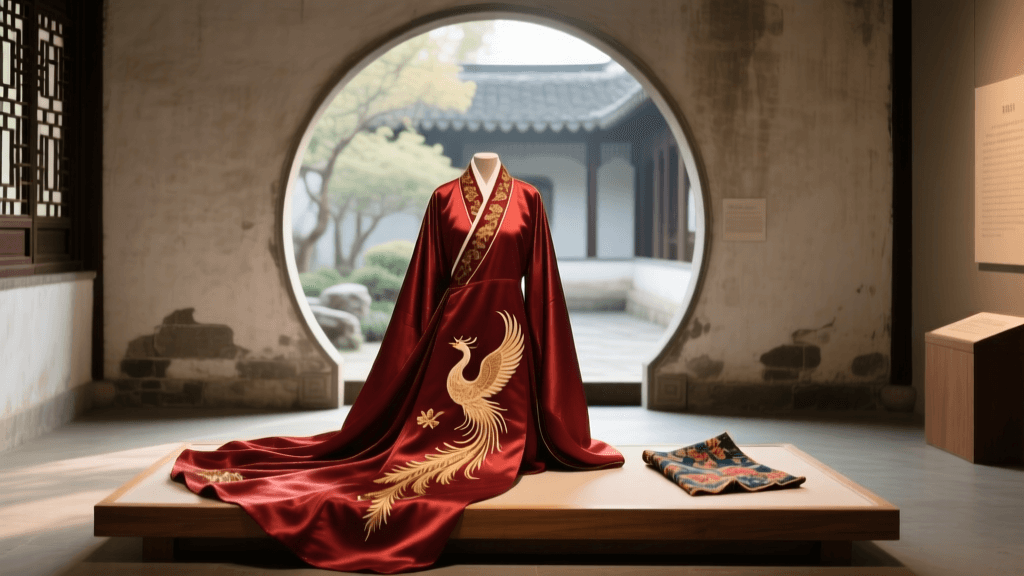
The global revival of Hanfu (traditional Han Chinese clothing) has sparked an unprecedented interest in the historical accuracy, structural engineering, and material culture of ancient Chinese garments. While social media and e-commerce platforms have popularized the aesthetic, the true foundation of the Hanfu movement relies heavily on institutional preservation. Museums, heritage sites, and cultural exhibitions across China serve as the ultimate arbiters of historical truth, housing fragile silk artifacts, intricate brocades, and archaeological textiles that inform modern reproductions. For researchers, designers, and cultural enthusiasts, visiting these institutions is not merely a leisure activity; it is an essential pilgrimage to understand the drape, weave, and symbolism of traditional Asian garments.
According to The Metropolitan Museum of Art's Heilbrunn Timeline of Art History, the evolution of Chinese silk weaving and garment construction represents one of the most complex technological and artistic achievements in human history. To truly appreciate the transition from the deep, wrapping robes of the Han Dynasty to the structured, pleated skirts of the Ming Dynasty, one must examine the surviving artifacts in controlled, climate-regulated exhibition spaces. This guide explores the most significant Hanfu and textile museums in China, offering practical advice for navigating these cultural treasure troves.
Premier Hanfu and Textile Museums in China
China National Silk Museum (Hangzhou)
Located near the scenic West Lake, the China National Silk Museum (CNSM) is the largest textile and costume museum in the world and an absolute necessity for any Hanfu enthusiast. The museum's 'Chinese Textile and Costume' exhibition chronicles 5,000 years of sartorial evolution. Here, visitors can view meticulously preserved fragments from the Mawangdui Han Dynasty tombs, showcasing the ethereal, lightweight gauze fabrics that defined early Hanfu silhouettes. The CNSM also features a state-of-the-art conservation laboratory where textile experts stabilize decaying silk proteins, a process that dictates how modern Hanfu makers handle delicate fabrics like luo (gauze) and qi (crepe).
Shanghai Textile and Costume Museum (Donghua University)
Affiliated with Donghua University (formerly the China Textile University), this museum bridges the gap between historical artifact and modern academic research. The museum is divided into distinct halls, with the 'Costume of Ethnic Minorities' and 'Historical Chinese Garments' sections being particularly relevant. The institution excels in displaying structural replicas alongside fragile originals, allowing visitors to understand the hidden layering of Hanfu undergarments, the structural rigidity of Song Dynasty collars, and the complex pleating techniques of the Ming Dynasty mamianqun (horse-face skirt). It is a vital resource for pattern-makers seeking historical grading and measurements.
Nanjing Yunjin Museum (Nanjing)
While Hanfu encompasses many fabric types, the imperial aesthetics of the Ming Dynasty are inextricably linked to Yunjin (cloud brocade). The Nanjing Yunjin Museum focuses on this specific, highly complex weaving technique. The centerpiece of the museum is the operational, massive wooden drawlooms—measuring roughly 5 meters long and 4 meters high—which require two artisans to operate simultaneously. Observing the creation of Yunjin provides crucial context for the heavy, ornate, and stiff fabrics used in high-status Ming Dynasty Hanfu, highlighting why these garments drape and fold so differently from the fluid silks of the Tang or Song eras.
Museum Comparison and Visitor Data
To help you plan your cultural itinerary, the following table compares the primary focus, logistical requirements, and unique offerings of China's top textile heritage sites.
| Museum Name | Location | Key Hanfu/Textile Focus | Admission Cost | Best Time to Visit |
|---|---|---|---|---|
| China National Silk Museum | Hangzhou, Zhejiang | Comprehensive history, Han/Tang silks, conservation science | Free (Reservation required) | Spring (March-May) for silk-related seasonal exhibits |
| Shanghai Textile & Costume Museum | Shanghai | Academic replicas, pattern structures, minority textiles | Free (ID/Passport required) | Autumn (Sept-Nov) during university fashion weeks |
| Nanjing Yunjin Museum | Nanjing, Jiangsu | Ming Dynasty brocades, imperial weaving, drawloom tech | ~30 RMB | Year-round; weekdays to watch active loom weavers |
| Chengdu Shu Brocade Museum | Chengdu, Sichuan | Sichuan regional weaves, Song/Ming pattern reproduction | ~50 RMB | Summer, when indoor climate control is most comfortable |
Experiencing Intangible Cultural Heritage (ICH)
Museums in China are increasingly moving away from static displays toward living heritage models. The integration of Intangible Cultural Heritage (ICH) workshops within museum spaces allows visitors to witness the creation of traditional textiles firsthand. The preservation of these techniques is globally recognized; for instance, UNESCO's Intangible Cultural Heritage list officially inscribed the sericulture and silk craftsmanship of China, acknowledging the vital transmission of skills from mulberry cultivation to the final weaving of patterned silks.
At institutions like the Suzhou Silk Museum, visitors can participate in or observe ICH workshops focusing on kessi (silk tapestry) and song (brocade) weaving. For Hanfu designers, understanding the limitations and capabilities of these traditional looms is critical. A modern power loom can produce a 1.4-meter-wide fabric bolt, but historical Hanfu garments were often cut from much narrower bolts (typically 50 to 70 centimeters wide). Experiencing traditional weaving explains the zero-waste cutting patterns and the distinct placement of seams in authentic historical Hanfu.
Practical Guide for International and Domestic Visitors
Navigating China's museum ecosystem requires specific preparation, particularly for international visitors or those traveling during peak domestic tourism seasons. Below is actionable advice to ensure a seamless experience.
- Advance Booking Protocols: Almost all major state-run museums in China, including the China National Silk Museum, require advance reservations. Bookings typically open exactly 7 days prior to the visit date at 8:00 AM or 9:00 AM (Beijing Time). You must use the museum's official WeChat Mini Program or their designated website to secure a time slot.
- Identification Requirements: Foreign visitors must bring their physical, original passports. Photocopies or digital photos on a smartphone are generally rejected at the security checkpoints. Domestic travelers must present their physical Shenfenzheng (National ID card).
- Photography and Lighting Etiquette: Silk is highly susceptible to photodegradation. Flash photography is strictly prohibited in all textile galleries. Furthermore, tripods and selfie sticks are banned to protect the glass exhibition cases and manage crowd flow. When photographing garment details for research, rely on the ambient, UV-filtered gallery lighting and use a camera with high ISO capabilities.
- Audio Guides and Translation: While premier museums like the CNSM offer English audio guides or WeChat-based bilingual tours, smaller regional heritage sites may only provide Mandarin descriptions. Downloading a real-time translation app that supports optical character recognition (OCR) is highly recommended for reading the detailed placards regarding fabric weaves, tomb origins, and garment terminology.
Studying Historical Garments for Modern Replicas
The intersection of museum archives and the modern Hanfu market is where historical accuracy meets contemporary fashion. Serious Hanfu brands and independent artisans frequently visit these exhibitions to study the drape, stitch density, and color palettes of original garments. The Victoria and Albert Museum's extensive Chinese textile archives and similar global collections emphasize the importance of analyzing the selvedge edges, thread counts, and natural dye degradation of historical pieces to accurately replicate them.
For example, when studying the Ming Dynasty artifacts excavated from the Dingling Mausoleum, researchers noted the heavy use of gold-wrapped threads and specific structural linings used to give garments a stiff, imposing silhouette. Modern Hanfu makers use this museum data to select appropriate interfacing and lining fabrics, ensuring that a replica aoqun (jacket and skirt set) behaves dynamically like its 16th-century counterpart, rather than hanging limply like modern fast-fashion garments.
Conclusion
Exploring China's Hanfu museums and textile exhibitions offers a profound journey into the heart of Asian sartorial traditions. These institutions do more than preserve decaying fabrics; they safeguard the engineering, artistry, and cultural philosophy of historical Chinese dress. Whether you are a historian analyzing Han Dynasty gauze, a fashion designer studying Ming Dynasty brocade structures, or a cultural enthusiast seeking to connect with your heritage, these museums provide the foundational knowledge necessary to appreciate and accurately revive the magnificent legacy of Hanfu.