Xin Zhongshi 2026: Build an Authentic New Chinese Style Wardrobe
The Maturation of Xin Zhongshi in 2026
The Xin Zhongshi (New Chinese Style) movement has undergone a radical transformation over the last few years. While the early 2020s saw a surge in mass-produced, costume-like garments that prioritized superficial motifs over structural integrity, 2026 marks the definitive maturation of the aesthetic. Today, Xin Zhongshi is no longer just a fleeting social media trend; it is a sophisticated sartorial philosophy that seamlessly integrates traditional Chinese tailoring, heritage textiles, and ancient symbolism into modern, everyday silhouettes. For the discerning wearer, building an authentic Xin Zhongshi wardrobe in 2026 requires moving beyond fast-fashion knockoffs and developing a keen eye for textile authenticity, structural drape, and historical context.
This deep dive will guide you through the mechanics of the modern New Chinese Style, teaching you how to identify genuine heritage fabrics, construct a versatile capsule wardrobe, and properly maintain your investment pieces for decades to come.
Decoding the Textiles: Authentic Song Brocade vs. Fast-Fashion Synthetics
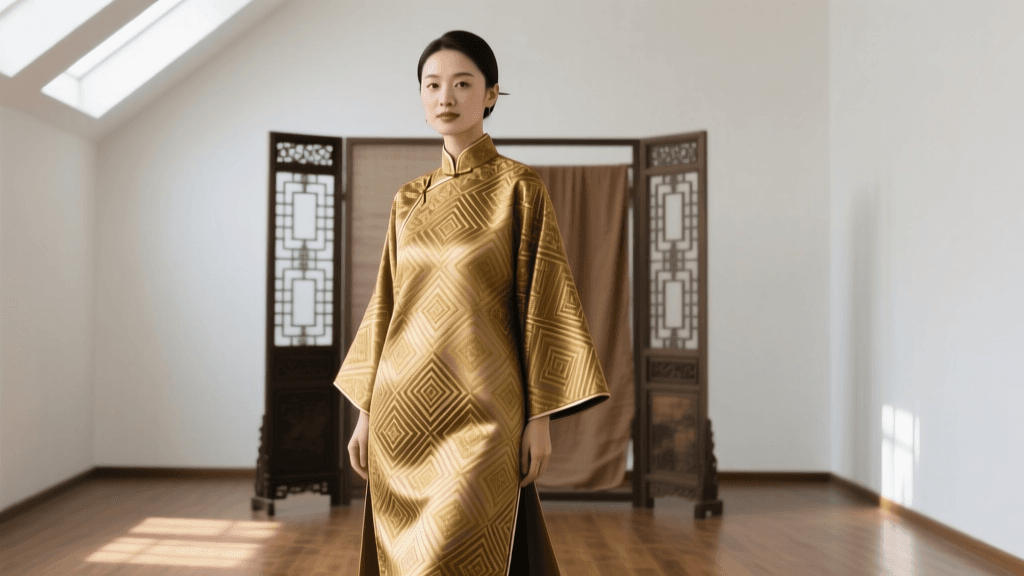
At the heart of the 2026 Xin Zhongshi movement is a strict return to textile authenticity. The most coveted fabric in this space is Song Brocade (Songjin), a heritage textile originating from the Song Dynasty known for its soft texture, intricate jacquard patterns, and subtle, non-reflective sheen. Unfortunately, the market is currently flooded with polyester jacquards masquerading as authentic brocade.
According to the Victoria and Albert Museum, historical Chinese silk weaving relies on complex warp and weft intersections that create a structural pattern, rather than a printed surface. When evaluating a Xin Zhongshi jacket or skirt in 2026, you must perform a weave inspection. Authentic Song Brocade will feature a reversible or cleanly finished reverse side where the pattern is still visible in negative space, achieved through the meticulous interlocking of mulberry silk threads. Synthetic imitations will often have a messy, web-like backing of loose threads and a distinctly plastic-like sheen under direct sunlight.
Furthermore, genuine heritage brocades utilize natural dyes and, in premium 2026 collections, real metallic threads wrapped around a silk core. The Metropolitan Museum of Art's Heilbrunn Timeline of Art History notes that traditional Chinese silk craftsmanship involves specialized sericulture and metallurgical techniques that give the fabric a distinct, heavy drape. When you hold an authentic piece, it should feel cool to the touch, possess a fluid, water-like drape, and emit a faint, natural protein scent when rubbed vigorously, unlike the chemical odor of heated polyester.
The Art of the Pankou: Identifying Hand-Rolled Knots
The Pankou (frog fastener) is the quintessential hardware of the Xin Zhongshi wardrobe, serving both a functional and deeply symbolic purpose. In 2026, top-tier designers are reviving the art of hand-rolled silk Pankou. Unlike machine-stitched or glue-bonded fasteners found on commercial garments, authentic hand-rolled knots are created by wrapping silk fabric around a core of cotton or silk wadding, creating a three-dimensional, firm, yet flexible toggle.
To test the authenticity of a Pankou knot on a modified Qipao top or a Mandarin-collar jacket, gently squeeze the knot. A genuine hand-rolled knot will yield slightly and feel dense and fibrous. A mass-produced, glue-stiffened knot will feel rock-hard, brittle, and may show visible adhesive seepage at the seams. In 2026, the most sought-after Pankou designs mimic natural elements, such as the plum blossom, the lotus, and the swallow, requiring hours of meticulous hand-stitching by master artisans.
The 2026 Xin Zhongshi Capsule Wardrobe: A Structured Guide
Building a functional Xin Zhongshi capsule wardrobe requires balancing statement heritage pieces with contemporary basics. The goal is to create outfits that look intentional and modern, rather than theatrical. Below is a breakdown of the essential garments for 2026, including their traditional roots and current market pricing for authentic, high-quality pieces.
| Garment Type | Traditional Element | 2026 Modern Adaptation | Avg. Investment Price (USD) |
|---|---|---|---|
| Mamianqun (Horse-Face Skirt) | Pleated side panels, flat front/back, woven motifs | Shorter hemlines, lightweight crepe silk, paired with knitwear | $250 - $600 |
| Modified Qipao Top | Mandarin collar, Pankou knots, side slits | Cropped boxy fit, cotton-linen blends, worn over wide-leg denim | $120 - $350 |
| Bijia (Sleeveless Vest) | Layering piece, often quilted or embroidered | Deconstructed asymmetrical hems, worn over turtlenecks or dresses | $180 - $400 |
| Song Brocade Jacket | Traditional Tang-style rounded collar, heavy brocade | Bomber jacket silhouette, minimalist hardware, subtle tone-on-tone weave | $450 - $1,200 |
| Wide-Leg Song Pants | Flowing drape, high waist, silk-satin finish | Tailored waistbands, matte crepe fabric, styled like office trousers | $150 - $300 |
Styling Mechanics: Bridging the Dynastic and the Contemporary
The golden rule of Xin Zhongshi styling in 2026 is the "One Heritage, Two Modern" ratio. To avoid looking like you are wearing a historical costume, anchor every traditional garment with two thoroughly modern, minimalist pieces.
Formula 1: The Deconstructed Mamianqun
The Mamianqun (horse-face skirt) remains the undisputed centerpiece of the New Chinese Style. While traditional versions are floor-length and heavily ornate, the 2026 iteration favors midi-lengths in solid, muted tones like celadon, ink blue, and oxblood. Style a pleated, unpatterned Mamianqun with a chunky, oversized merino wool sweater and modern leather combat boots. The juxtaposition of the ancient pleating technique with heavy, utilitarian footwear creates a striking, streetwear-ready silhouette that grounds the skirt in contemporary urban life.
Formula 2: The Layered Bijia
The Bijia (vest) is a masterclass in transitional layering. In 2026, look for Bijia crafted from raw silk or textured linen rather than shiny satin. Wear an unquilted, dark charcoal Bijia over a crisp white poplin button-down shirt and tailored wide-leg trousers. Leave the top Pankou knot undone to create a relaxed, effortless neckline. This look translates perfectly to the modern workplace, offering a subtle nod to Chinese heritage without sacrificing professional polish.
Footwear and Accessory Integration
Footwear in the Xin Zhongshi ecosystem has evolved significantly. The traditional "cloud-toe" (yunjian) shoe has been reimagined by contemporary cobblers who fuse the upturned, embroidered silk toe box with ergonomic, vulcanized rubber sneaker soles or stacked leather loafer heels. When investing in footwear, prioritize pieces that utilize Suzhou embroidery (Su Xiu) on heavy canvas or matte leather, as delicate silk uppers are prone to rapid deterioration in wet urban environments.
For accessories, 2026 sees a departure from flashy, oversized jade pendants. The current trend favors minimalist, architectural jewelry crafted from brushed silver and nephrite jade, designed to mimic the structural lines of ancient Chinese bronze vessels. Hair accessories, such as modernized Zan (hairpins) made from acetate and matte brass, provide an elegant way to incorporate heritage aesthetics into everyday grooming routines.
Preservation and Storage of Heritage Blends
Authentic Xin Zhongshi garments are investment pieces that require meticulous care. The UNESCO Intangible Cultural Heritage registry highlights the incredible fragility and organic nature of traditional Chinese sericulture products. Because authentic silk and natural dyes are highly susceptible to UV degradation, protein-eating pests, and moisture, proper storage is non-negotiable.
- Cleaning: Never machine-wash authentic Song Brocade or heavily structured Pankou garments. The agitation will destroy the internal wadding of the knots and distort the jacquard weave. Always seek a dry cleaner who specializes in heritage textiles and explicitly state the presence of natural silk and metallic threads.
- Storage: Avoid wire hangers, which will permanently distort the shoulder seams of a modified Qipao or Bijia. Use wide, padded wooden hangers. For folded skirts like the Mamianqun, interleave the pleats with acid-free tissue paper to prevent permanent creasing along the fold lines.
- Pest Control: Do not use chemical mothballs, as their harsh odors will permanently permeate the porous silk fibers, and the chemicals can react with natural dyes. Instead, store your garments in breathable cotton canvas bags alongside natural camphor wood blocks or dried lavender sachets to deter silverfish and moths organically.
Conclusion
The Xin Zhongshi movement of 2026 represents a profound cultural renaissance, shifting the global fashion conversation from mere appropriation to deep, respectful integration. By learning to identify authentic Song Brocade, appreciating the structural complexity of hand-rolled Pankou, and mastering the art of modern styling ratios, you can build a wardrobe that honors centuries of Asian textile tradition while remaining firmly rooted in the contemporary world. Investing in these garments is not just an exercise in personal style; it is an active participation in the preservation and evolution of living cultural heritage.