Tanmono Kimono Construction: Zero-Waste Techniques 2026
The Philosophy of Tanmono: Straight Lines and Zero Waste
In the contemporary fashion landscape of 2026, the push for circularity and zero-waste design has moved from a niche trend to an industry mandate. As global textile regulations tighten, designers and home sewists alike are looking backward to move forward. At the forefront of this sustainable renaissance is the traditional Japanese method of kimono construction, specifically the use of the tanmono fabric bolt. Unlike Western tailoring, which relies on curved pattern pieces that generate significant offcut waste, the kimono is a masterclass in geometric efficiency and zero-waste engineering.
The tanmono is a standard bolt of fabric, traditionally woven to a specific width and length to yield exactly one adult-sized kimono with virtually no waste. According to the Victoria and Albert Museum, the structural integrity and aesthetic drape of the kimono are entirely dependent on this standardized bolt system, reflecting a deep cultural respect for the materials used. By understanding and adapting these centuries-old garment construction techniques, modern makers in 2026 are creating modular, sustainable, and highly functional wardrobes.
The Anatomy of the Tanmono Bolt
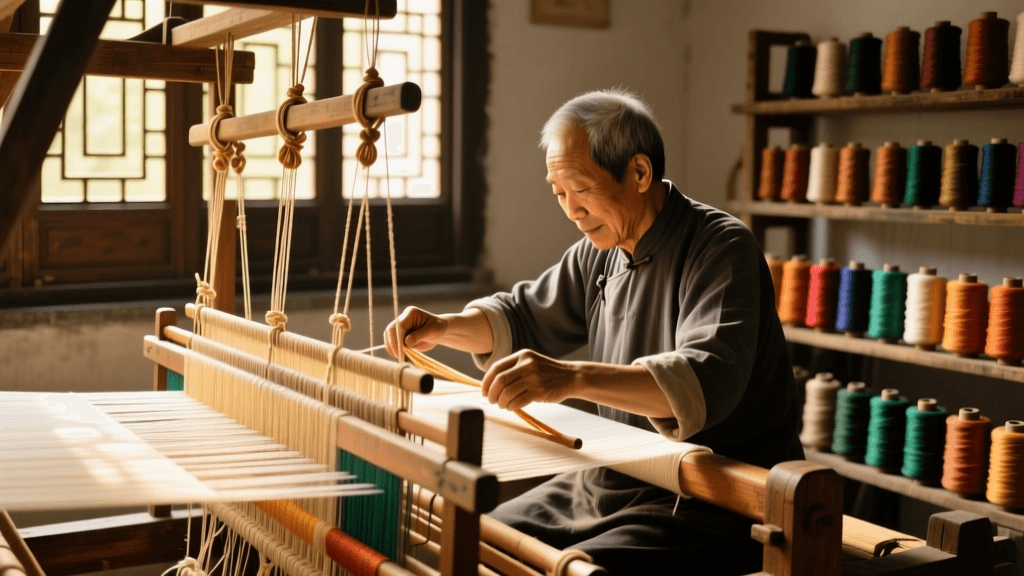
To master this construction technique, one must first understand the mathematics of the fabric. A standard tanmono bolt measures approximately 36 centimeters (about 14.2 inches) in width and 11.5 to 12 meters (12.5 to 13.1 yards) in length. This narrow width is historically dictated by the span of the traditional backstrap loom and the width of a silkworm's cocoon thread yield.
In Western pattern drafting, fabric is typically cut along curved lines to accommodate the human form, leaving behind irregular scraps that often end up in landfills. In traditional Japanese sewing (wasai), the fabric is cut exclusively in straight lines parallel or perpendicular to the selvedge. This technique, known as chokudan-giri (straight cutting), ensures that every single centimeter of the 12-meter bolt is utilized in the final garment.
The Eight-Panel System: Deconstructing the Kimono
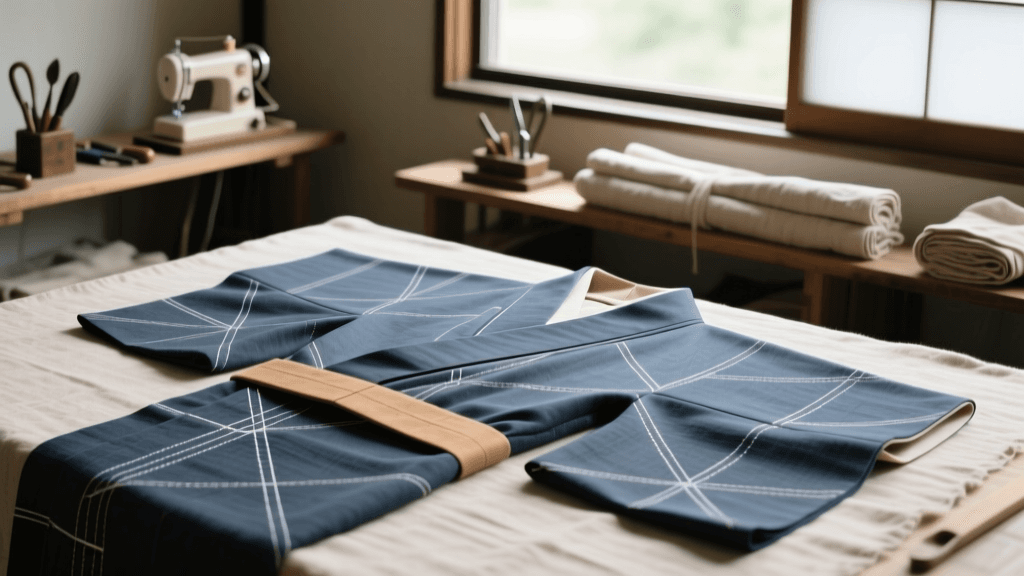
A standard kimono is constructed from eight primary rectangular panels. Because the pieces are cut in straight lines, the seam allowances are not trimmed away; instead, they are folded inward during the sewing process. This means the garment can be entirely deconstructed, washed, and re-sewn without losing any of the original fabric width.
- Migoro (Body Panels): Two long panels that make up the front and back of the torso.
- Sode (Sleeves): Two rectangular panels that are folded in half and attached to the body, creating the iconic draped sleeve pouch.
- Okumi (Front Overlaps): Two narrower panels cut from the remaining fabric, attached to the front edges of the migoro to create the overlapping front closure.
- Eri (Collar): A long, narrow strip that forms the outer collar, paired with an inner collar piece (tomoe).
"The genius of the kimono lies not in how it is cut to fit the body, but in how the body moves within the uncut, rectangular geometry of the cloth." — Traditional Textile Construction Archives, The Textile Society.
Construction Comparison: Western Tailoring vs. Tanmono Cutting
For makers transitioning from Western sewing methods to Asian traditional techniques, the paradigm shift can be profound. Below is a structural comparison of the two methodologies as applied in 2026 sustainable fashion practices.
| Feature | Western Tailoring (Standard) | Tanmono Kimono Construction |
|---|---|---|
| Pattern Shape | Curved, contoured to body measurements | Straight rectangles and squares |
| Seam Allowance | Trimmed, graded, and finished (often overlocked) | Folded inward, preserving original fabric width |
| Material Waste | 15% to 25% offcut waste per garment | Near 0% waste (selvedge to selvedge usage) |
| Fit Adjustment | Requires complex pattern grading and darts | Adjusted via the width of the okumi overlap and tying |
| End-of-Life | Difficult to upcycle due to irregular shapes | Easily deconstructed into flat, reusable textiles |
2026 Sustainability: Adapting Tanmono for Modern Eco-Fashion
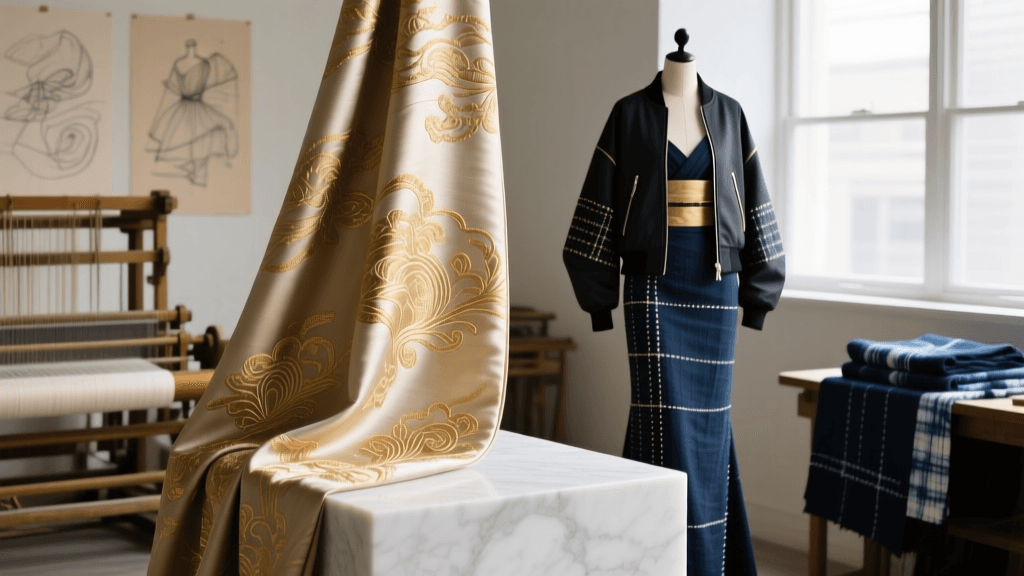
In 2026, the global fashion industry is heavily focused on the Ellen MacArthur Foundation's principles of circular design. The narrow 36cm width of the tanmono is no longer just a historical artifact; it is a highly sought-after specification for modern zero-waste designers. Contemporary brands are now weaving deadstock organic linen, recycled hemp, and peace silk into 36cm bolts specifically to utilize this zero-waste cutting system.
Modern sewists are adapting the eight-panel system to create everyday garments. By adjusting the length of the migoro and the depth of the sode, makers are constructing zero-waste wrap coats, wide-leg trousers, and modular dusters. Because the seams are straight, these garments can be sewn efficiently on modern domestic machines, while still honoring the traditional wasai folding techniques that eliminate the need for synthetic thread overlocking.
Step-by-Step: Constructing a Modern Tanmono Garment
If you are embarking on a zero-waste project using a 36cm fabric bolt this year, follow these traditional construction steps to ensure authenticity and durability.
1. Marking and Basting (Shitsuke)
Unlike Western sewing where pins are heavily used, traditional kimono construction relies on long basting stitches called shitsuke. Using a soft, easily removable basting thread, mark your seam lines. The standard seam allowance for the body panels is 1.5 cm, while the sleeve attachments may require a 2 cm allowance. Basting is critical; the slippery nature of silk or modern cupro-blends requires the fabric to be locked in place before final stitching.
2. The Back Seam (Senui)
The construction begins with the senui, the central back seam joining the two migoro panels. In traditional sewing, this seam is folded so that the selvedges meet perfectly inside the fold. This creates a clean, finished interior without any raw edges. Stitch using a standard running stitch (nuitori), ensuring your stitches are small (about 2-3 mm) for structural integrity.
3. Attaching the Okumi (Overlaps)
The front overlaps are attached to the front edges of the migoro. This is where the fit of the garment is determined. In 2026, many modern makers widen the okumi slightly to accommodate contemporary layering over thicker winter knits. The seam allowance here is folded toward the body panel, creating a subtle structural ridge that helps the garment hang beautifully.
4. Sleeve Construction and the Furi
The sode is folded in half horizontally. The side seam is sewn, but the bottom and the inner edge are left partially open. The unsewn portion of the inner sleeve edge is called the furi. This opening allows for ventilation and provides the characteristic swaying motion of the kimono sleeve. In modern adaptations, the furi is often utilized as a hidden pocket or a dramatic design element.
Essential Tools for the 2026 Home Sewist
To properly execute these techniques, a few specialized tools are recommended, many of which are now readily available through global online textile suppliers:
- Shaku (Ruler): A traditional bamboo measuring stick. While metric rulers are common today, using a shaku helps maintain the proportional harmony inherent in the original designs.
- Kote-hera (Bamboo Spatula): Used to press seams open and fold allowances crisply without the need for high-heat irons, which can damage delicate eco-silks and modern recycled fibers.
- Meka (Thimble): A traditional Japanese ring thimble worn on the middle finger, designed to push the needle through dense, multi-layered seam folds.
- Jaku-jaku (Measuring Tape): A flexible tape measure, essential for verifying the precise 36cm width of your modern deadstock fabric bolts.
Care, Deconstruction, and the Circular Lifecycle
The ultimate triumph of the tanmono construction technique is its end-of-life protocol. In traditional Japanese culture, when a kimono becomes soiled, it undergoes araihari—the process of completely taking the garment apart, washing the flat panels like a bolt of cloth, stretching them on a frame to dry, and re-sewing them.
In 2026, this concept is being championed by sustainable fashion advocates as the pinnacle of circularity. When a modern zero-waste wrap coat made from a tanmono bolt reaches the end of its wearable life, it can be deconstructed into flat, rectangular textiles. These panels can then be easily repurposed into cushion covers, table runners, or patchwork quilts, ensuring that the material remains in use for generations. By embracing the straight-line geometry of Asian dress traditions, we unlock a sustainable future where waste is quite literally designed out of existence.