Tango Chirimen vs Poly-Blend Kimono Fabrics: 2026 Guide
The 2026 Kimono Textile Renaissance
As we navigate the global fashion landscape of 2026, the kimono is experiencing a profound renaissance. No longer confined to strict ceremonial obligations, traditional Japanese garments are being embraced for daily wear, travel, and modern street style. At the heart of this revival is a critical decision every wearer must make: choosing the right fabric. The debate between heritage textiles and modern synthetics has never been more relevant. Specifically, the choice between authentic Tango Chirimen silk and advanced 2026 poly-blends dictates not only the aesthetic of the garment but also its functionality, care requirements, and environmental footprint.
Whether you are a seasoned collector sourcing vintage bolts or a modern enthusiast looking for a travel-friendly garment, understanding the textile engineering behind these fabrics is essential. This comprehensive guide breaks down the nuances of Tango Chirimen and modern poly-blends, helping you make an informed decision for your 2026 wardrobe.
The Heritage Standard: Tango Chirimen Silk
Tango Chirimen is a highly prized silk crepe originating from the Tango Peninsula in northern Kyoto Prefecture. What sets this textile apart is its meticulous weaving technique, which has been refined over centuries. The secret lies in the weft threads, which are subjected to an intense twisting process known as hachioji. In 2026, master weavers still utilize specialized machines to twist the raw silk threads up to 2,000 to 3,000 times per meter.
Once the fabric is woven, it undergoes a rigorous degumming process. The silk is boiled in an alkaline solution that removes the natural sericin (silk gum). Because the weft threads are so tightly twisted, the removal of the gum causes the fabric to shrink and contract, resulting in a distinctive, pebbled surface texture known as shibo. This texture is not merely decorative; it serves a highly functional purpose. The shibo surface scatters light, giving the silk a sophisticated, matte luminosity, while also making the fabric remarkably resilient to wrinkling compared to flat-weave silks like habutae.
The protein structure of silk makes it both luminous and vulnerable. As noted in The Metropolitan Museum of Art's Heilbrunn Timeline of Art History, the degumming process is what unlocks silk's brilliance but also necessitates careful conservation and specialized care to maintain its structural integrity over decades.
The Modern Contender: 2026 High-Tech Poly-Blends
If you associate polyester kimono with the stiff, unbreathable, and overly shiny garments of the late 20th century, it is time to update your perspective. The textile engineering of 2026 has birthed a new generation of poly-blends that closely mimic the drape, texture, and even the acoustic rustle of authentic silk. Modern manufacturers are utilizing ultra-fine microfiber polyesters, frequently interwoven with cupro (a regenerated cellulose fiber derived from cotton linter) or rayon.
These 2026 poly-blends are engineered to replicate the shibo texture of Chirimen through advanced heat-setting and mechanical texturizing processes. The addition of cupro provides a breathable, moisture-wicking quality that pure polyester lacks, making these garments viable even during the humid Japanese summer. Furthermore, the sustainability angle has been vastly improved; according to recent benchmarks from Textile Exchange, the 2026 shift toward closed-loop recycled poly-blends and biodegradable cupro has significantly reduced the carbon footprint of synthetic kimono production.
Head-to-Head Comparison: Silk vs. Poly-Blend
To understand how these fabrics stack up against one another in practical scenarios, review the comparative data below based on 2026 market standards.
| Feature | Tango Chirimen Silk | 2026 Poly-Blend (with Cupro) |
|---|---|---|
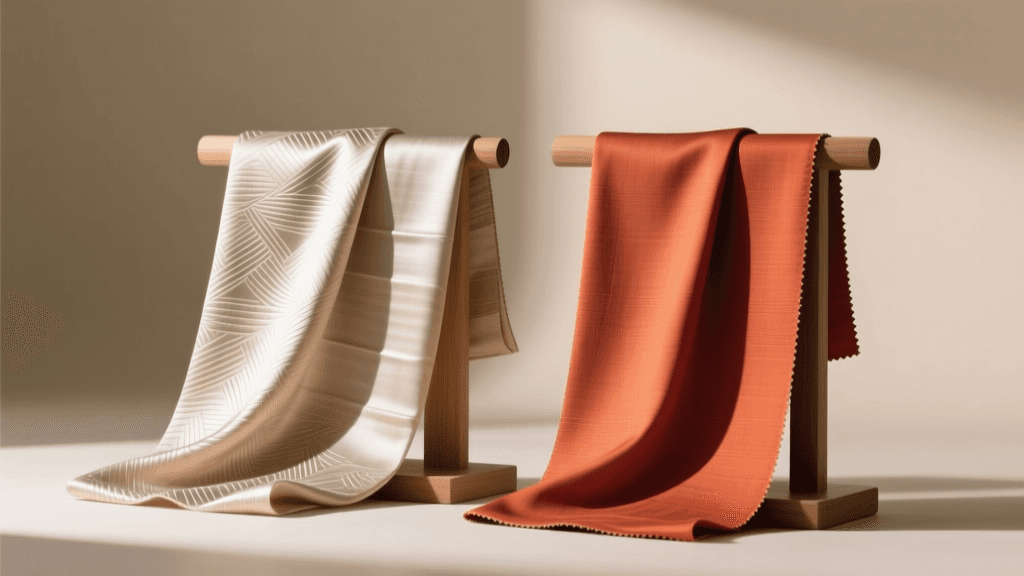
| Surface Texture | Authentic shibo (pebbled), matte finish | Mechanically textured, semi-matte finish |
| Drape & Weight | Heavy, fluid, luxurious, molds to the body | Lightweight, slightly more structured |
| Breathability | Excellent natural temperature regulation | Good (enhanced by cupro weaves) |
| Water Resistance | Poor; water spots the silk instantly | High; resists light rain and spills |
| Care Routine | Dry clean or traditional arai-hari | Machine washable (gentle cycle, mesh bag) |
| 2026 Price per Bolt (Tan) | ¥45,000 – ¥85,000+ ($300 - $570 USD) | ¥15,000 – ¥25,000 ($100 - $170 USD) |
Drape, Breathability, and the Climate Factor
The most critical factor in kimono wearing is how the fabric behaves in motion and in varying climates. Tango Chirimen possesses a heavy, gravitational drape. When you walk, the silk swings with a deliberate, elegant momentum that synthetic fibers struggle to perfectly replicate. However, silk is highly sensitive to humidity. While it breathes beautifully in dry heat, heavy summer rains can cause water spots that require professional re-dyeing or spot-treatment.
Conversely, 2026 poly-blends offer unparalleled practicality for unpredictable weather. If you are caught in a sudden spring shower, a poly-blend kimono can be wiped down and will dry rapidly without leaving a permanent ring. The integration of cupro in modern blends ensures that the fabric does not trap body heat the way vintage 1990s polyesters did, making it a highly viable option for summer festivals (matsuri) and outdoor travel.
Sourcing and Verifying Authenticity
When shopping for kimono fabrics in 2026, whether at specialized boutiques in Kyoto or through international online retailers, verifying the textile composition is vital. Unscrupulous sellers may market high-quality poly-blends as pure silk to command premium prices.
- The Visual Selvedge Test: Authentic vintage and high-end modern silk kimono bolts feature a distinct selvedge (mimi). For a deeper historical understanding of how these textiles were originally constructed and draped, the Victoria and Albert Museum's Asian Collections offers unparalleled archival insights into traditional selvedge markers, which often include woven silk stamps indicating the weaver and region.
- The Tactile Test: Tango Chirimen feels slightly dry and textured, almost like fine sandpaper, due to the shibo. Poly-blends, despite texturizing, will often feel slightly cooler and smoother to the touch.
- The Burn Test: If you have a loose thread from the seam allowance, burn it. Silk will burn slowly, self-extinguish, and smell like burning hair, leaving a crushable black ash. Poly-blends will melt, burn rapidly, smell like sweet plastic, and leave a hard, uncrushable bead.
Care, Maintenance, and Longevity
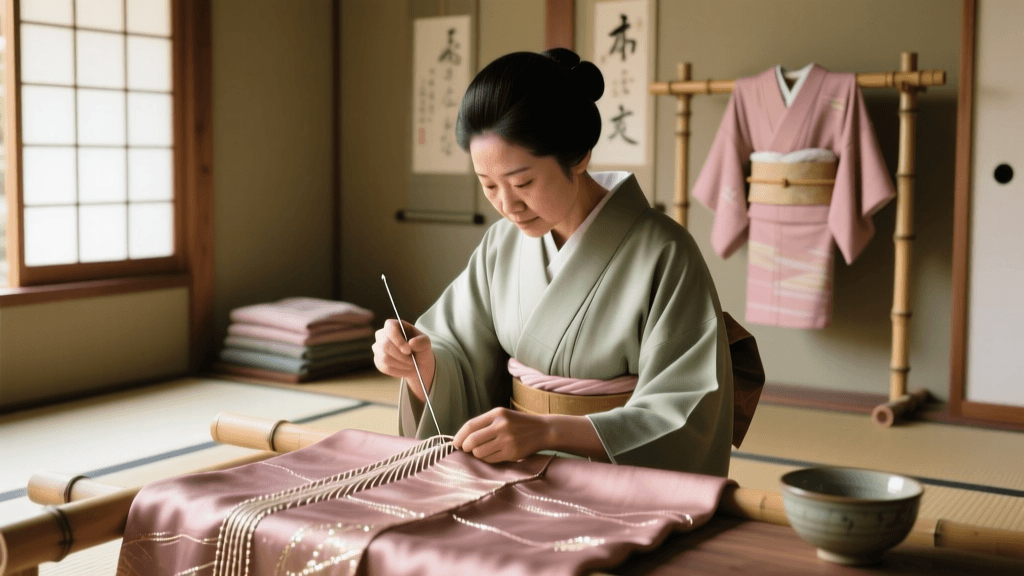
The maintenance of your garment will heavily influence your choice of fabric. Tango Chirimen requires a commitment to traditional care. Professional dry cleaning is standard, but purists prefer arai-hari—a meticulous process where the kimono is entirely taken apart into its original rectangular panels, washed, stretched on bamboo frames to dry, and then re-sewn. This process preserves the silk's tension and luster but is expensive and time-consuming.
Poly-blends, on the other hand, are designed for the modern, fast-paced lifestyle. Most 2026 poly-blend kimono can be washed at home. The recommended protocol involves using a pH-neutral detergent, placing the folded garment in a fine mesh laundry bag, and using the delicate cycle with cold water. It should then be hung to dry in the shade. This ease of care makes poly-blends the undisputed champions of daily wear, practice garments for tea ceremony students, and travel wardrobes.
"A silk kimono is an heirloom that demands a relationship with its wearer; a poly-blend is a reliable companion that adapts to the wearer's life." — 2026 Kyoto Textile Guild Proverb
Making the Right Choice for Your Wardrobe
Ultimately, the choice between Tango Chirimen and poly-blends is not about one being universally superior to the other; it is about matching the textile to the occasion.
When to Choose Tango Chirimen Silk:
- Formal ceremonies, weddings, and high-level tea ceremonies.
- Garments intended to be passed down as multi-generational heirlooms.
- Collectors who value the historical provenance and artisanal craftsmanship of the Tango Peninsula.
- Indoor, climate-controlled environments where water damage is not a risk.
When to Choose 2026 Poly-Blends:
- Traveling, sightseeing, and attending outdoor festivals.
- Daily practice for martial arts (like iaido) or traditional arts where frequent washing is necessary.
- Wearers on a budget who still desire a beautiful, dignified aesthetic.
- Rainy seasons or unpredictable climates where water-spotting is a major concern.
Conclusion
The year 2026 represents a golden era for kimono enthusiasts, where the reverence for heritage textiles like Tango Chirimen coexists harmoniously with the practical innovations of modern poly-blends. By understanding the unique properties, care requirements, and optimal use cases for both fabrics, you can curate a versatile, beautiful, and functional kimono wardrobe that honors Asian traditions while seamlessly integrating into contemporary life. Whether you choose the timeless, pebbled luxury of Kyoto silk or the resilient, washable convenience of modern microfibers, you are participating in a living, evolving textile tradition.