Best 2026 Kyoto Kimono Sewing Workshops For Wanui Mastery
The Renaissance of Wanui in 2026
In an era where sustainable, zero-waste fashion is no longer a niche trend but a global necessity, the ancient Japanese art of Wanui (traditional kimono hand-sewing) is experiencing a profound renaissance. As we navigate through 2026, international students, textile conservators, and slow-fashion enthusiasts are flocking to Japan—particularly the historic ateliers of Kyoto—to learn the meticulous construction methods that have defined the kimono for centuries. Unlike Western tailoring, which relies on curved cuts, permanent machine stitching, and significant fabric offcuts, Wanui utilizes straight seams, temporary basting, and a complete lack of fabric waste. This ingenious system allows the garment to be entirely deconstructed, washed, stretched, and resewn over multiple generations.
Whether you are looking to immerse yourself in a two-week intensive program in Higashiyama or prefer a hybrid digital seminar that ships authentic materials to your doorstep, 2026 offers unprecedented access to these guarded techniques. Below, we explore the top workshops and seminars for mastering traditional Asian garment making this year.
Top 3 Wanui Workshops and Seminars for 2026
1. The Kyoto Traditional Arts Intensive (In-Person)
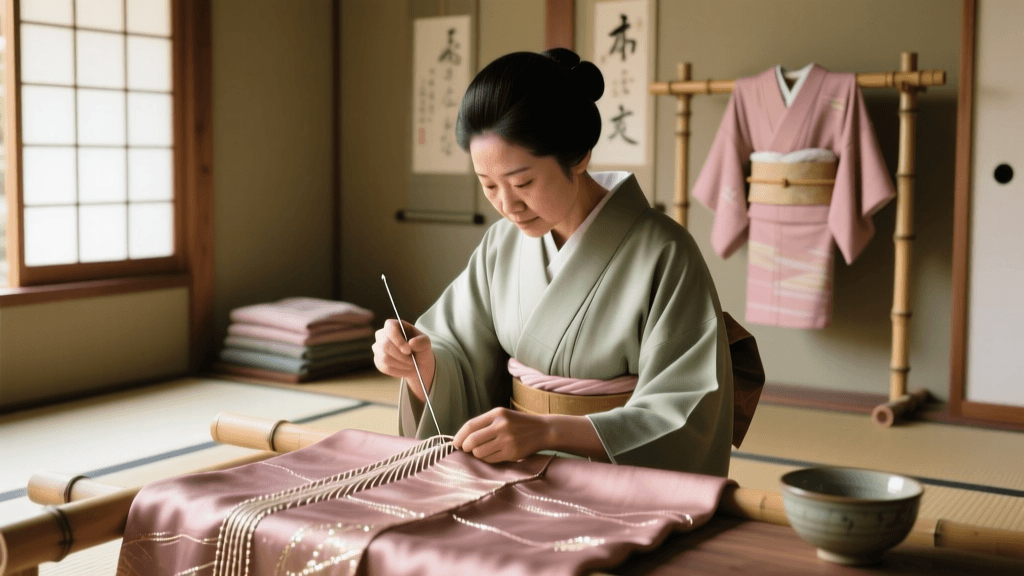
Located in the heart of Kyoto’s Higashiyama Ward, this immersive 14-day workshop is the gold standard for international students in 2026. Taught by certified kimono kitsuke and sewing masters, the curriculum focuses on the complete creation of a yukata (summer cotton kimono) and a hitoe (unlined silk kimono). Students learn the vital importance of shitsuke (basting threads) which hold the delicate silk panels together before the final, nearly invisible hand-stitching is applied. The workshop includes daily lectures on fabric grain, the philosophy of the tanmono (standard fabric bolt), and traditional pressing techniques using heavy bamboo and iron tools.
- Location: Higashiyama Ward, Kyoto, Japan
- Duration: 14 Days (Full-time, 6 hours/day)
- Prerequisites: Basic hand-sewing skills
- 2026 Tuition: ¥385,000 (Approx. $2,550 USD)
2. Bunka Hybrid Wanui Seminar (Tokyo/Online)
Institutions like the renowned Bunka Fashion College have updated their 2026 curricula to include hybrid digital seminars, making elite Japanese fashion education accessible worldwide. Their 8-week 'Foundations of Wanui' module combines high-definition, multi-angle live streams from Tokyo with a globally shipped physical kit. The kit includes pre-dyed tanmono cotton, specialized needles, and a traditional kakehari (tensioning tool). Students sew along in real-time, receiving personalized feedback via AI-assisted camera rigs that analyze stitch tension and seam straightness.
- Location: Hybrid (Live from Tokyo / Global Online Access)
- Duration: 8 Weeks (Weekend sessions)
- Prerequisites: None (Beginner friendly)
- 2026 Tuition: $1,200 USD (Includes international kit shipping)
3. The Global Virtual Kitsuke & Sewing Guild (Online)
For those seeking a slower, community-driven approach, this online guild operates on a subscription and cohort model. The 2026 spring cohort focuses specifically on the eri (collar) attachment and sode (sleeve) curvature adjustments, which are notoriously difficult for Western sewists to master. The guild provides access to an extensive 2026 video library, weekly Q&A sessions with Kyoto-based artisans, and a peer-review forum where students upload macro-photography of their stitches for critique.
- Location: 100% Online
- Duration: 12 Weeks (Self-paced with weekly live critiques)
- Prerequisites: Intermediate hand-sewing
- 2026 Tuition: $650 USD
2026 Workshop Comparison Chart
| Workshop Name | Format | Duration | 2026 Tuition (USD) | Material Kit Included? |
|---|---|---|---|---|
| Kyoto Traditional Arts Intensive | In-Person (Kyoto) | 14 Days | $2,550 | Yes (Premium Silk & Cotton) |
| Bunka Hybrid Wanui Seminar | Hybrid (Tokyo/Online) | 8 Weeks | $1,200 | Yes (Shipped Globally) |
| Global Virtual Kitsuke Guild | Online Only | 12 Weeks | $650 | Yes (Practice Cotton Only) |
Core Techniques You Will Master
Attending a Wanui seminar is not merely about learning to sew; it is about unlearning Western tailoring habits. According to the Victoria and Albert Museum's extensive archives on Japanese dress, the kimono's structural brilliance lies in its relationship to the fabric bolt. You will master the following core techniques:
- Shitsuke (Basting): The foundation of Wanui. You will learn to use long, temporary stitches to hold panels together. This ensures perfect alignment before the final, much smaller running stitches are applied.
- Kakehari (Tensioning): Using a specialized hooked tool and a heavy weight to keep silk taut while sewing, preventing puckering without the need for modern sewing machine feed dogs.
- Hera (Marking): Instead of chalk or washable pens, traditional artisans use a hera (a smooth bamboo or bone spatula) to crease the fabric, leaving a temporary, perfectly straight guide line that vanishes after pressing.
- Chakin-shibori (Pressing): Learning to use a damp cloth and a specialized heavy iron to manipulate seams flat without scorching delicate silk weaves.
Essential Tools for the 2026 Student
If you are enrolling in an online seminar or preparing for your trip to Kyoto, you will need to acquire specific tools. While some workshops provide these, serious students in 2026 are investing in their own artisanal kits:
- Misu-ya Needles: Hand-forged needles from Kyoto that offer superior flexibility and sharpness compared to mass-produced steel needles.
- Yubinuki (Thimble): A traditional Japanese thimble worn as a ring around the middle finger, featuring a tightly wound silk or leather pad that allows the needle to be pushed through multiple layers of fabric with precision.
- Shaku (Bamboo Ruler): Traditional measuring sticks based on the shaku system (approx. 37.8 cm), still used in 2026 by master tailors to calculate panel widths and sleeve drops.
The Zero-Waste Philosophy of Traditional Asian Garments
One of the most compelling reasons designers are studying Wanui in 2026 is its inherent sustainability. The Agency for Cultural Affairs in Japan continues to heavily promote and subsidize traditional craft workshops to ensure intangible cultural properties are passed down to both domestic and foreign artisans. The kimono is cut from a single bolt of fabric (tanmono) measuring roughly 12 meters long and 36 centimeters wide. Every single centimeter is utilized in the body panels, sleeves, collar, and front overlaps. Any remaining fabric is used for ties or修补 (repairs). By studying these seminars, modern fashion students are learning how to apply zero-waste pattern drafting to contemporary clothing, bridging the gap between ancient Asian traditions and futuristic eco-fashion.
Tips for International Students in 2026
For those planning to attend in-person workshops in Kyoto or Tokyo this year, preparation is key. Japan's updated 2026 'Cultural Activities' visa guidelines make it easier than ever for foreigners to engage in short-term, intensive craft study (up to 90 days) without requiring a full student visa. However, language barriers remain a factor. While top-tier academies now offer real-time AR (Augmented Reality) translation glasses for rental, bringing a dedicated offline translation device is highly recommended for communicating with older, master artisans who may not speak English. Additionally, be prepared for the physical demands of the work; traditional floor-sewing (zabuton seating) requires significant core strength and flexibility.
Conclusion
Mastering Wanui is a journey into the heart of Japanese aesthetics, where patience, precision, and respect for materials reign supreme. Whether you choose the immersive, incense-scented ateliers of Kyoto or a cutting-edge hybrid seminar from Tokyo, the skills you acquire in 2026 will fundamentally change how you view garment construction. By preserving these ancient techniques, students are not just making clothes; they are keeping a vital, sustainable piece of Asian cultural heritage alive for the next century.