Sashiko & Boro: 2026 Guide to Japanese Sustainable Fashion
The Renaissance of Wabi-Sabi: Boro and Sashiko in 2026
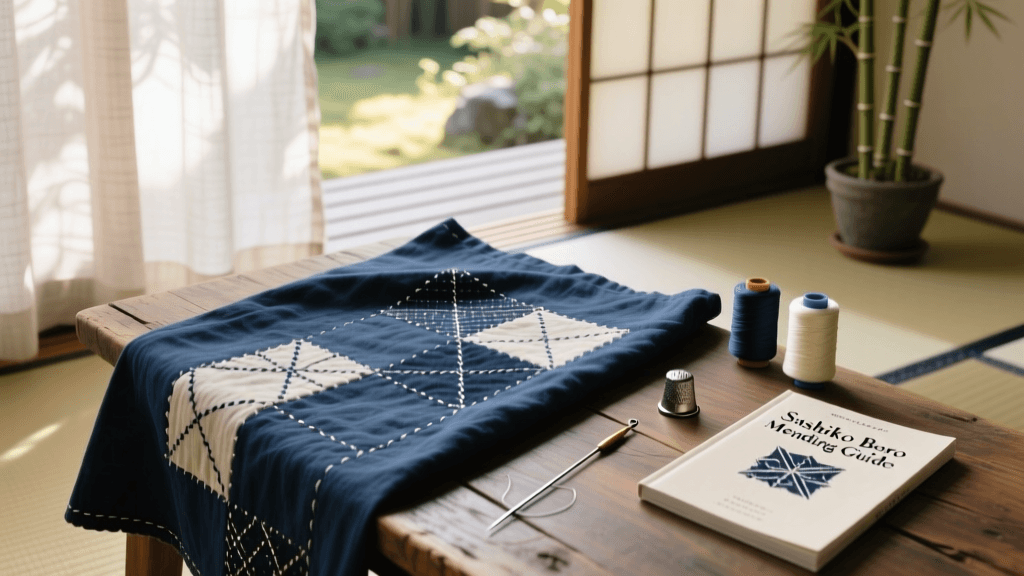
As the global apparel industry confronts the environmental realities of the mid-2020s, the ancient Japanese textile arts of Sashiko and Boro have transcended their historical origins to become cornerstones of 2026 sustainable fashion. Sashiko, translating roughly to 'little stabs,' is a functional embroidery technique characterized by simple running stitches. Boro, meaning 'rags' or 'tattered cloth,' is the practice of patching and repairing textiles to extend their lifespan. Together, they embody the Zen philosophy of Wabi-Sabi—finding profound beauty in imperfection, impermanence, and the authentic wear of time.
In 2026, these techniques are no longer viewed merely as historical curiosities or rustic crafts. They are at the forefront of the circular fashion movement. According to the Ellen MacArthur Foundation, the transition to circular fashion models has become the defining mandate of the 2026 apparel industry, urging designers and consumers to keep garments in use for as long as possible. By integrating Sashiko and Boro into modern wardrobes, fashion enthusiasts are actively participating in this ecological shift, transforming damaged garments into bespoke, high-value pieces of wearable art.
Essential Tools for the Modern Sashiko Practitioner
To achieve the crisp, uniform stitches that define authentic Sashiko, utilizing the correct tools is non-negotiable. The market in 2026 offers a blend of heritage artisanal tools and modern ergonomic adaptations.
Needles: The Tulip Hiroshima Standard
Standard sewing needles are too flexible and short for Sashiko. You require specialized Sashiko needles, which are longer, thicker, and possess exceptionally sharp points to pierce multiple layers of heavy fabric without bending. The gold standard in 2026 remains the Tulip Hiroshima Sashiko Needles. For medium-weight denim and cotton canvas, a needle length of 45mm with a diameter of 0.89mm is ideal. These needles are forged in Hiroshima, a region with over 300 years of needle-making heritage, ensuring a polished eye that prevents thread fraying during repetitive stitching.
Thread: Olympus Sashiko Cotton
Do not use standard embroidery floss or mercerized cotton; they are too shiny and lack the structural integrity required for mending. Olympus Sashiko Thread, sold in 20-meter skeins, is a tightly twisted, matte-finish 100% cotton thread specifically engineered for this craft. In 2026, the trend has shifted toward variegated and naturally dyed threads (such as indigo, persimmon tannin, and matcha green) to create subtle tonal variations against raw denim and heavyweight linen.
Thimbles: The Yubinuki Ring
Unlike Western tailoring, which utilizes a cap thimble on the middle finger, Sashiko relies on a ring thimble called a Yubinuki. Worn on the pad of the middle finger, it acts as a fulcrum to push the long needle through dense fabric layers. Traditional Yubinuki are woven from silk and stuffed with cotton, but contemporary 2026 practitioners often prefer Hantex Leather Yubinuki for their durability and immediate grip, requiring no break-in period.
Core Stitching Techniques and Precise Measurements
The beauty of Sashiko lies in its mathematical precision. The aesthetic appeal is dictated by the consistency of the stitch length and the spacing between stitches.
The Running Stitch (Unishinuri)
The foundational Sashiko stitch is the running stitch. When mending heavy fabrics like denim jackets or canvas tote bags in 2026, the optimal stitch length is between 3mm and 5mm. The gap between each stitch should be roughly 1mm to 2mm, ensuring that the fabric layers are locked together tightly without creating stiff, unbending ridges. The key to a flawless running stitch is 'loading' the needle: gather three to four stitches onto the needle shaft before pulling the thread through, which guarantees uniform tension.
Pattern Stitching (Moyouzashi)
Beyond simple lines, Sashiko features intricate geometric patterns rooted in Japanese nature and Zen spirituality. Two patterns dominating 2026 streetwear mending are:
- Asanoha (Hemp Leaf): A star-like geometric pattern representing vigor and rapid growth. It requires precise 45-degree angle intersections and is best executed on flat, unlined cotton panels.
- Seigaiha (Blue Ocean Waves): Overlapping concentric circles symbolizing surges of good luck and resilience. This pattern is highly effective for concealing large, irregular tears in denim, as the curved lines distract the eye from the underlying damage.
Comparison Chart: Traditional vs. Contemporary Applications
Understanding how Sashiko and Boro have evolved helps contextualize their place in modern Japanese fashion styles. Below is a comparison of their historical utility versus their 2026 fashion applications.
| Feature | Edo & Meiji Period (Historical) | 2026 Contemporary Fashion |
|---|---|---|
| Primary Purpose | Thermal insulation and extreme poverty-driven necessity. | Aesthetic expression, mindfulness, and circular sustainability. |
| Base Fabrics | Hand-woven hemp, ramie, and low-grade cotton. | Selvedge denim, organic heavyweight linen, and upcycled technical nylon. |
| Thread Colors | Exclusively white or unbleached cotton (due to dye scarcity). | Indigo, botanical dyes, metallic blends, and high-contrast neon. |
| Garment Types | Noragi (farming jackets), futon covers, and work trousers. | Haori jackets, wide-leg trousers, sneakers, and luxury handbags. |
| Cultural Perception | A marker of the lower working class and rural agrarian life. | A premium marker of artisanal heritage, luxury, and eco-consciousness. |
Integrating Boro into Modern Japanese Fashion Styles
In 2026, the integration of Boro into everyday fashion is guided by the principles of intentional contrast. The Japanese Ministry of Economy, Trade and Industry (METI) actively supports the evolution of these heritage crafts, noting in their Traditional Craft Industries initiative that modern adaptations and cross-pollination with contemporary streetwear are vital for preserving artisanal lineages in the 21st century.
The Modern Haori
The Haori, a traditional hip- or thigh-length kimono-style jacket, has become a staple in 2026 global streetwear. Applying Boro patches to the shoulders and elbows of a solid black or navy cotton Haori creates a striking visual anchor. Use varying shades of indigo-dyed cotton scraps for the patches, overlapping them slightly before securing them with a dense white Sashiko running stitch around the perimeters.
Upcycled Selvedge Denim
Raw selvedge denim is the perfect canvas for Sashiko. When a pair of heavyweight (14oz to 21oz) denim jeans develops a blowout at the knee or crotch, avoid invisible machine darning. Instead, place a piece of contrasting sashiko cloth (often featuring pre-printed fading patterns) behind the tear. Secure it with a dense grid of cross-stitches (Jujizashi). This not only reinforces the structural integrity of the denim but turns a point of failure into a focal point of the garment's narrative.
Zen Spirituality and the Sensory Experience of Mending
Beyond the physical garments, the practice of Sashiko is deeply intertwined with Zen spirituality and the sensory experience of creation. In an era dominated by digital screens and instantaneous gratification, the tactile resistance of a thick cotton thread pulling through dense denim offers a grounding, meditative rhythm. Historical textiles preserved in institutions like the Victoria and Albert Museum's Asian Collections demonstrate that Boro was originally born of absolute necessity, yet the meticulous care applied to every stitch reveals an inherent human desire to imbue even the most utilitarian objects with dignity and grace.
The mindfulness required to maintain a consistent 3mm stitch length forces the practitioner into a state of active meditation. The repetitive motion, the sound of the needle piercing the fabric, and the gradual emergence of a geometric pattern from a blank canvas all serve to quiet the mind. In 2026, 'mending circles' have become popular wellness and community-building events in major cities from Tokyo to London, where individuals gather to repair their clothes, share techniques, and engage in the slow, deliberate act of caring for their possessions.
Conclusion: The Future is Mended
As we navigate the fashion landscape of 2026, the lessons of Sashiko and Boro are more relevant than ever. They teach us that a tear is not the end of a garment's life, but an invitation for reinvention. By mastering the precise measurements, investing in heritage tools like Tulip Hiroshima needles, and embracing the Zen philosophy of Wabi-Sabi, we can transform our wardrobes into living archives of sustainability and personal history. True style in the modern era is not about pristine, untouched perfection; it is about the beautiful, resilient, and storied reality of things that have been loved, worn, and masterfully mended.