Japanese Traditional Looms: Jibata Weaving Methods 2026
The Resurgence of Japanese Hand-Weaving in 2026
In the contemporary landscape of global slow fashion, the rhythmic, meditative practice of Japanese hand-weaving has experienced a profound renaissance. As we navigate 2026, textile collectors, fashion historians, and mindful makers are increasingly turning away from mass-produced fabrics, seeking instead the soulful imperfections and structural integrity of traditional Japanese garments. At the heart of this movement lies the Jibata, a traditional Japanese floor loom that demands a deeply physical and spiritual connection between the weaver and the cloth. This comprehensive guide explores the mechanics of the Jibata, the legendary Ojiya-chijimi crepe weaving technique, and how artisans and hobbyists are preserving these ancient methods today.
The Zen of the Loom: Mindfulness and Sensory Experience
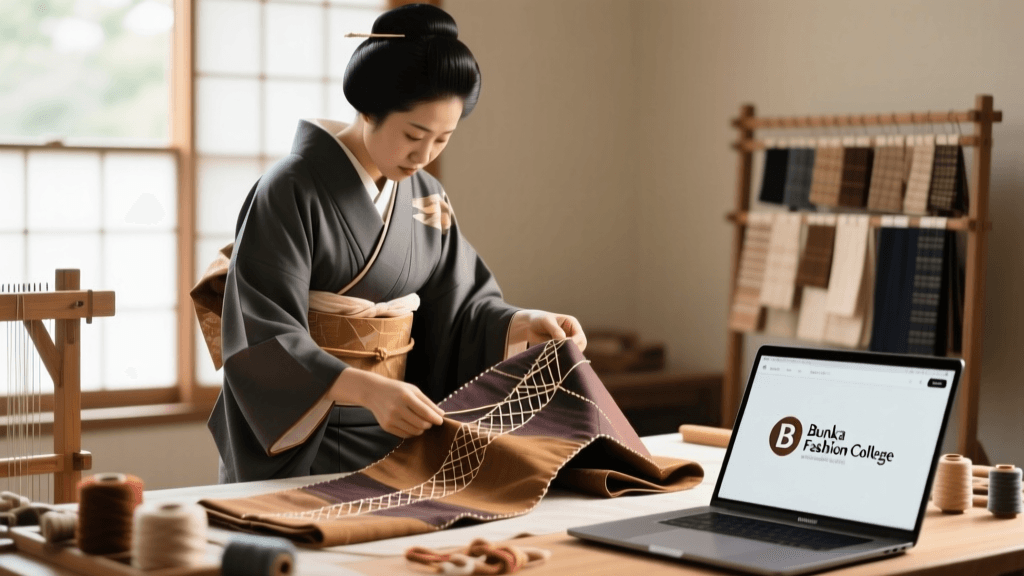
Weaving on a traditional Japanese loom is not merely a manufacturing process; it is a moving meditation rooted in Zen spirituality. The concept of mushin (no-mind) is achieved through the repetitive, rhythmic motions of throwing the shuttle and beating the weft. For the weaver, the sensory experience is all-encompassing. The sharp, resonant clack of the wooden osa (reed) beating the yarn into place creates a percussive heartbeat that echoes through the workshop. The air is often heavy with the earthy scent of raw ramie, damp cotton, or the fermented aroma of natural indigo (aizome) vats.
In 2026, wellness retreats in Kyoto and Niigata are integrating loom weaving into their mindfulness programs, recognizing that the intense focus required to manage warp tension and shuttle trajectory naturally quiets the modern, overstimulated mind. The physical posture required by the Jibata—sitting on the floor, engaging the core, and using the body's natural backward lean to tension the warp—aligns the spine and grounds the practitioner in the present moment.
Anatomy of the Jibata and Takahata Looms
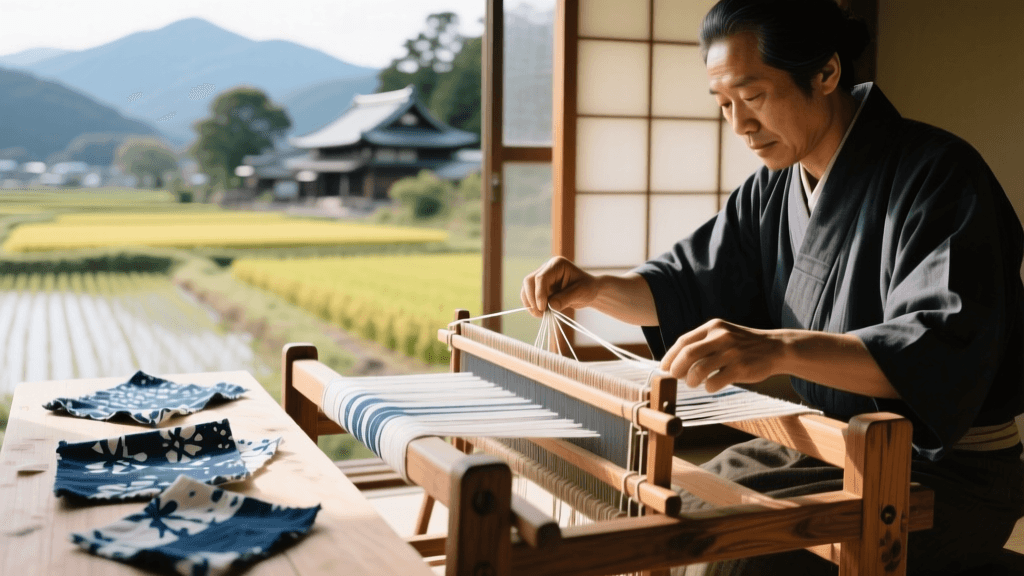
To understand Japanese weaving methods, one must distinguish between the primary traditional looms. The Jibata (floor loom) is uniquely adapted to the Japanese lifestyle and architecture. Unlike Western floor looms that rely on heavy wooden frames and foot treadles, the traditional Jibata often utilizes a backstrap-like tensioning system combined with a low wooden frame. The weaver sits on a zabuton (floor cushion), securing the warp beam to their waist or a low anchor, allowing for micro-adjustments in tension simply by shifting their body weight. This makes it ideal for weaving delicate, high-twist yarns that require a gentle, intuitive touch.
Conversely, the Takahata (high loom) is a more complex, multi-shaft treadle loom historically used in the Nishijin district of Kyoto for weaving intricate silk brocades (Nishijin-ori). While the Takahata allows for complex pattern harnesses, it requires a dedicated, elevated seating position and significantly more workshop space. For the 2026 artisan focusing on rural textile traditions like linen and cotton, the Jibata remains the gold standard.
Ojiya-Chijimi: The Art of Crepe Weaving
No discussion of Japanese hand-weaving is complete without examining Ojiya-chijimi, a textile technique originating in the Uonuma region of Niigata Prefecture. Recognized by UNESCO as an Intangible Cultural Heritage, this method produces a lightweight, breathable crepe fabric that is highly prized for summer kimono and modern luxury resort wear. According to the UNESCO Intangible Cultural Heritage registry, the technique relies on a brilliant manipulation of twist and moisture.
The warp threads are kept straight, while the weft threads are spun with a tight, alternating S and Z twist. When the weaving is complete, the cloth is washed in warm water and massaged by hand. The twisted weft threads relax and contract, creating the signature shibo (crepe) texture. Historically, this fabric was then laid out on the snowfields of Niigata to bleach naturally under the sun and snow—a process called yukisarashi. While climate change has made natural snow-bleaching less predictable by 2026, artisanal cooperatives have developed eco-friendly, temperature-controlled hydration chambers that mimic the exact humidity and UV conditions of the traditional snowfields, preserving the textile's unique hand-feel without compromising environmental standards.
2026 Sourcing Guide: Looms, Tools, and Materials
Acquiring a traditional Japanese loom in 2026 requires patience and an understanding of the artisanal supply chain. Custom wooden looms are still crafted by master woodworkers in Gifu and Niigata, often with a waiting list of 12 to 18 months. Below is a comparison of loom types and current market estimates for serious practitioners.
| Loom Type | Origin / Style | Space Required | 2026 Avg Cost (USD) | Best Application |
|---|---|---|---|---|
| Authentic Jibata (Floor) | Echigo / Niigata | 15 - 20 sq ft | $4,500 - $7,500 | Ramie, Cotton, Crepe Weaving |
| Takahata (High Treadle) | Nishijin / Kyoto | 30 - 40 sq ft | $12,000 - $22,000 | Silk Brocade, Complex Patterns |
| Modern Portable Box Loom | Contemporary Hybrid | 5 - 8 sq ft | $600 - $1,200 | Beginners, Travel, Sashiko Weaving |
| Antique Meiji-Era Jibata | Restored Vintage | 20 sq ft | $3,000 - $5,500 | Collectors, Museum Displays |
For sourcing authentic hand-spun ramie and naturally dyed cotton yarns, the Japan Traditional Crafts Aoyama Square in Tokyo remains an indispensable hub. In 2026, they have expanded their international shipping network, allowing global weavers to purchase directly from certified shokunin (master artisans) in rural Japan, ensuring fair trade and direct support to aging weaving communities.
Step-by-Step: Setting Up the Warp (Soko-gake)
The foundation of any hand-woven garment is the warp setup, known as soko-gake. On a Jibata, this process is deeply tactile.
- Measuring the Warp: Using a wooden warping board (seikei-dai), the weaver measures out the continuous threads of ramie or cotton. For a standard summer kimono bolt (tanmono), this requires measuring approximately 12 meters of warp per thread, repeated hundreds of times.
- Threading the Heddles (Soko): The warp threads are passed through the eyes of the soko (heddles). This dictates the shedding pattern. In Ojiya-chijimi, a simple plain weave is often used, but the tension must be perfectly uniform to allow the crepe weft to contract evenly later.
- Denting the Reed (Osa): The threads are then drawn through the bamboo or metal dents of the osa (reed). The density of the reed determines the final width and drape of the fabric. A standard summer fabric might use 40 to 50 ends per inch.
- Tying On and Tensioning: The warp is secured to the front cloth beam and the back tensioning beam. The weaver ties the tensioning cords to their waist belt, leaning back to apply the exact kilograms of pressure required to keep the delicate ramie threads taut without snapping them.
Life Stages of a Weaver: Education and Preservation
The transmission of weaving knowledge in Japan follows a structured life-stage progression, though it has adapted to the digital age. Traditionally, a student begins as a deshi (apprentice), spending the first two years merely preparing yarns, sweeping the workshop, and observing the master. Only after demonstrating patience and respect for the materials are they allowed to dress the loom.
By 2026, the Japan Folk Crafts Museum and various prefectural cultural boards have introduced hybrid apprenticeship models. International students can now utilize augmented reality (AR) headsets to practice the complex threading of the soko in their home studios, receiving real-time feedback from masters in Niigata. Once the foundational skills are verified, the student travels to Japan for the intensive, sensory-rich phase of the apprenticeship, focusing on the physical rhythm of the Jibata and the alchemy of natural dyeing.
As a weaver matures into a shokunin (artisan), they are expected to develop their own aesthetic voice while strictly adhering to the structural integrity of the traditional methods. The ultimate goal is to achieve the status of sensei or Living National Treasure, a title that carries the heavy responsibility of ensuring the craft survives for the next century.
Conclusion: The Future of the Thread
Japanese traditional looms and hand-weaving methods represent a vital intersection of Zen spirituality, material science, and cultural preservation. As the world grapples with the environmental and social costs of fast fashion, the Jibata offers a profound alternative: a return to garments that carry the literal heartbeat of their maker. Whether you are a collector seeking authentic Ojiya-chijimi textiles, or a practitioner setting up your first warp in 2026, engaging with these traditional methods is an act of cultural stewardship. By honoring the rhythm of the shuttle and the tension of the thread, we ensure that the rich tapestry of Asian textile traditions continues to unfold for generations to come.