Top Japanese Kimono Tailoring Workshops & Courses 2026
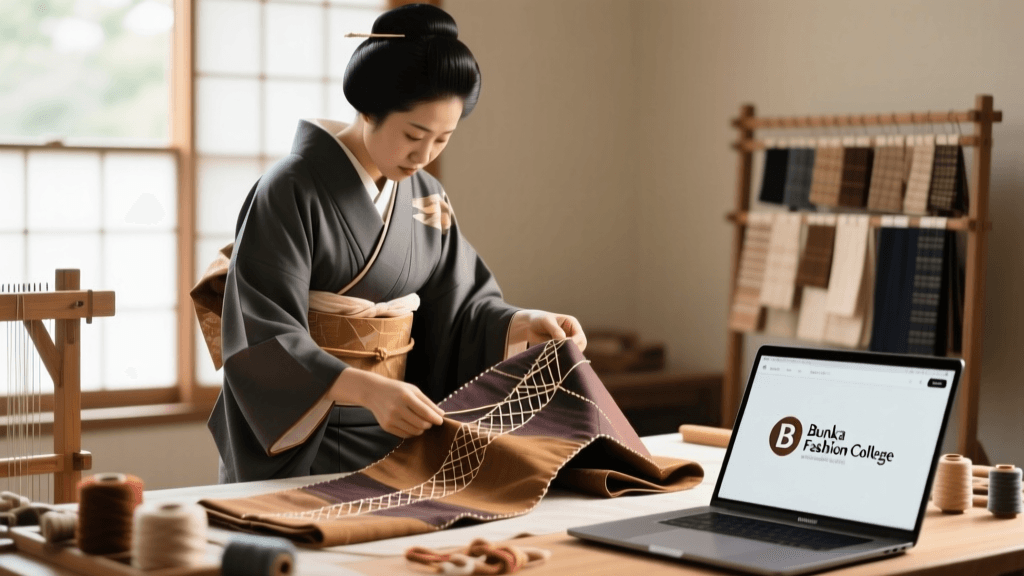
The 2026 Renaissance of Traditional Japanese Garment Education
As the global fashion industry pivots toward sustainability and slow fashion in 2026, traditional Japanese garment making has emerged as a beacon of zero-waste design and enduring craftsmanship. For designers, historians, and textile enthusiasts, mastering the art of the kimono, yukata, and haori is no longer confined to multi-year apprenticeships in Kyoto. Today, prestigious Japanese fashion schools and specialized cultural institutions offer immersive workshops and cutting-edge online learning platforms that bridge ancient techniques with modern technology.
At the heart of this educational movement is the philosophy of mottainai (a sense of regret concerning waste) and the structural genius of the tanmono—the standard 36-to-40-centimeter-wide, 12-meter-long bolt of fabric from which a complete kimono is cut using only straight lines. Unlike Western tailoring, which relies on curved seams and fabric removal to create three-dimensional shapes, traditional Japanese pattern making (shikumi) honors the two-dimensional integrity of the textile. In 2026, institutions are teaching these concepts not just as historical artifacts, but as vital, forward-thinking methodologies for the future of global fashion.
Top In-Person Workshops in Tokyo and Kyoto
For those able to travel to Japan, in-person workshops provide unparalleled access to master artisans, historic looms, and authentic dyeing facilities. The 2026 academic calendar features several standout programs tailored for international students and working professionals.
Bunka Fashion College: Summer Intensive Kimono Tailoring
Recognized globally as a pioneer in fashion education, Bunka Fashion College in Tokyo has expanded its 2026 summer curriculum to include a dedicated four-week intensive on traditional kimono tailoring and modern integration. Students learn to draft patterns using the traditional heraboke (wooden ruler) and sew using the unshin (running stitch) technique. The 2026 cohort also explores how to adapt traditional silk textiles for contemporary ready-to-wear silhouettes without compromising the fabric's structural integrity. Cost: Approximately 380,000 JPY (roughly $2,500 USD), excluding materials and housing.
Kyoto Traditional Arts Super College: Natural Dyeing and Sashiko
Located in the cultural heart of Japan, this institution offers weekend and two-week intensives focused on ai-zome (traditional indigo dyeing) and sashiko (functional reinforcement stitching). In 2026, the college has introduced a new module on cultivating and maintaining sukumo (fermented indigo leaves) in urban studio environments. Participants leave with a deep understanding of color theory as dictated by nature and the meditative rhythm of hitomezashi (one-stitch sashiko) patterns. Cost: 65,000 JPY for the two-week intensive.
Premier Online and Hybrid Learning Platforms
For those unable to relocate to Japan for months at a time, 2026 has brought remarkable advancements in digital textile education. Schools have integrated Augmented Reality (AR) and high-definition macro-video into their Learning Management Systems (LMS), allowing remote students to study the drape of silk crepe (chirimen) and the precise tension required for shibori binding.
- Bunka Virtual LMS: Offers asynchronous modules on flat-pattern drafting. Students receive a physical tanmono practice kit in the mail and submit 3D-scanned garments for instructor feedback.
- Kyoto Art Center Virtual Studios: Live-streamed weekend workshops focusing on yuzen resist dyeing. Instructors use overhead macro-cameras to demonstrate the application of rice-paste resist (itome-nori) with pinpoint accuracy.
- Global Slow Fashion Consortium: A collaborative online platform where Japanese masters teach the philosophy of wabi-sabi in textile repair, focusing on boro and visible mending techniques using vintage indigo scraps.
Comparing 2026 Learning Modalities
| Modality | Duration | Estimated Cost (2026) | Best Suited For | Material Access |
|---|---|---|---|---|
| In-Person (Tokyo) | 4 Weeks | $2,500 USD + Living | Career designers, deep immersion | Full studio access, silk, industrial irons |
| In-Person (Kyoto) | 2 Weeks | $450 USD + Living | Dyers, embroiderers, hobbyists | Indigo vats, vintage textiles, looms |
| Hybrid (AR + Mail) | 8 Weeks | $800 USD | Working professionals, global students | Mailed cotton practice kits, AR draping tools |
| Live Virtual | Weekends | $250 USD | Beginners, mending enthusiasts | Student sources local materials via guide |
Essential Tools for Your Home Studio
Whether you are preparing for an in-person workshop or setting up a home studio for your online classes, acquiring the correct tools is paramount. The Japanese Ministry of Economy, Trade and Industry (METI) emphasizes that traditional crafts rely heavily on specialized, regionally produced implements. Here is what you need to acquire in 2026:
- Shaku and Heraboke: The traditional Japanese measuring system relies on the shaku (approximately 37.8 cm). A heraboke is a specialized wooden ruler used for marking straight lines on silk without snagging the delicate fibers.
- Kote (Traditional Iron): Unlike modern steam irons, the kote is a specialized, often charcoal-heated or modern electric equivalent designed to press seams flat without crushing the weave of the tanmono. Modern electric versions feature precise temperature controls for delicate silks.
- Harite (Tension Clips): Wooden clips with metal teeth used to hold fabric taut on a tatami mat or cutting table while sewing long, continuous running stitches.
- Sashiko Thimbles (Yubinuki): Worn on the middle finger rather than the index finger, these coin-shaped or ring-shaped leather and metal thimbles allow the needle to be pushed through multiple layers of heavy indigo cotton with the side of the finger.
The Philosophy of Kitsuke and Modern Adaptation
Beyond the cutting and sewing of the garments, a comprehensive 2026 curriculum must address kitsuke—the art of dressing. Traditional kimono dressing is an intricate process of wrapping, folding, and tying that transforms flat, two-dimensional panels into a structured, elegant silhouette. In modern fashion school workshops, students are taught the biomechanics of kitsuke, analyzing how the obi (sash) supports the posture and how the datejime (tying belts) secure the layers. Understanding kitsuke is crucial for contemporary designers who wish to adapt wrap-style closures, modular layering, and adjustable waistbands into modern streetwear and high fashion. By mastering the physical interaction between the body and the tanmono, students learn to design garments that adapt to the wearer's movements and fluctuations in body shape, embodying the ultimate form of inclusive and sustainable design.
Navigating Visas and Enrollment Logistics
For international students planning to attend in-person workshops lasting longer than 90 days, navigating Japan's immigration system is a critical first step. In 2026, the Cultural Activities Visa remains the most appropriate pathway for those studying traditional arts, tea ceremony, or garment making without the intent of immediate paid employment in Japan. Applicants must provide a certificate of enrollment from a recognized institution, a detailed study plan, and proof of financial sustainability.
Applications for prestigious summer intensives typically open in January and close by late March. It is highly recommended to connect with the international student offices of schools like the Kyoto Costume Institute or affiliated university programs early in the year to secure your placement and begin the visa sponsorship process. Furthermore, many schools now offer pre-departure virtual orientation sessions, teaching students basic Japanese terminology for the studio, such as migigoro (right body panel) and okumi (front overlap panel), ensuring a smooth transition into the physical workspace.
The Future of Japanese Textile Education
The integration of traditional Japanese garment making into global fashion curricula is more than a passing trend; it is a necessary evolution toward mindful consumption. By studying the mathematical precision of the kimono, the chemistry of natural indigo, and the meditative discipline of sashiko, the next generation of designers is learning that true luxury lies in the preservation of time, culture, and material. Whether you are threading a needle in a historic Kyoto studio or analyzing the drape of digital silk via an AR headset in your living room, the 2026 landscape of Japanese fashion education offers a profound, accessible, and deeply inspiring path forward.