Top Hanfu Certification Programs & Workshops for 2026
The global fascination with traditional Chinese clothing has evolved from a niche internet subculture into a multi-billion-dollar cultural and fashion industry. As we navigate the mature market of 2026, the demand for historical accuracy, professional styling, and academic rigor has never been higher. Enthusiasts and professionals alike are no longer satisfied with surface-level aesthetics; they seek deep, structural knowledge of dynastic silhouettes, textile weaving techniques, and ceremonial protocols. This shift has given rise to a robust ecosystem of formal Hanfu education workshops and certification programs.
Whether you are an aspiring historical consultant for film and television, a cultural heritage educator, or a high-end bridal stylist specializing in traditional Chinese weddings, obtaining a recognized certification in Hanfu studies is now a critical career milestone. In this comprehensive guide, we explore the premier Hanfu certification pathways available in 2026, breaking down curriculums, costs, and the professional doors these credentials open.
The Rise of Formal Hanfu Education in 2026
For years, Hanfu education was largely decentralized, relying on social media tutorials, independent bloggers, and community-led meetups. While these grassroots efforts were vital in sparking the modern revival, the industry's explosive growth necessitated standardized, peer-reviewed educational frameworks. By 2026, leading cultural institutions and fashion universities have stepped in to bridge the gap between amateur enthusiasm and professional mastery.
Today, certification programs focus heavily on material culture and historical authenticity. Students are taught to differentiate between the structural nuances of a Tang Dynasty Banbi (half-sleeve jacket) and a Song Dynasty Beizi (long outer jacket). Furthermore, institutions now emphasize the preservation of intangible cultural heritage, integrating lessons on traditional sericulture and loom weaving. According to the UNESCO Intangible Cultural Heritage frameworks, the transmission of traditional craftsmanship is vital for cultural continuity, a principle that modern Hanfu certification programs have wholeheartedly adopted.
Top Hanfu Certification Pathways
1. Museum-Backed Historical Styling Certificates
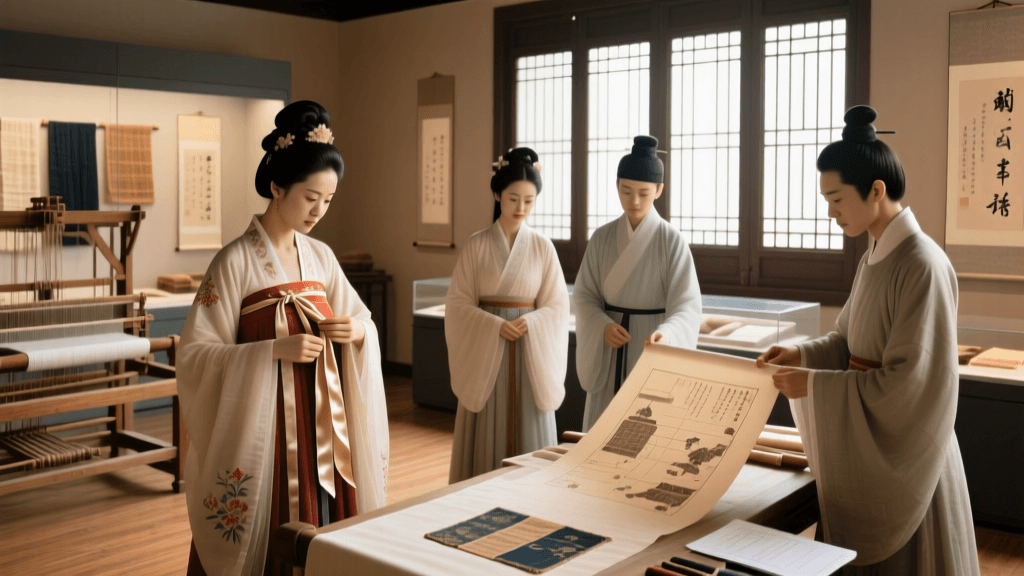
Museums housing extensive textile archives offer some of the most prestigious certifications in the field. The China Silk Museum in Hangzhou, for example, offers an intensive, multi-week residency program that grants direct access to Ming and Qing dynasty textile fragments. These programs are highly competitive and focus on the intersection of archaeological findings and modern reproduction techniques. Graduates earn a "Certificate in Historical Textile Preservation and Styling," which is highly regarded by heritage tourism boards and film production studios across Asia.
2. University Continuing Education Modules
Institutions like the Beijing Institute of Fashion Technology (BIFT) and Donghua University have integrated Hanfu studies into their continuing education and executive masterclass portfolios. These academic programs lean heavily into the socio-historical context of dress. Students analyze sumptuary laws, the evolution of the Mamianqun (horse-face skirt) from the Song to the Ming dynasty, and the influence of the Silk Road on Central Asian and Han Chinese textile exchanges. The academic rigor of these programs makes them ideal for aspiring academics, museum curators, and published authors.
3. Online Masterclasses & Guild Accreditation
For international students and working professionals who cannot relocate to China for intensive residencies, accredited online guilds offer rigorous virtual certifications. The Global Traditional Dress Guild (GTDG) launched its 2026 virtual syllabus, featuring 3D garment rendering, digital textile analysis, and live-streamed draping practicums. While lacking the tactile experience of handling antique silks, these programs excel in teaching the geometry of flat-pattern cutting and the digital archiving of historical garments.
2026 Hanfu Certification Comparison Chart
Choosing the right program depends on your career goals, budget, and geographic flexibility. Below is a structured comparison of the top three certification pathways available this year.
| Program Type | Notable Institution / Provider | Duration | Estimated Cost (2026) | Primary Focus | Best For |
|---|---|---|---|---|---|
| Museum Residency | China Silk Museum (Hangzhou) | 6 Weeks (In-Person) | $4,500 - $6,000 USD | Textile conservation, antique analysis, draping | Curators, Film/TV Wardrobe Supervisors |
| University Certificate | Donghua University (Shanghai) | 4 Months (Hybrid) | $3,200 USD | Dynastic history, pattern drafting, sociology of dress | Academics, Authors, Heritage Educators |
| Virtual Guild Masterclass | Global Traditional Dress Guild | 12 Weeks (Online) | $1,800 USD | Flat-pattern geometry, digital rendering, styling | International Stylists, E-commerce Consultants |
Curriculum Deep Dive: What You Will Learn
A certified Hanfu specialist in 2026 must possess a multidisciplinary skill set. The top-tier programs universally require mastery of the following core modules:
- Dynastic Silhouette Accuracy: Understanding the profound differences in cut and drape between eras. For instance, mastering the high-waisted, voluminous aesthetics of the Tang Dynasty versus the slender, minimalist, and layered silhouettes of the Song Dynasty. Students study primary sources, including tomb murals and surviving textiles, to understand how garments like the Daopao (scholar's robe) were constructed with side slits and inner gussets for mobility.
- Advanced Textile Identification: The ability to identify and source historically accurate fabrics. This includes distinguishing between Kesi (silk tapestry with cut ends), Zhuanghua (Nanjing cloud brocade), and various weaves of ramie and hemp used by commoners. The Metropolitan Museum of Art's Heilbrunn Timeline of Art History provides excellent foundational context on how these textiles signified social rank and bureaucratic status in imperial China.
- Structural Draping and Layering: Hanfu is not merely put on; it is engineered on the body. Certification candidates must pass practical exams demonstrating the correct layering of inner garments (Zhongyi), main garments, and outerwear, ensuring that collars align perfectly (always left over right for the living) and that waist ties are secured using period-accurate knots.
- Accessory and Grooming Protocols: A complete Hanfu look requires historically grounded accessories. Modules cover the metallurgy and symbolism of hairpins (Zan and Chai), the construction of traditional cloth boots, and the evolution of ceremonial headwear, such as the Futou worn by Ming dynasty officials.
Career Opportunities for Certified Hanfu Professionals
The professionalization of Hanfu studies has created a lucrative niche market. In 2026, certified professionals are actively recruited across several high-value sectors:
Film, Television, and Theater Consulting: With global streaming platforms investing heavily in high-budget Chinese historical dramas (Xianxia and Wuxia genres), production companies require on-set consultants to prevent anachronisms. A certified specialist ensures that the weave, color, and cut of a costume accurately reflect the specific decade of the depicted dynasty, avoiding the costly public backlash that historically inaccurate costuming can generate on social media.
High-End Cultural Bridal Styling: The demand for authentic Ming-dynasty style weddings has surged. Certified Hanfu stylists command premium rates for curating the bride and groom's attire, which often involves sourcing authentic Phoenix crowns (Fengguan) and managing the complex layering of the Mang Pao (python robe) for the wedding ceremony.
Heritage Tourism and Diplomacy: Cultural centers, embassies, and luxury tourism boards hire certified educators to lead immersive workshops for international dignitaries and tourists. These professionals design interactive experiences that teach the philosophy of Li (ritual propriety) through the physical act of dressing in traditional garments.
How to Choose the Right Program in 2026
When selecting a certification program, scrutinize the faculty's credentials. The most reputable programs are taught by a hybrid team of academic historians, archaeological textile conservators, and master tailors. Beware of "weekend certification" mills that prioritize modern, fantasy-inspired aesthetics over historical integrity. True certification requires hundreds of hours of study, hands-on textile analysis, and rigorous practical examinations.
Furthermore, consider the alumni network. Programs affiliated with major museums or state-recognized cultural heritage bureaus often provide direct pipelines to internships and consulting gigs within the heritage sector. As the Hanfu industry continues to mature and globalize throughout 2026, holding a credential from a respected, historically grounded institution is your most valuable asset in preserving and promoting the profound legacy of Asian traditional garments.