Hanfu Etiquette: Greeting Rituals and Dress Code Rules
Introduction to Hanfu Etiquette and the Philosophy of Li
Hanfu is far more than a historical fashion statement; it is a profound physical manifestation of Chinese philosophy, social harmony, and cultural continuity. To wear Hanfu correctly, one must also embody the behaviors and manners that historically accompanied the garments. This synergy between clothing and conduct is rooted in the Confucian concept of Li (rites, etiquette, or ritual propriety). According to the Stanford Encyclopedia of Philosophy, Li encompasses the norms of proper behavior, guiding individuals on how to interact with others, the divine, and the natural world with reverence and respect. When you don a traditional Hanfu ensemble, you are stepping into a framework of Li that dictates how you stand, walk, greet, and present yourself.
In the modern Hanfu revival movement, understanding these etiquette rules is essential for participating in tea ceremonies, traditional festivals, and formal cultural gatherings. This guide provides actionable, precise instructions on mastering Hanfu greeting rituals, understanding historical dress codes, and managing the unique structural elements of traditional Chinese garments.
Mastering the Core Greetings: Gongshou, Zuoyi, and Wanfu
The most recognizable Hanfu greeting is the clasped-hand bow. However, the exact execution varies significantly based on gender, context, and the level of formality required. The foundation of this greeting relies on the ancient Chinese cosmological concepts of Yin and Yang.
1. The Gongshou (拱手) and Zuoyi (作揖)
For Men (The Auspicious Greeting): In traditional Chinese metaphysics, the left side represents Yang (life, sun, and auspiciousness), while the right represents Yin (death, moon, and inauspiciousness). Therefore, when a man performs the Gongshou, he makes a fist with his right hand and wraps his left hand around it. The left thumb should be tucked in, and the fingers should be straight. Wrapping the left over the right signifies peace and respect. Critical Exception: During mourning rites or funerals, this is reversed (right hand over left fist) to reflect the somber, Yin-dominant nature of the event.
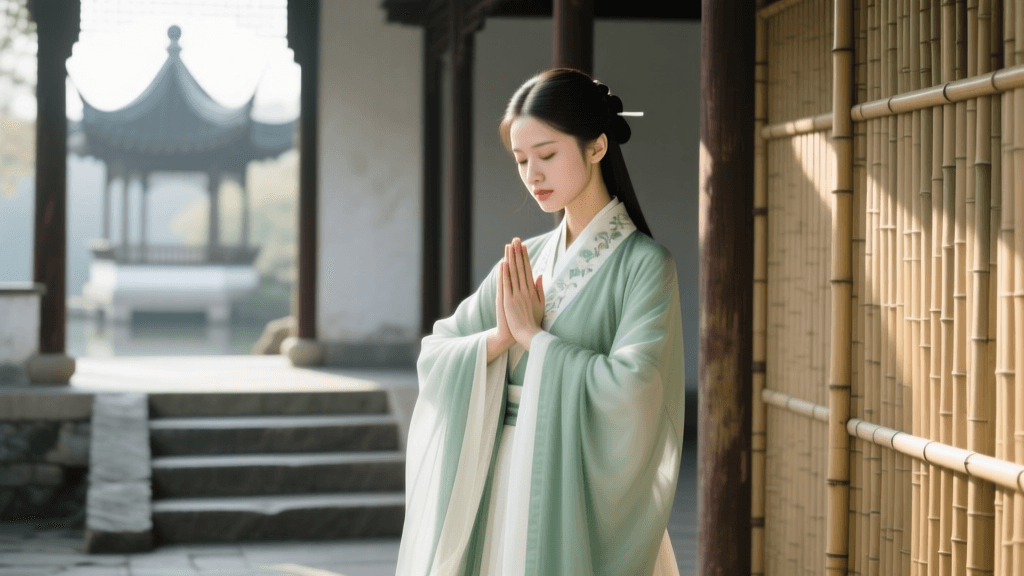
For Women: Traditional etiquette dictates that women reverse the hand placement to align with Yin energy. A woman will make a fist with her left hand and wrap her right hand around it. Alternatively, women may simply clasp both hands flat against each other (palms touching, fingers aligned) without making a fist, resting them at the right side of the waist.
Executing the Zuoyi (The Bow):
- Posture: Stand with feet shoulder-width apart, back completely straight, and shoulders relaxed.
- The Lift: Raise your clasped hands (Gongshou) to chest level, keeping your elbows slightly rounded and relaxed, not rigidly pinned to your sides.
- The Bow: Push your hands slightly forward and bow from the waist. Keep your neck aligned with your spine; do not just drop your head.
- Angles and Timing: For casual greetings to peers, a 15-degree bow held for 1 second is sufficient. For formal greetings to elders or teachers, execute a 45-degree bow and hold the position for 2 to 3 seconds before rising slowly. For solemn ancestral or temple rituals, a 90-degree deep bow is required.
2. The Wanfu (万福) Greeting for Women
Popularized during the Song and Ming dynasties, the Wanfu is a highly elegant, feminine greeting. To perform it, clasp your hands flat against each other and place them slightly to the right of your waist or hip. Gently bend your knees in a slight curtsy while bowing your head softly. This greeting is ideal for women wearing voluminous skirts like the Mamianqun (horse-face skirt), as it prevents the fabric from pulling awkwardly.
Hanfu Dress Codes: Matching Garment to Occasion
Historically, the Encyclopædia Britannica notes that Chinese dress codes were strictly regulated by sumptuary laws, dictating who could wear what based on social rank and occasion. Today, while sumptuary laws no longer exist, the Hanfu community categorizes garments into three main tiers to maintain historical accuracy and situational appropriateness.
| Category | Garment Type | Sleeve Width & Hem | Best Occasions |
|---|---|---|---|
| Xiaofu (Small Dress) | Duanhe, narrow-sleeve Ruqun | Sleeves: 15-25 cm. Hem: Ankle-length. | Daily wear, casual outings, active tasks, archery. |
| Changfu (Regular Dress) | Beizi, standard Aoqun, Lanshan | Sleeves: 25-40 cm. Hem: Ground-grazing (1 cm clearance). | Tea ceremonies, visiting friends, cultural festivals, semi-formal dinners. |
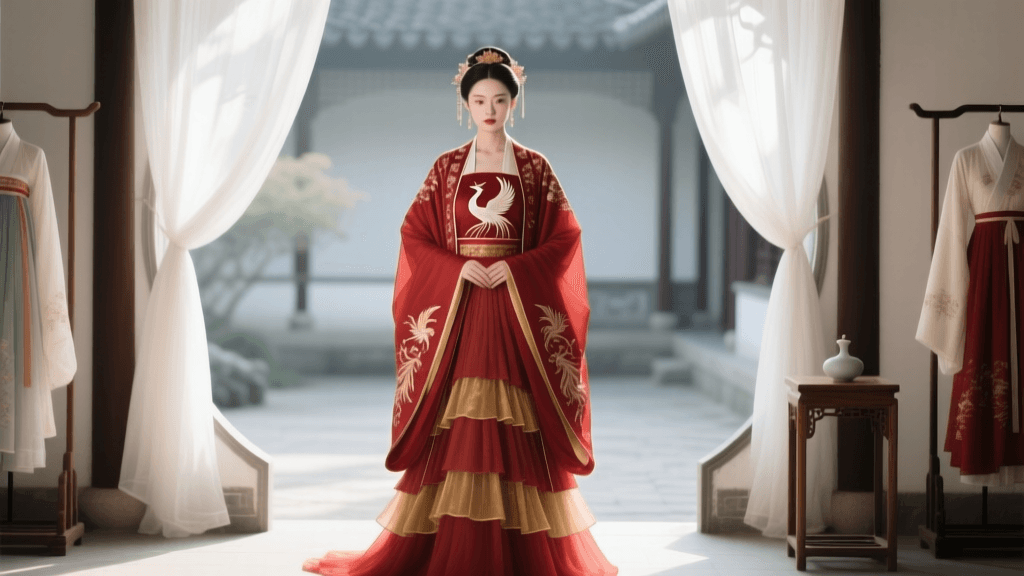
| Lifu (Ritual/Formal) | Da Xiu Shan, Shenyi, formal Mamianqun | Sleeves: 40-60+ cm (Da Xiu). Hem: Trailing or floor-pooling. | Weddings, ancestral worship, coming-of-age rites (Guanli/Jili), stage performances. |
Actionable Advice for Hem Lengths: When tailoring or purchasing a formal Changfu or Lifu skirt, measure your height while wearing the specific shoes you intend to use. The front hem should sit exactly 1.5 cm above the floor. This prevents the fabric from dragging and collecting dirt while ensuring the pleats of a Mamianqun fall perfectly vertical, creating the desired 'waterfall' effect when walking.
Posture, Movement, and Sleeve Management
Wearing wide-sleeved Hanfu requires a complete adjustment to your physical movement. The flowing nature of the silk and linen fabrics demands grace and deliberate pacing.
Walking and Sitting
When walking in a long Hanfu skirt, avoid lifting your knees high. Instead, use a 'gliding' step: keep your feet close to the ground, striking with the heel first and rolling smoothly to the toe. This keeps the skirt's hem stable and prevents the pleats from tangling. When sitting, especially in formal settings, keep your knees together and your back straight. If sitting on the floor in a traditional seiza-style kneeling position, ensure your skirt is neatly folded beneath you, and rest your clasped hands on your thighs.
The Art of Lishou (Sleeve Management)
The wide sleeves (Da Xiu) of formal Hanfu are a symbol of elegance, but they can be impractical if left unmanaged. The traditional method of holding the sleeves is called Lishou. When standing before an elder, preparing to serve tea, or performing a formal bow, use your opposite hand to gently pinch the cuff of your sleeve about 10 cm from the edge, folding the excess fabric back over your forearm. This exposes your hands for practical tasks while maintaining the dignified silhouette of the garment. The Victoria and Albert Museum's Asian collections frequently highlight the structural brilliance of these sleeves, which were designed not just for aesthetics, but to force the wearer into a posture of calm and deliberation.
Accessories, Grooming, and Final Presentation
A Hanfu outfit is considered incomplete—and historically inappropriate for formal settings—without proper grooming and accessories.
- Hair Binding: In traditional Chinese culture, allowing hair to hang loose was associated with mourning, barbarism, or a state of undress. For formal Hanfu wear, hair must be tied up. Men traditionally wear a Guan (cap) or bind their hair with a simple jade or wooden hairpin. Women utilize intricate updos secured with Ji (hairpins) and Zan (ornamental sticks), often adorned with silk ribbons or dangling buyao (step-shake) ornaments that sway gently with movement.
- Footwear: Avoid modern sneakers or visible contemporary shoes. Traditional Yuntou xie (cloud-head shoes) made of embroidered silk or cotton are the standard. For men, simple black cloth boots or leather shoes with upturned toes are historically accurate for Ming and Song dynasty ensembles.
- Undergarments: Proper layering is crucial. Always wear a white or neutral-toned inner garment (Zhongyi) beneath your outer robes. The collar of the Zhongyi should peek out exactly 1 to 2 cm above the outer collar, creating a layered, sophisticated neckline that protects the outer silk from body oils.
Conclusion: Embodying the Spirit of the Garment
Hanfu etiquette is not about rigidly adhering to archaic rules; it is about cultivating mindfulness, respect, and a physical connection to Asian traditions. By mastering the Zuoyi bow, understanding the阴阳 (Yin-Yang) dynamics of hand placement, and respecting the dress codes of Xiaofu and Lifu, you elevate your experience from merely wearing a costume to truly embodying a living cultural heritage. Whether you are attending a modern Hanfu parade or a quiet tea ceremony, let your posture and greetings reflect the deep, enduring elegance of the garments you wear.