Modern Qipao Styling: Evolution & Everyday Cheongsam
The qipao, widely recognized across the globe as the cheongsam, stands as a monumental pillar in the history of Asian traditional garments. Originating as a loose-fitting, modest robe worn by Manchu women during the Qing Dynasty, the garment underwent a radical transformation in the early 20th century. Today, it is celebrated not merely as a historical artifact, but as a living, breathing element of contemporary fashion. The modern resurgence of the qipao, heavily influenced by the Xin Zhongshi (New Chinese Style) movement, has transformed the cheongsam from a rigid, formal uniform into a versatile wardrobe staple. Whether you are looking to incorporate traditional Chinese aesthetics into your daily streetwear or seeking the perfect bespoke silhouette for a formal event, understanding the evolution, sizing, and styling of the modern qipao is essential.
The Evolution of the Qipao: From Shanghai Streets to Global Runways
To truly master modern qipao styling, one must first appreciate its dynamic sartorial journey. During the 1920s and 1930s in Shanghai, the qipao was radically reimagined. Influenced by Western flapper fashion and modernist tailoring, the garment was cinched at the waist, shortened at the hem, and fitted with side slits to allow for greater mobility. According to The Metropolitan Museum of Art, this era introduced structured darts, set-in sleeves, and the iconic high mandarin collar, establishing the silhouette that the world now recognizes as the traditional cheongsam.
However, the 21st-century qipao is no longer bound by these strict mid-century rules. The contemporary fashion landscape has embraced deconstruction and fusion. Designers are now experimenting with asymmetrical hems, drop-shoulders, and hybrid garments that blend the qipao's signature pankou (knotted fasteners) with Western streetwear elements. As noted by Sixth Tone, the Xin Zhongshi movement has been heavily driven by Gen Z consumers who demand that traditional garments be adaptable, comfortable, and expressive of individual identity rather than strict historical conformity.
Traditional vs. Modern Cheongsam: A Design Comparison
Understanding the differences between vintage cuts and modern interpretations will help you select the right garment for your lifestyle.
| Feature | Traditional Qipao (1930s-1950s) | Modern Xin Zhongshi (2020s) |
|---|---|---|
| Collar | Stiff, high mandarin collar (3-5cm) | Softer, lower collars, V-necks, or collarless |
| Fasteners | Functional knotted pankou across the chest | Decorative pankou, hidden zippers, or snap buttons |
| Silhouette | Form-fitting, tailored darts, pencil skirt | Relaxed, A-line, shift dress, or cropped tops |
| Slits | Moderate side slits for walking ease | Asymmetrical, dramatic high slits, or no slits |
| Materials | Silk crepe, heavy brocade, cotton | Linen, denim, jacquard, tech fabrics, velvet |
Sizing and Measurements: Getting the Perfect Fit
One of the most common challenges Western buyers face when purchasing a qipao online is navigating Asian sizing and traditional tailoring proportions. Unlike Western dresses that often rely on stretch fabrics or standard S/M/L grading, a proper qipao requires precise measurements.
When ordering a bespoke or made-to-measure cheongsam, you must provide four critical measurements:
- Bust: Measure around the fullest part of your chest.
- Waist: Measure at your natural waistline, typically the narrowest part of your torso.
- Hips: Measure around the fullest part of your hips and buttocks.
- Hollow-to-Hem: This is crucial for qipaos. Measure from the hollow at the base of your neck down to where you want the hem to fall. Because traditional qipaos have a high waistline and specific knee placements, standard waist-to-hem measurements are insufficient.
Pro-Tip: Traditional silk and brocade fabrics have zero stretch. Always add 1 to 1.5 inches (2.5 to 4 cm) of ease to your bust, waist, and hip measurements to ensure you can sit, breathe, and eat comfortably. If you are buying a modern Xin Zhongshi qipao made from cotton-linen blends or stretch crepe, you can stick closer to your exact measurements.
Everyday Styling: Integrating the Qipao into Modern Wardrobes
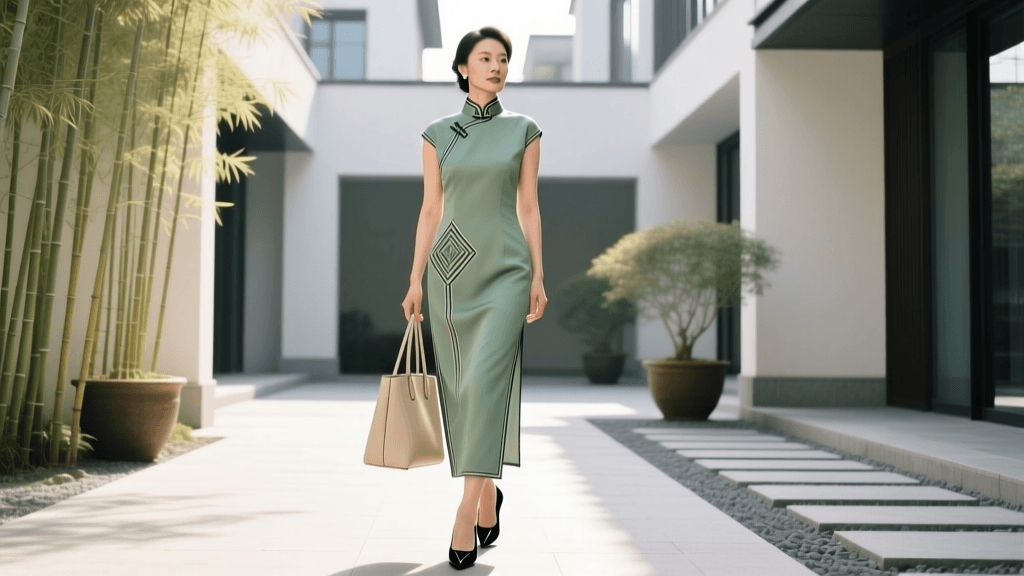
The beauty of the New Chinese Style movement is its inherent versatility. You no longer need a formal gala to justify wearing a cheongsam. For everyday wear, opt for a short-sleeved or sleeveless cotton-linen qipao in muted tones like sage green, slate grey, or indigo. These fabrics are breathable, machine-washable (on gentle cycles), and cost between $50 and $150 from independent Asian designers on platforms like Etsy or specialized boutiques.
To style a knee-length, relaxed-fit qipao for a day in the city, layer it under an oversized, structured blazer. Pair the outfit with chunky leather loafers or minimalist white sneakers to ground the traditional silhouette with contemporary streetwear aesthetics. Alternatively, the cropped qipao trend is dominating social media platforms like TikTok and Douyin. A cropped, mandarin-collar top with subtle pankou knots pairs beautifully with high-waisted wide-leg denim or linen trousers, creating a balanced, fashion-forward look that respects traditional motifs while embracing modern proportions. As highlighted by Vogue, the key to modernizing the cheongsam lies in juxtaposition—mixing the delicate, historical elements of the garment with utilitarian or avant-garde modern pieces.
Formal and Bridal Cheongsam Styling
For weddings, galas, and Lunar New Year celebrations, the traditional floor-length qipao remains unmatched in elegance. Formal cheongsams are typically crafted from premium materials such as mulberry silk, Xiangyunsha (gambiered Canton gauze), or intricate Song brocade. Xiangyunsha is a highly prized, heritage fabric that is dyed using river mud and plant extracts, resulting in a rich, dark finish that is water-resistant and incredibly luxurious.
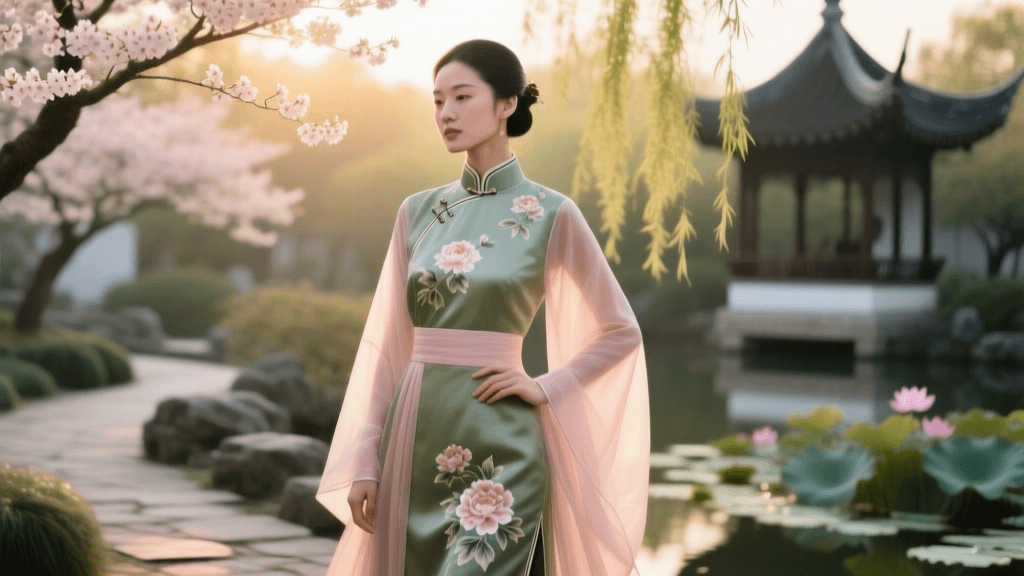
Formal qipaos often feature hand-embroidered motifs. The peony represents wealth and honor, the phoenix symbolizes grace and feminine power, and the crane denotes longevity. Because of the intensive hand-embroidery and premium textiles, a high-quality formal cheongsam is an investment piece, typically ranging from $400 to over $3,000. When styling a formal qipao, keep accessories minimal. Let the garment's intricate patterns speak for themselves. Pair it with jade or pearl drop earrings, a sleek low bun, and classic pointed-toe pumps. Avoid heavy, chunky jewelry that competes with the delicate pankou knots and embroidery.
Garment Care: Preserving Your Silk and Brocade
Proper care is essential to maintain the structural integrity and luster of your qipao.
- Silk and Brocade: Never machine wash or wring these fabrics. Dry cleaning is highly recommended for heavily structured or embroidered pieces. If you must hand wash plain silk, use cold water and a pH-neutral silk detergent.
- Pankou Knots: Be careful not to crush the knotted fasteners during storage or ironing. Use a pressing cloth and low heat if you must remove wrinkles near the chest.
- Storage: Never hang a heavy brocade qipao on a wire hanger, as this will distort the shoulders and stretch the fabric. Instead, use wide, padded hangers, or fold the garment with acid-free tissue paper and store it flat in a breathable cotton garment bag away from direct sunlight.
Conclusion
The qipao is far more than a static relic of 1930s Shanghai; it is a dynamic, evolving canvas that bridges the gap between ancient Asian traditions and modern global fashion. By understanding its history, mastering the nuances of traditional tailoring, and embracing the boundary-pushing Xin Zhongshi styling techniques, you can seamlessly integrate the cheongsam into your contemporary wardrobe with confidence and profound cultural respect.