DIY Hanfu Guide: Sewing the Traditional Mamianqun Skirt
The Renaissance of the Mamianqun in Modern DIY Hanfu
The global Hanfu movement has sparked a vibrant renaissance in traditional Chinese clothing, inspiring enthusiasts and makers to recreate historical garments with their own hands. Among the most iconic and highly sought-after pieces is the Mamianqun, commonly translated as the 'horse-face skirt.' Originating in the Song Dynasty and reaching the height of its popularity during the Ming Dynasty, the Mamianqun is celebrated for its elegant silhouette, dynamic movement, and intricate pleating. For the DIY sewing enthusiast, constructing a Mamianqun is a deeply rewarding project that bridges the gap between historical textile appreciation and modern garment construction.
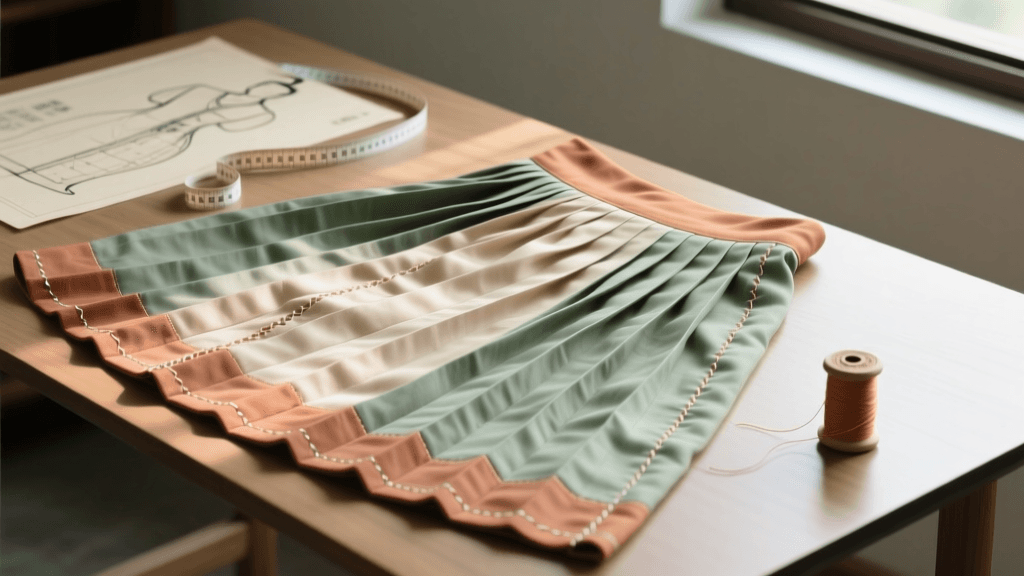
Unlike Western wrap skirts or standard pleated skirts, the Mamianqun features a highly specific structural design. It is composed of two overlapping fabric panels that create flat, unpleated sections at the front and back (the 'horse faces'), while the sides feature deep, structured pleats. This guide will walk you through the essential steps of drafting your own pattern, selecting the appropriate textiles, and executing the precise pleating math required to sew an authentic, historically inspired Mamianqun from scratch.
Understanding the Structural Anatomy
Before cutting into your fabric, it is crucial to understand the unique anatomy of the skirt. A traditional Mamianqun is constructed from two identical, large rectangular panels of fabric. Each panel has a flat central section (the skirt face) and pleated sections on both sides. When the two panels are wrapped around the body and secured at the waist, the flat sections overlap perfectly at the center front and center back. The side pleats remain hidden when standing still but fan out beautifully with movement. The skirt is finished with a wide, contrasting waistband, traditionally made of white cotton or linen, which is tied securely around the waist using long fabric ribbons.
Selecting the Right Fabric for Your Hanfu
Fabric selection is arguably the most critical step in Hanfu construction. The drape, weight, and fiber content of your textile will dictate how well the pleats hold their shape and how the skirt moves. Historically, wealthy Ming Dynasty women wore skirts made of luxurious silks, often featuring elaborate jacquard weaves, gold thread, and vibrant dyes. According to the Metropolitan Museum of Art, silk production and textile weaving in China reached unparalleled levels of sophistication during the Ming era, with complex draw-looms used to create the highly patterned silks favored by the elite.
Today, the intricate craftsmanship of traditional Chinese textiles is globally recognized, with sericulture and silk craftsmanship inscribed on the UNESCO Representative List of the Intangible Cultural Heritage of Humanity. While authentic silk remains the gold standard for luxury Hanfu, modern DIY makers have a variety of accessible options. Below is a comparison of the most common fabrics used in modern Mamianqun construction.
| Fabric Type | Drape & Weight | Pleat Retention | Cost (per yard) | Best For |
|---|---|---|---|---|
| Silk Jacquard | Heavy, fluid, luxurious | Excellent (requires heavy ironing) | $30 - $80+ | Authentic replicas, formal events |
| Polyester Brocade | Medium-heavy, structured | Superior (holds sharp creases) | $10 - $25 | Beginners, daily wear, crisp pleats |
| Cotton Sateen | Medium, soft, matte | Good (requires starch spray) | $8 - $15 | Summer wear, casual styling |
| Rayon/Viscose | Lightweight, very fluid | Poor (pleats will fall out) | $6 - $12 | Not recommended for Mamianqun |
| Wool Blend | Heavy, warm, structured | Excellent (tailoring grade) | $20 - $40 | Winter Hanfu, historical cold-weather |
Pro-Tip: If you are a beginner, start with a mid-weight polyester brocade or a cotton-polyester blend. These fabrics are forgiving, hold a pressed crease exceptionally well, and are much easier to manage under a sewing machine than slippery, high-end silks.
Tools Required for the Project
- Rotary cutter and self-healing cutting mat
- Clear acrylic quilting ruler (for precise pleat measurements)
- Measuring tape
- Sewing machine with a universal or microtex needle
- High-quality steam iron and ironing board
- Fabric starch or heavy-duty sizing spray
- Fabric weights and fine pins
- Matching polyester or silk thread
Taking Measurements and Drafting the Pattern
The beauty of the Mamianqun is that it is essentially composed of rectangles, meaning you do not need to draft complex curved slopers. However, the math regarding pleat depth and skirt width must be exact. You will need three primary measurements: your natural waist circumference, your desired skirt length, and your chosen pleat depth.
Step 1: Calculate the Flat Skirt Face (Ma Men)
The flat front and back panels should be roughly the width of your front torso. A standard measurement for the flat face is between 15 cm to 20 cm (approx. 6 to 8 inches), depending on your body proportions. Let's use 18 cm for this example.
Step 2: Calculate the Pleats
A traditional Ming-style skirt often features 4 to 6 pleats on each side of the flat face. Let's assume you want 5 pleats per side, and you want each visible pleat to be 4 cm wide. Because each pleat requires three times its visible width in fabric (the visible fold plus the hidden underlay), a 4 cm visible pleat requires 12 cm of fabric.
- Visible pleat width: 4 cm
- Fabric required per pleat: 4 cm x 3 = 12 cm
- Total fabric for one side's pleats: 5 pleats x 12 cm = 60 cm
- Total fabric for both sides of ONE panel: 60 cm x 2 = 120 cm
Step 3: Total Panel Width
Add the flat face to the pleated sections: 18 cm (flat face) + 120 cm (pleats) = 138 cm. You will need to cut two identical rectangular panels, each 138 cm wide. Add 2 cm to the width for seam allowances on the edges.
Step 4: Calculate the Length
Measure from your natural waist to your desired hemline (usually just above the ankle or touching the floor). Add 5 cm for the top seam allowance (to attach the waistband) and 5 cm for the bottom hem. If your desired length is 100 cm, cut your panels to 110 cm in length.
Step-by-Step Sewing Instructions
1. Prepare and Hem the Edges
Before pleating, you must finish the raw edges to prevent fraying and bulk. Fold and press the side edges (the selvedge edges of your 138 cm width) inward by 1 cm and stitch a narrow hem. Next, hem the bottom edge of both panels with a 4 cm double-fold hem. It is vastly easier to hem the flat fabric before attempting to iron the pleats.
2. Mark and Press the Pleats
This is the most labor-intensive step. Lay your fabric flat on a large table. Using a clear ruler and fabric chalk, mark the pleat lines according to your math. Starting from the edge of the flat face, fold the fabric along your chalk lines to create the inner and outer folds of each pleat. Pin heavily. Spray the pleated section generously with fabric starch, then use a hot steam iron to press the pleats razor-sharp. Do not slide the iron; press it down, hold for 5 seconds, and lift. Sliding will distort the grainline.
3. Secure the Pleats
Once all pleats on both panels are pressed, use a sewing machine to stitch a basting line 1 cm from the top raw edge. This permanently locks the pleats in place so they do not shift when you attach the waistband. Check your waist measurement at this stage to ensure the pleated sections wrap around your hips correctly.
4. Attach the Waistband
Cut a waistband from contrasting white cotton or linen. The waistband should be your natural waist measurement plus 80 cm (for the tying ribbons on one side) and 40 cm (for the ribbons on the other side), with a width of 10 cm (which will fold down to a 4 cm finished width). Pin the right side of the waistband to the right side of the skirt's top edge, aligning the raw edges. Stitch with a 1 cm seam allowance. Fold the waistband up, press, and fold the remaining raw edge inward. Topstitch the waistband down, enclosing the raw edges and simultaneously creating the long tying ribbons.
Styling and Wearing Your DIY Hanfu
To wear your newly constructed Mamianqun, step into the skirt and bring the two panels around your waist. Ensure the flat 'horse faces' are centered on your front and back. The right panel should wrap over the left panel (following the traditional youren or right-over-left cross-collar rule of Hanfu). Tie the ribbons securely around your waist.
The Mamianqun is incredibly versatile. For a historically grounded Ming Dynasty look, pair it with a PIAO (a short, pleated upper garment) or a Shan (a long, flowing cross-collar shirt) tucked neatly into the waistband. For a modern, fusion streetwear aesthetic, the skirt pairs beautifully with a fitted turtleneck, a tailored blazer, or a simple silk camisole. By mastering the pattern drafting and sewing techniques outlined in this guide, you not only create a stunning garment but also participate in the living preservation of Asian textile traditions.