The Complete Hanfu Care Guide: Washing and Storage Tips
Introduction to Hanfu Fabric Care
The global revival of Hanfu (traditional Han Chinese clothing) has transformed how we engage with Asian sartorial heritage. Whether you own a delicate Ming dynasty-style Mamianqun (horse-face skirt) crafted from pure mulberry silk, or a durable, everyday Song dynasty-style Beizi made from synthetic chiffon, proper garment care is essential. Traditional Asian garments often feature complex pleating, intricate embroidery, and delicate woven patterns that require specialized maintenance. According to the American Institute for Conservation, improper washing and storage are the leading causes of textile degradation, including fiber breakage, color bleeding, and permanent creasing.
This comprehensive guide provides actionable, step-by-step instructions for washing, drying, ironing, and storing your Hanfu collection, ensuring your traditional garments remain vibrant and structurally sound for generations.
Identifying Your Hanfu Fabrics
Before applying water or heat to your garments, you must identify the fabric composition. Hanfu manufacturers typically use four main categories of textiles, each demanding a unique care protocol.
| Fabric Type | Common Hanfu Items | Wash Method | Water Temp | Iron Setting | Est. Dry Clean Cost |
|---|---|---|---|---|---|
| 100% Mulberry Silk | Mamianqun, formal Ruqun | Hand wash / Dry clean | Cold (Max 30°C/86°F) | Low (with pressing cloth) | $25 - $45 |
| Polyester / Chiffon | Everyday Qixiong Ruqun | Machine (gentle) / Hand | Cool (Max 40°C/104°F) | Low / Steam | $15 - $25 |
| Cotton / Linen Blends | Summer Beizi, Zhongyi | Machine (gentle) / Hand | Warm (Max 40°C/104°F) | Medium-High | $10 - $20 |
| Brocade / Jacquard | Winter jackets, Aoqun | Dry clean only | N/A | Steam only (no contact) | $35 - $60 |
The Hand-Washing Protocol for Delicate Silks
For pure silk Hanfu, hand-washing is the safest and most cost-effective alternative to professional dry cleaning. Silk is a protein-based fiber, much like human hair, and requires a gentle, pH-neutral environment to prevent the fibers from becoming brittle.
Step-by-Step Silk Washing
- Preparation: Fill a clean basin with cool water, strictly not exceeding 30°C (86°F). Hot water will cause silk dyes to bleed and fibers to shrink.
- Detergent Selection: Add a capful of pH-neutral, enzyme-free delicate wash. Products like Eucalan Delicate Wash or The Laundress Delicate Wash (approx. $15-$20 per bottle) are ideal. Never use standard alkaline laundry detergents or bleach, which will dissolve silk proteins.
- Soaking: Submerge the Hanfu gently. Allow it to soak for exactly 5 to 10 minutes. Prolonged soaking weakens the seams and promotes color transfer.
- Agitation: Gently swish the garment through the water. Do not rub, twist, or wring the fabric, as wet silk is highly susceptible to tearing.
- Rinsing: Drain the soapy water and refill with cool, clean water. Repeat until the water runs completely clear. Adding a tablespoon of white vinegar to the final rinse can help restore the silk's natural luster and lock in colors.
Machine Washing Synthetic and Blended Hanfu
Many modern, budget-friendly Hanfu sets are made from polyester chiffon or cotton-linen blends. While more durable, they still require careful machine washing to protect intricate embroidery and metallic thread accents.
- Turn the garment inside out to protect embroidered motifs and woven gold threads from friction.
- Place the Hanfu inside a mesh laundry bag (preferably a fine-mesh bag to prevent snagging).
- Use the 'Delicate' or 'Hand Wash' cycle on your machine with a low spin speed (400 RPM or lower).
- Use a mild liquid detergent. Avoid fabric softeners, which can leave a residue that dulls the vibrant sheen of synthetic chiffons.
Specialized Care: Maintaining Mamianqun Pleats
The Mamianqun (horse-face skirt) is famous for its sharp, structured knife pleats. Washing this garment can easily destroy the pleating if not handled correctly.
The Pleat Preservation Technique: Before washing, fold the skirt along its existing pleat lines. Use rust-proof stainless steel clips or specialized fabric tape to secure the pleats in place. Hand wash the skirt in a basin without agitating the pleated sections. When drying, keep the clips in place until the skirt is 90% dry. The Victoria and Albert Museum's textile conservation guidelines emphasize that maintaining structural tension during the drying phase is critical for preserving historical and traditional pleated garments.
Drying: Preserving the Silhouette and Color
Never use a mechanical tumble dryer for any traditional Asian garment. The intense heat and tumbling action will melt synthetic fibers, shrink silk, and destroy embroidery.
- For Tops and Jackets (Ao, Beizi, Shan): Gently press out excess water by rolling the garment in a clean, dry microfiber towel. Hang on a padded wooden or velvet hanger. Wire hangers will create permanent 'shoulder horns' and distort the garment's drape.
- For Skirts (Qun): Hang using a clip hanger with padded clips, clipping only the unembroidered waistband. Alternatively, lay flat on a mesh drying rack.
- UV Protection: Always dry Hanfu indoors or in a deeply shaded area. Direct sunlight contains UV rays that will rapidly fade the natural and synthetic dyes used in traditional textiles.
Ironing and Steaming Techniques
Wrinkles are inevitable, but applying direct heat to Hanfu can be disastrous. Steamers are vastly superior to traditional flat irons for traditional garments.
Using a Garment Steamer
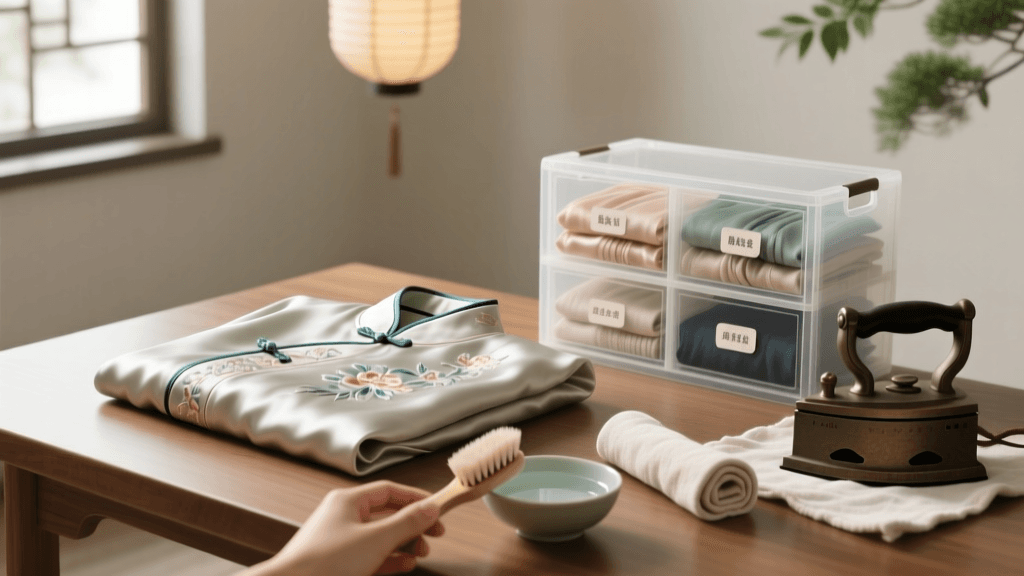
A handheld or standing garment steamer (costing between $30 and $80) is the best investment for a Hanfu enthusiast. Hang the garment and pass the steamer head 2 to 3 inches away from the fabric. The steam will relax the fibers and release wrinkles without crushing embroidery or flattening the texture of brocade. For Mamianqun skirts, steam the pleats while gently pulling the hem downward to encourage the folds to set.
Using a Flat Iron
If you must use a flat iron, always use a 100% cotton pressing cloth between the iron and the Hanfu. Set the iron to the lowest 'Silk/Synthetic' setting. Never spray water directly onto silk while ironing, as this will cause permanent water spots. Iron on the reverse side of the fabric whenever possible.
Long-Term Storage and Archival Preservation
Proper storage is vital for preventing moth damage, yellowing, and permanent creasing. The Smithsonian Institution Archives recommends archival-grade materials for the long-term preservation of cultural textiles.
Storage Materials and Costs
- Acid-Free Tissue Paper: Use unbuffered, acid-free tissue paper (approx. $20 for a pack of 100 sheets) to stuff the sleeves and bodice of your Hanfu. This prevents deep, hard-to-remove creases from forming along the fold lines. (Note: Buffered tissue is for cotton/linen; unbuffered is required for silk).
- Archival Storage Boxes: Store folded, out-of-season Hanfu in acid-free, lignin-free cardboard or polypropylene plastic bins ($25-$40 each). Avoid standard cardboard boxes, which emit acidic gases that yellow silk over time.
- Pest Deterrents: Moths and silverfish are attracted to natural fibers and the starches used in some traditional sizing. Place natural cedar blocks or lavender sachets in your storage bins. Avoid chemical mothballs (naphthalene), which are toxic and will permanently embed a foul odor into the porous silk fibers.
Traveling with Your Traditional Garments
Attending Hanfu festivals, cultural events, or destination photoshoots requires careful packing. Never fold a heavily embroidered or pleated Hanfu into a standard suitcase.
Invest in a breathable, canvas garment bag (avoid plastic dry-cleaning bags, which trap moisture and cause mildew). Roll lightweight chiffon garments loosely rather than folding them to minimize creasing. Upon arriving at your hotel, immediately unbag the garments and hang them in the bathroom while taking a hot shower. The ambient steam will naturally release most travel wrinkles without the need for an iron.
Dealing with Stains and Snags
Accidents happen, especially during festive occasions involving food and makeup.
- Makeup/Oil Stains: Immediately blot (do not rub) the stain with a clean microfiber cloth. Apply a small drop of pH-neutral dish soap or a specialized silk stain remover, gently working it in with a cotton swab. Rinse with cold water.
- Ink Stains: Place a paper towel under the stain and dab the area with a cotton swab dipped in rubbing alcohol. The ink will transfer to the paper towel below.
- Snags and Pulled Threads: Never cut a snagged thread on embroidered or brocade Hanfu, as this can unravel the entire motif. Use a specialized 'snag nab-it' tool or a fine needle to gently pull the snagged thread to the reverse side of the fabric.
Conclusion
Caring for Hanfu and traditional Chinese clothing is an act of cultural preservation. By understanding the specific needs of silk, chiffon, and brocade, and by utilizing proper washing, drying, and archival storage techniques, you ensure that these beautiful garments remain a vibrant part of your wardrobe. Treat your traditional garments with the respect they deserve, and they will continue to tell their historical stories for years to come.