Nishijin-ori vs Yuzen: Guide to Kimono Silk Crafts
The Dichotomy of Japanese Silk: Weaving vs. Dyeing
When exploring the vast and intricate world of traditional Japanese garments, the kimono stands as a masterclass in textile engineering and artistic expression. However, not all silk kimonos are created equal. The fundamental divide in kimono craftsmanship lies between woven textiles and dyed fabrics. In the historic capital of Kyoto, two techniques reign supreme: Nishijin-ori (brocade weaving) and Yuzen (resist dyeing). Understanding the distinction between these two methods is crucial for collectors, cultural enthusiasts, and anyone looking to invest in authentic Japanese silk. This guide breaks down the craftsmanship, fabric types, costs, and practical care required for these magnificent textiles.
Nishijin-ori: The Architectural Weave of Kyoto
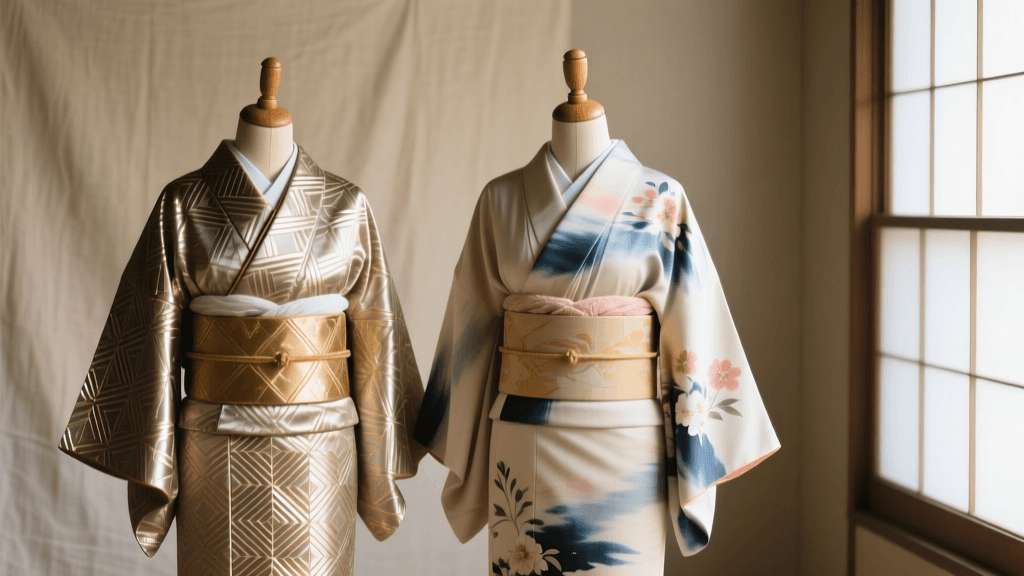
Nishijin-ori is not merely a fabric; it is an architectural marvel of interlaced threads. Originating in the Nishijin district of Kyoto over 1,200 years ago, this technique involves dyeing the silk threads before they are woven together. According to the Kyoto Museum of Traditional Crafts, Nishijin weaving utilizes complex jacquard looms and can incorporate up to 9,000 individual warp threads, often integrating metallic elements like gold leaf, silver foil, and lacquered paper.
Key Characteristics and Garment Types
- Texture and Weight: Nishijin-ori is notably thick, stiff, and heavy. The dense weave gives it a sculptural quality, making it less suitable for the main body of a flowing summer kimono but perfect for structured garments.
- Primary Use: Because of its rigidity and opulent appearance, Nishijin silk is predominantly used for obi (the wide sash tied around the kimono). Specifically, the fukuro obi (formal bag sash) and the ultra-formal maru obi are almost exclusively woven in Nishijin.
- Motifs: Designs are geometric, symmetrical, and highly stylized, featuring auspicious symbols like cranes, pine trees, and imperial chrysanthemums woven directly into the fabric structure.
'The creation of a single Nishijin maru obi can take a master weaver several months, as the metallic threads must be manipulated by hand to prevent snapping and ensure the pattern aligns perfectly across the 12-meter bolt.'
Yuzen Dyeing: Painting with Rice Paste and Pigment
If Nishijin-ori is architecture, Yuzen is a watercolor painting on silk. Developed in the late 17th century by Miyazaki Yuzensai, this technique revolutionized Japanese fashion by allowing for pictorial, free-form designs that were previously impossible with weaving. Yuzen relies on itome-nori, a fine line of rice paste applied to the silk to act as a resist barrier, preventing dyes from bleeding into one another.
Kyo-Yuzen vs. Kaga-Yuzen
Yuzen craftsmanship is generally divided into two regional styles, each with distinct aesthetic philosophies:
- Kyo-Yuzen (Kyoto): Characterized by soft, pastel backgrounds, elegant and stylized nature motifs, and the generous use of gold leaf (surihaku) and embroidery. It is the preferred choice for highly formal garments like the furisode (long-sleeved kimono for unmarried women) and houmongi (visiting kimono).
- Kaga-Yuzen (Kanazawa): As highlighted by the Kaga Yuzen Kimono Center, this style is famous for its strict five-color palette (Kaga Gosai), realistic botanical illustrations, and a unique technique called mushikui, which depicts insect-eaten leaves to celebrate the transient beauty of nature. It avoids heavy gold leaf, favoring a more subdued, natural elegance.
Comparative Analysis: Nishijin-ori vs. Yuzen
Choosing between woven and dyed silk depends heavily on the intended use, budget, and desired drape of the garment. Below is a structured comparison to aid in your selection process.
| Feature | Nishijin-ori (Woven) | Yuzen (Dyed) |
|---|---|---|
| Primary Technique | Jacquard loom weaving with pre-dyed/metallic threads | Rice-paste resist dyeing and hand-painting on white silk |
| Best Garment Use | Obi (sashes), Haori (jackets), formal outer layers | Furisode, Houmongi, Tomesode (main kimono bodies) |
| Drape and Weight | Heavy, stiff, structural, holds knots tightly | Fluid, lightweight, drapes elegantly over the body |
| Average Cost (USD) | $300 - $800 (Vintage Obi) / $2,000 - $10,000+ (New) | $500 - $1,500 (Komon) / $2,500 - $8,000 (Furisode) |
| Maintenance | Spot clean only; professional re-weaving for snags | Professional washing (arai-hari); re-touching possible |
Actionable Guide: Sizing, Commissioning, and Pricing
For collectors and buyers looking to acquire authentic pieces, understanding the logistics of kimono fabrics is essential. The Victoria and Albert Museum notes that the construction of a kimono is fundamentally tied to the dimensions of the fabric bolt, meaning very little silk is wasted during the tailoring process.
Measurements and The Tanmono Bolt
All traditional kimonos are cut from a single bolt of fabric known as a tanmono. When purchasing raw silk or commissioning a piece, you must adhere to these standard dimensions:
- Width: Exactly 36 to 38 centimeters (approx. 14.5 inches). This dictates the maximum hip width a standard kimono can accommodate without adding extra panels.
- Length: 12 to 13 meters (approx. 13 yards). This provides enough fabric for the body panels, sleeves, collar, and overlapping front panels.
- Obi Dimensions: A standard fukuro obi requires a specialized narrower bolt, typically 31-33 cm wide and 4.5 meters long.
Commissioning Timelines and Costs
If you are commissioning a bespoke piece directly from an atelier in Kyoto or Kanazawa, patience is mandatory. Hand-painting a single Kyo-Yuzen houmongi requires a lead time of 8 to 14 months. The process involves over 20 distinct steps, from sketching and paste application to steaming, washing, and final detailing. Expect to pay a minimum of $3,500 for a high-quality, hand-painted formal kimono, while a fully embroidered Nishijin fukuro obi with genuine gold thread will easily start at $4,500.
Curatorial Care: Preserving Silk Heirlooms
Silk is a protein fiber that is highly susceptible to humidity, light, and chemical degradation. Proper care ensures these garments survive for generations.
Storage Protocols
- Tatoushi Paper: Never store a kimono in plastic. Plastic traps moisture and emits gases that yellow silk. Always wrap the garment in tatoushi, a specialized acid-free, breathable Japanese paper.
- Shou-nou (Camphor): Place natural camphor blocks in the corners of your wooden storage chest (tansu) to repel silverfish and moths. Ensure the camphor does not touch the silk directly, as the essential oils can stain the Yuzen dyes.
- Airing Out: Twice a year, during the dry autumn and winter months, remove your kimonos from storage and hang them in a shaded, well-ventilated room for 24 hours to release trapped moisture and prevent mold.
Professional Cleaning: Arai-Hari
Do not attempt to wash a Yuzen kimono at home; water will dissolve the metallic glues and cause the rice-paste resist lines to bleed. Traditional cleaning involves a process called arai-hari, where the kimono is completely unstitched, washed as flat fabric bolts, stretched on bamboo frames in a river or specialized facility, dried, and then re-sewn. This service typically costs between $100 and $200 USD and should be performed every 5 to 10 years, or immediately if the garment is exposed to heavy perspiration or stains.
Conclusion
Whether you are drawn to the structural brilliance and metallic gleam of Nishijin-ori or the fluid, painted poetry of Yuzen dyeing, both techniques represent the zenith of Asian textile traditions. By understanding the specific measurements, commissioning timelines, and rigorous care requirements of these fabrics, collectors and wearers can make informed decisions that honor the master craftsmen who keep these ancient arts alive today.