2026 Hanfu Guide: Dressing For Tropical Desert Cold
The 2026 Hanfu Renaissance: Conquering Extreme Climates
The global appreciation for traditional Chinese clothing has evolved dramatically over the past decade. As we navigate 2026, the Hanfu movement is no longer confined to temperate East Asian seasons or indoor photography studios. Enthusiasts, cultural ambassadors, and everyday wearers are now taking their garments across the globe, facing the intense humidity of equatorial tropics, the scorching UV radiation of arid deserts, and the biting sub-zero winds of northern winters. Adapting Hanfu for extreme climates requires a deep understanding of historical layering systems, traditional textile properties, and modern 2026 fabric innovations. Whether you are attending a cultural festival in Singapore, exploring the dunes of Dubai, or walking through a snowy Harbin winter, this comprehensive guide will help you maintain both historical elegance and physical comfort.
Tropical Climates: Beating High Heat and Humidity
Tropical environments pose a unique challenge for traditional dress. High ambient temperatures combined with oppressive humidity can make multi-layered garments feel suffocating. The key to wearing Hanfu in regions like Southeast Asia, Southern India, or the American Deep South during summer lies in fabric selection and silhouette modification.
The Magic of Xia Bu (Ramie) and Bamboo Blends
Historically, Chinese commoners and scholars alike relied on Ramie, often referred to as Xia Bu (summer cloth), to survive sweltering summers. Ramie is a bast fiber that is naturally highly absorbent, dries incredibly fast, and resists mildew. According to the Food and Agriculture Organization (FAO), ramie fibers possess a natural stiffness that keeps the fabric away from the skin, promoting vital air circulation. In 2026, the market has seen a surge in bamboo-charcoal infused Ramie blends, which offer enhanced odor resistance and a softer drape while maintaining the structural integrity required for traditional pleating.
Tropical Silhouettes: Banbi and Lightweight Beizi
To maximize airflow, abandon the heavy, floor-sweeping Shenyi (deep robes) in favor of separated garments. The Banbi (half-sleeve jacket) worn over a lightweight Zhongyi (inner garment) provides a historically accurate, breezy aesthetic. Pair this with a short, ankle-length Ruqun (skirt) made from Habotai silk or modern Tencel-silk weaves. The Beizi (parallel-collar outer jacket) is another excellent choice; its side slits allow for maximum leg ventilation. Avoid heavy brocades and synthetic linings at all costs, as they trap heat and moisture against the body.
Desert Climates: Sun Protection and Temperature Swings
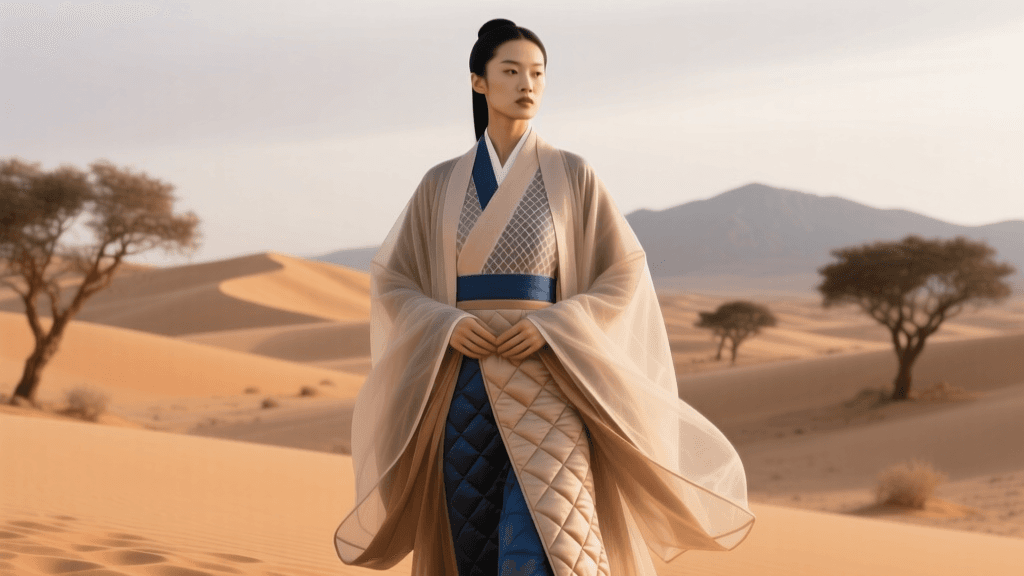
Desert environments, such as those found in the Middle East, North Africa, or the American Southwest, present a dual threat: intense solar radiation during the day and rapid, drastic temperature drops at night. Hanfu is surprisingly well-suited for this environment if styled correctly, as traditional Chinese modesty standards inherently promote full-body coverage, which acts as a physical barrier against UV rays.
UV-Blocking Silks and Wide Sleeves
The Metropolitan Museum of Art notes that silk has been prized for centuries not just for its luster, but for its remarkable temperature-regulating and protective qualities. In 2026, textile manufacturers have developed UPF-rated silk organza and raw silk (Tussah) weaves specifically designed for outdoor sun exposure. Wide-sleeved garments like the Daxiushan or standard wide-sleeve Ao create a microclimate around the arms, trapping a layer of cooler air while shielding the skin from direct sunlight. Light colors such as ivory, pale celadon, and soft sand are essential to reflect solar heat.
Nighttime Layering: The Essential Doupeng
When the desert sun sets, temperatures can plummet by 20 to 30 degrees Fahrenheit. This is where the Doupeng (hooded cloak) becomes indispensable. Originally designed to shield travelers from wind and dust, a mid-weight wool-blend or lined cotton Doupeng can be easily draped over your daytime silk garments. It provides immediate core warmth without requiring a complete wardrobe change, making it the ultimate desert travel companion for evening stargazing or night markets.
Cold Regions: Insulation and Windproofing
Wearing Hanfu in freezing climates—whether in Northern China, Scandinavia, or the Canadian winter—requires mastering the traditional art of layering. The historical concept of Zhongyi (inner layers) and Waiyi (outer layers) was specifically engineered to trap heat while allowing the wearer to adjust to indoor heating environments.
Winter Silhouettes: Aoqun and Mamianqun
The Aoqun (padded or lined jacket and skirt combination) is the cornerstone of winter Hanfu. In 2026, many heritage brands have integrated modern thermal technologies into traditional cuts. Look for Ao jackets lined with graphene-infused thermal silk, which reflects body heat back to the wearer without adding the bulk of traditional cotton padding. For the lower half, the Mamianqun (horse-face skirt) is ideal. Its overlapping front and back panels provide double-layered wind protection over the legs, while heavy wool or velvet fabrics offer substantial insulation.
Accessories for Extreme Cold: Pifo and Hand Muffs
Heat escapes rapidly from the neck and extremities. The Pifo (cloud shoulder) is a beautiful, historically accurate accessory that sits over the shoulders and chest, providing an extra layer of insulation over the collar of your Ao. For the hands, traditional fur-lined hand muffs or modern heated silk gloves that match your Hanfu's color palette are essential. Furthermore, 2026 has seen the rise of USB-rechargeable heated insoles that slide discreetly into traditional Xue (boots), ensuring your feet remain warm even when standing on snow or ice for extended periods.
2026 Extreme Climate Hanfu Matrix
To help you plan your wardrobe, refer to the following climate-adaptation matrix tailored for the current year's textile market:
| Climate Zone | Primary Challenge | Ideal Hanfu Silhouette | Recommended 2026 Fabric | Essential Accessory |
|---|---|---|---|---|
| Tropical | High Humidity, Sweat | Banbi, Short Ruqun, Slit Beizi | Ramie (Xia Bu), Bamboo-Silk Blends | Bamboo-weave hand fan, Moisture-wicking Zhongyi |
| Desert | UV Radiation, Night Cold | Wide-sleeve Ao, Shenyi | UPF-rated Raw Silk, Linen-Cotton | Wide-brim Mao (hat), Mid-weight Doupeng |
| Cold/Snow | Sub-zero Temps, Wind | Lined Aoqun, Mamianqun | Graphene-lined Silk, Heavy Wool | Pifo (Cloud Shoulder), Heated Boots |
Garment Care in Extreme Conditions
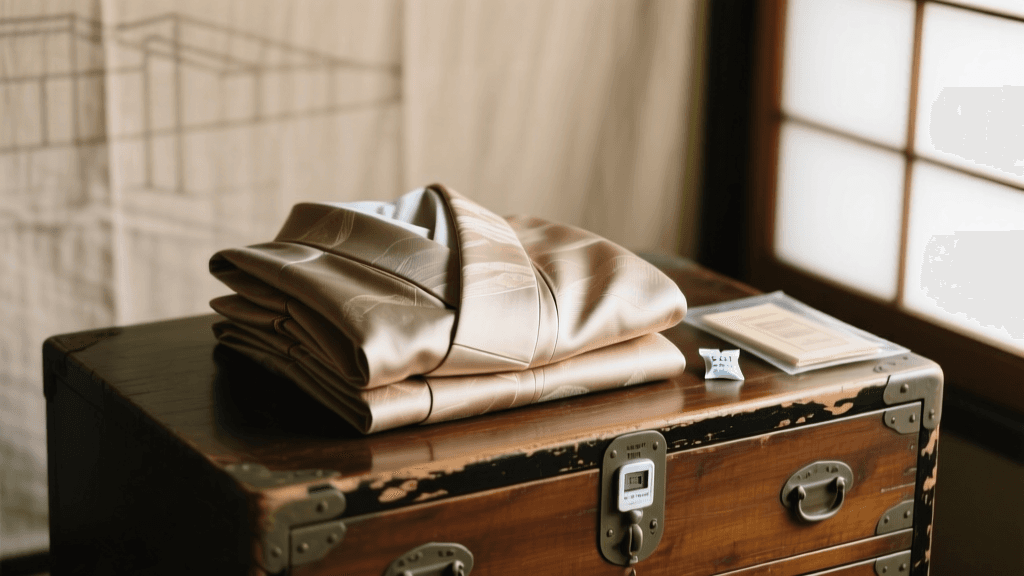
Extreme climates not only test your comfort but also the longevity of your garments. In tropical zones, sweat and humidity can degrade natural fibers if not properly treated. Always air-dry your Ramie and silk garments in a shaded, well-ventilated area immediately after wearing; never leave them balled up in a damp state. For desert environments, fine sand and dust can become embedded in the weave of raw silk. Use a soft-bristled garment brush to gently sweep the fabric before storing it. In cold, snowy regions, road salt and slush can ruin the hem of a Mamianqun. Invest in a set of traditional wooden clogs or modern silicone overshoes designed for Hanfu wearers to elevate your hemline above the slush, and always spot-clean wool garments with a specialized, pH-neutral wool detergent.
Conclusion
As documented by cultural historians at Britannica, Hanfu is not a static relic of the past, but a dynamic clothing system that has continuously adapted to the needs of its wearers across different dynasties and geographies. The 2026 Hanfu market beautifully reflects this legacy of adaptation, merging ancient silhouettes with cutting-edge, climate-responsive textiles. By understanding the functional purpose of traditional layers and selecting the appropriate fabrics for your specific environment, you can confidently wear Hanfu anywhere on Earth, honoring Asian traditions while embracing the realities of the modern, globalized world.