Shichi-Go-San and Seijin no Hi: Japanese Kimono Guide
The Cultural Weight of Japanese Milestones
In Japan, the transition from childhood to adulthood is not merely a matter of aging; it is a deeply cultural journey marked by specific rites of passage, shrine visits, and, most importantly, the donning of traditional garments. The kimono serves as a visual and tactile timeline of a person's life. From the padded vests of toddlers to the sweeping sleeves of young adults, traditional Japanese clothing encodes social status, age, and familial hopes. According to the Metropolitan Museum of Art, the evolution of the kimono from a simple undergarment to a complex, heavily layered symbol of cultural identity is one of the most fascinating aspects of Asian textile history. This guide explores two of the most significant milestone celebrations in Japan: Shichi-Go-San and Seijin no Hi, detailing the garments, measurements, costs, and traditions associated with them.
Shichi-Go-San: The Seven-Five-Three Festival
Held annually on November 15th (though practically celebrated on the nearest weekends throughout November), Shichi-Go-San is a rite of passage for three- and seven-year-old girls, and three- and five-year-old boys. Historically, these ages were considered highly vulnerable, and the festival was a way to pray for the children's health, longevity, and safe passage into the next stage of childhood.
The Significance of Ages 3, 5, and 7
At age three, both boys and girls traditionally wear kimono for the first time, marking the end of infancy and the shaving of the head. At age five, boys wear their first hakama (pleated trousers), symbolizing their entry into the male sphere of society. At age seven, girls replace the simple cords used to tie their kimono with a formal obi (sash), mirroring the dressing style of adult women.
Children's Kimono Garments and Adjustments
Children's kimonos are marvels of practical engineering. Because children grow rapidly, these garments are constructed with deep, sewn-in tucks that can be let out as the child grows. The two primary adjustments are:
- Kata-age (Shoulder Tucks): Deep folds sewn at the shoulders to shorten the sleeve length and bodice.
- Koshi-age (Waist Tucks): Folds sewn around the waist to adjust the overall length of the kimono, ensuring the hem falls perfectly at the ankles.
For three-year-old girls, the kimono is typically paired with a hifu, a padded, sleeveless vest that ties at the front. This eliminates the need for a complex obi knot, which would be uncomfortable for a toddler. Five-year-old boys wear a formal kimono with a haori (jacket) and hakama, often featuring family crests (kamon). Seven-year-old girls wear a more mature kimono with a real, tied obi, often styled in a decorative knot like the fukura-suzume (puffed sparrow).
Seijin no Hi: Coming-of-Age Day
Seijin no Hi, or Coming-of-Age Day, is celebrated on the second Monday of January. It honors those who have reached the age of maturity. While Japan recently lowered the legal age of adulthood to 18, the traditional ceremonies and the wearing of milestone garments remain firmly anchored to the age of 20, a custom deeply rooted in historical village traditions where youth were recognized as full community members.
The Furisode: Symbol of Youth and Adulthood
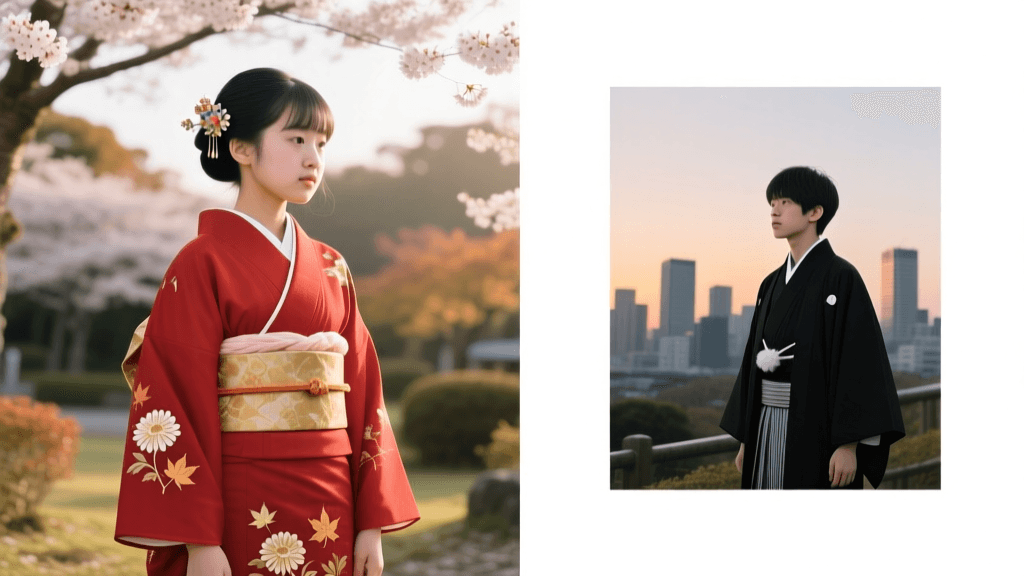
The undisputed star of Seijin no Hi is the furisode, a formal kimono characterized by its long, swinging sleeves. As noted by the Victoria and Albert Museum, the furisode is the most formal attire for unmarried women, and its dramatic sleeves historically served to ward off evil spirits while simultaneously acting as a visual signal of availability for marriage. Furisode sleeves come in three standard lengths:
- Ofurisode (Large): Approximately 114 cm in length. This is the most formal and dramatic, often worn by brides or those attending highly formal ceremonies.
- Chufurisode (Medium): Approximately 100 cm in length. This is the most common choice for Coming-of-Age Day, striking a balance between formality and ease of movement.
- Kofurisode (Small): Approximately 85 cm in length. Slightly more practical, though less commonly seen at Seijin no Hi.
Men's Coming-of-Age Attire
While women's furisode dominate the visual landscape of the holiday, young men also participate in traditional dress. Many opt for a formal montsuki hakama ensemble—a black kimono adorned with five white family crests, paired with a striped silk hakama and a formal haori jacket. However, in recent decades, Western business suits have become equally, if not more, common among young men due to their practicality and lower cost.
Comparison Chart: Milestone Celebrations
| Feature | Shichi-Go-San | Seijin no Hi |
|---|---|---|
| Target Age | 3, 5, and 7 years old | 20 years old |
| Season / Date | November (centered on Nov 15) | January (Second Monday) |
| Primary Garment | Hifu (girls 3), Hakama (boys 5), Obi (girls 7) | Furisode (women), Montsuki Hakama or Suit (men) |
| Average Rental Cost | ¥15,000 - ¥30,000 ($100 - $200 USD) | ¥150,000 - ¥350,000 ($1,000 - $2,300 USD) |
| Key Accessory | Chitose-ame (longevity candy) | Zori sandals and fur shawl |
Practical Guide: Renting, Buying, and Budgeting
Preparing for these milestones requires significant lead time and financial planning. For Shichi-Go-San, parents typically begin booking studio photography and kimono rentals in late spring or early summer. Rental packages for children usually include the kimono, accessories, dressing service, and a professional photoshoot, ranging from ¥30,000 to ¥80,000 depending on the studio and the quality of the silk. Buying a new, high-quality silk children's kimono set can cost upwards of ¥150,000, which is why renting or borrowing from family members is the standard practice.
For Seijin no Hi, the preparation timeline is even more aggressive. Because the second Monday of January is a national holiday and thousands of young women are visiting salons and dressing studios simultaneously, bookings for furisode rentals and hair appointments often open a full year in advance. A standard rental package (including the furisode, undergarments, obi, zori sandals, dressing, and hair styling) averages around ¥200,000 ($1,300 USD). Purchasing a brand-new, hand-painted silk furisode from a specialized department store or artisan can easily exceed ¥800,000 ($5,300 USD). To manage costs, many families opt for 'mama-furisode' (wearing the mother's vintage furisode, tailored to fit the daughter) or purchase second-hand garments from specialized vintage kimono shops in Tokyo's Harajuku or Kyoto's Gion districts.
Sourcing and Caring for Milestone Kimono
Whether renting or owning, the care of these garments is paramount. Silk kimonos are highly susceptible to humidity, moth damage, and staining. After wearing a furisode or a child's silk kimono, it must be aired out in a shaded, well-ventilated area for at least 24 hours before being folded and stored. Professional cleaning (arai-hari or modern dry cleaning specialized for silk) is recommended if any sweat or makeup stains the collar or cuffs.
For those interested in the broader context of how these garments are preserved and presented to the public, the Japan National Tourism Organization provides extensive resources on experiencing traditional culture, including visiting kimono museums and artisan workshops where these milestone garments are dyed and woven by hand. Understanding the meticulous craftsmanship behind a single furisode—from the yuzen dyeing techniques to the gold leaf application—transforms the wearing of the garment from a simple photo opportunity into a profound connection with Japanese heritage.
According to cultural historians, the transition from childhood to adulthood in Japan is deeply intertwined with the physical garments worn during these rites of passage. The weight of the silk and the restriction of the obi serve as physical reminders of the new social responsibilities the wearer is undertaking.
Conclusion
The garments worn during Shichi-Go-San and Seijin no Hi are far more than festive costumes; they are woven narratives of growth, protection, and societal integration. From the practical, growth-accommodating tucks of a toddler's kimono to the sweeping, spirit-warding sleeves of a young woman's furisode, traditional Japanese clothing provides a beautiful, structured framework for celebrating the fleeting milestones of life. Whether you are a parent planning a child's shrine visit, a young adult preparing for your coming-of-age ceremony, or a textile enthusiast studying Asian traditions, understanding the nuances of these garments enriches the appreciation of Japan's enduring sartorial legacy.