Kimono vs Hanbok vs Cheongsam: 2026 Event Styling Guide
The Resurgence of Heritage Fashion in 2026
As we navigate the global fashion landscape of 2026, there is an undeniable resurgence in the appreciation for heritage garments. Modern consumers are increasingly turning away from fast fashion, seeking out traditional Asian dress not just as cultural artifacts, but as sustainable, high-quality, and deeply meaningful wardrobe investments. Whether you are attending a formal evening gala, a traditional wedding, or a high-profile cultural festival, choosing the right garment is essential. The Japanese kimono, the Korean hanbok, and the Chinese cheongsam (qipao) represent three distinct philosophies of silhouette, construction, and elegance. This comprehensive guide compares these iconic garments, offering actionable advice on fit, modern styling, and sourcing for the contemporary wearer in 2026.
The Japanese Kimono: Structured Elegance and Linear Geometry
Silhouette and Construction
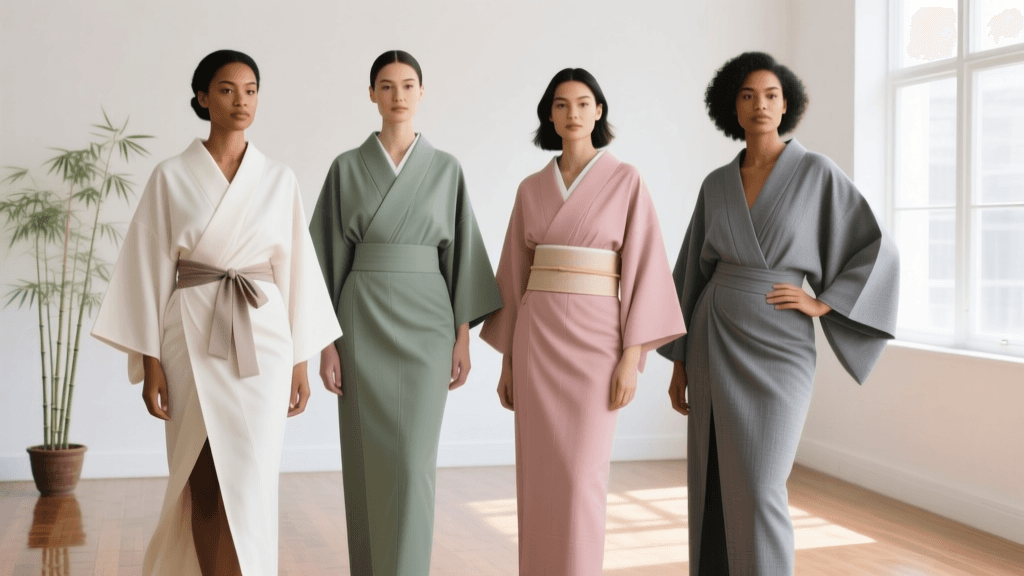
The kimono is defined by its T-shaped, straight-line construction. Unlike Western tailoring, which cuts fabric to follow the curves of the body, the kimono wraps the body in a cylindrical silhouette, hiding the natural form while emphasizing the textile's artistry. According to the Victoria and Albert Museum, the kimono's flat construction allows the garment to be folded completely flat, making storage highly efficient while turning the entire surface into a canvas for intricate dyeing and weaving techniques.
For formal events in 2026, the furisode (for unmarried women, featuring long, swinging sleeves) and the kurotomesode (for married women, featuring a black base with patterns only below the waist) remain the gold standards. The complexity of the kimono lies not in its cut, but in its layering and the tying of the obi (sash).
2026 Styling and Sourcing
In 2026, the styling of the kimono has embraced a 'quiet luxury' aesthetic. While traditional gold and silver zuri (sandals) are still worn, many modern stylists are pairing formal silk kimono with minimalist, architectural leather clutches and subtle, matte-finish hairpins. When sourcing a kimono, expect to pay between $800 and $2,500 for a new, machine-woven silk formal kimono, while authentic vintage silk pieces from specialized Kyoto dealers can range from $300 to $1,500 depending on the condition and the prestige of the family crests (mon).
The Korean Hanbok: Voluminous Grace and Vibrant Harmony
Silhouette and Construction
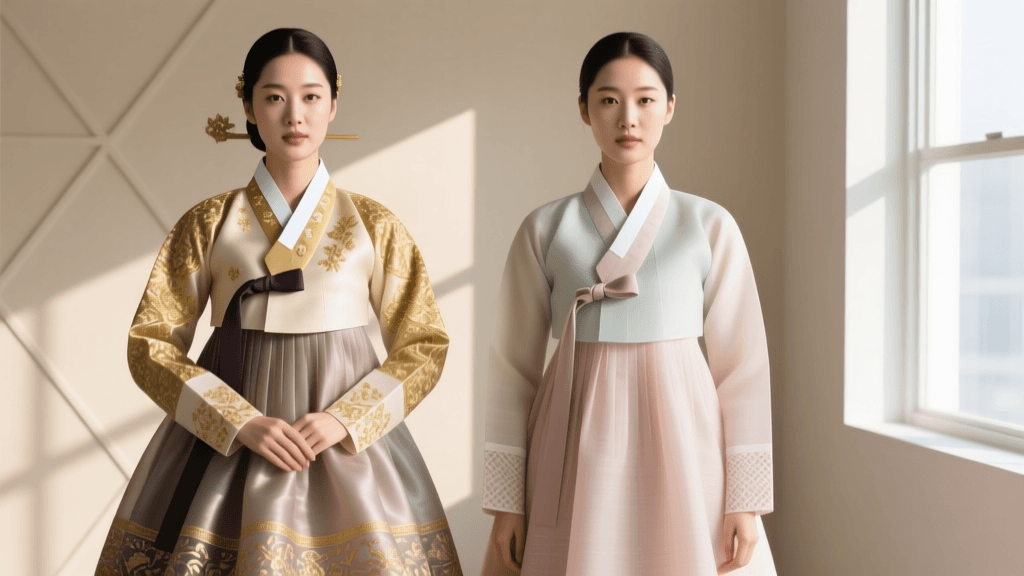
The traditional hanbok is celebrated for its sweeping curves and vibrant color contrasts. The women's formal hanbok consists of the jeogori (a short, cropped jacket) and the chima (a high-waisted, full, bell-shaped skirt). The Encyclopedia Britannica highlights that the hanbok's design is deeply rooted in the traditional Korean aesthetic of natural harmony and the philosophical principles of yin and yang, often reflected in the contrasting colors of the upper and lower garments.
The structural magic of the hanbok lies in its volume. The chima is heavily gathered at the waistband, creating a majestic, floating silhouette that glides when the wearer walks. The crisp, white dongjeong (paper collar) frames the face, providing a striking contrast to the vibrant silk of the jacket.
2026 Styling and Sourcing
The 2026 hanbok trend for formal events leans toward 'modernized ceremonial' wear. Designers in Seoul are utilizing lightweight, sustainable cupro and peace silk blends that maintain the structural bell shape without the heavy, restrictive weight of traditional synthetic brocades. The jeogori has seen a slight elongation in 2026 formal collections to provide more comfort and modest coverage. Bespoke formal hanbok sets from renowned ateliers in the Bukchon Hanok Village typically cost between $600 and $1,800 in 2026, with custom embroidery and hand-painted motifs adding to the final price.
The Chinese Cheongsam: Tailored Sophistication and Form-Fitting Grace
Silhouette and Construction
The cheongsam, or qipao, is a masterclass in tailored sophistication. Originating in the 1920s and evolving through the decades, the modern cheongsam is a form-fitting, one-piece dress characterized by a high mandarin collar, asymmetrical opening, side slits, and intricate pankou (frog fasteners). As noted by the Encyclopedia Britannica, the qipao represents a pivotal moment in fashion history where traditional Chinese elements were seamlessly merged with Western tailoring techniques to celebrate the natural female silhouette.
Unlike the kimono and hanbok, which obscure the body's shape, the cheongsam relies on precise darts and seams to contour the wearer's figure. The side slits are both functional, allowing for ease of movement, and aesthetic, offering glimpses of the leg while maintaining an air of modest elegance.
2026 Styling and Sourcing
For 2026 galas and evening events, the cheongsam is being crafted from innovative, eco-conscious textiles. While traditional heavy silk brocade remains popular for winter weddings, summer formal events are seeing a rise in breathable, sustainable lotus-silk blends and digital-printed crepe de chine. The 2026 styling trend favors 'deconstructed elegance,' where designers might replace traditional knotted pankou with hidden magnetic closures or subtle metallic clasps for a sleeker, uninterrupted neckline. A bespoke, hand-tailored cheongsam from a master tailor in Shanghai or Hong Kong starts at approximately $1,200 in 2026, with intricate hand-embroidery pushing the price well past $4,000.
2026 Comparative Analysis: Kimono vs Hanbok vs Cheongsam
To help you decide which garment best suits your upcoming formal event, refer to the comparison table below.
| Feature | Japanese Kimono | Korean Hanbok | Chinese Cheongsam (Qipao) |
|---|---|---|---|
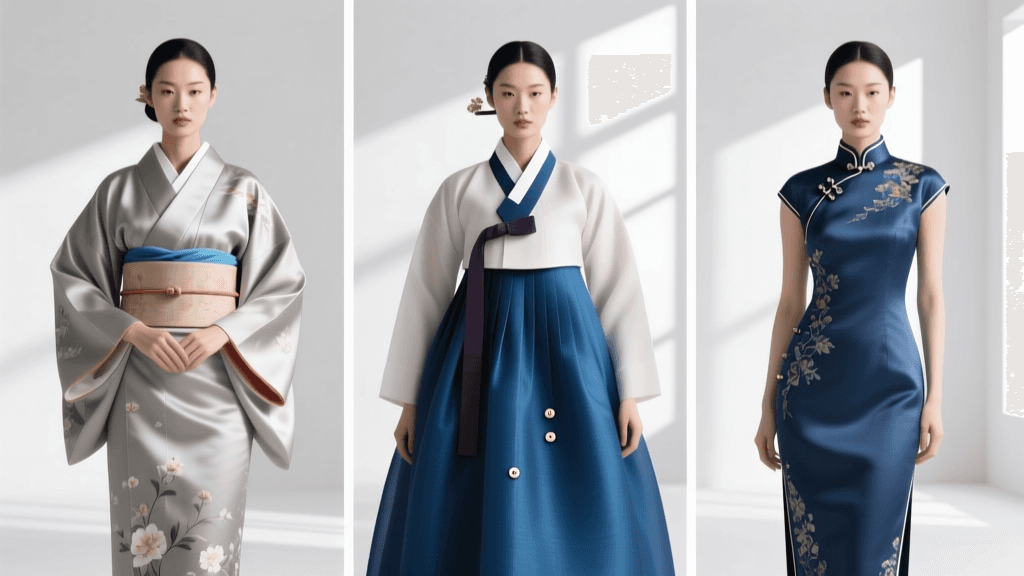
| Silhouette | Cylindrical, straight lines, conceals body shape. | Bell-shaped skirt, cropped jacket, emphasizes volume. | Form-fitting, tailored darts, emphasizes natural curves. |
| Primary Fastening | Obi (wide sash) tied in complex knots. | Ribbons and ties (goreum) at the chest. | Frog buttons (pankou) or hidden modern clasps. |
| Best For | Tea ceremonies, traditional weddings, highly formal cultural galas. | Festivals (Chuseok/Seollal), weddings, vibrant evening events. | Red-carpet galas, cocktail parties, modern formal dinners. |
| Mobility | Restricted; requires small, gliding steps. | High; the full skirt allows for wide, comfortable strides. | Moderate; side slits aid walking, but the narrow hem limits stride. |
| 2026 Avg. Bespoke Cost | $1,500 - $3,500+ | $600 - $1,800 | $1,200 - $4,000+ |
Undergarments and Fit: Actionable Advice
Achieving the correct silhouette in 2026 requires the proper foundational garments. Never attempt to wear these heritage pieces with standard Western undergarments, as they will ruin the intended lines of the clothing.
- Kimono: You must wear a nagajuban (an under-kimono) to protect the outer silk from skin oils and to provide a crisp collar line. To achieve the ideal cylindrical shape, use kimono pads around the waist and hips to smooth out natural curves before wrapping the outer garment.
- Hanbok: The modern hanbok requires a specific petticoat structure. In 2026, lightweight, hoop-less crinoline petticoats are preferred over heavy traditional layers. Wear a snug, sleeveless undershirt to absorb moisture, as the jeogori is often made of delicate, unwashable silks.
- Cheongsam: Because the cheongsam is tailored to the millimeter, seamless, high-waisted shaping briefs and a well-fitted, low-profile bustier are essential. Avoid padded bras, as they will alter the precise darting of the bodice and cause the mandarin collar to gap at the neck.
Garment Care and Preservation in 2026
Investing in traditional Asian garments requires a commitment to proper preservation. The harsh chemical dry-cleaning methods of the past are being replaced in 2026 by eco-friendly, liquid-silicone-based cleaning processes that are safe for delicate metallic threads and natural dyes. Always store your kimono flat in an acid-free tatoushi paper wrapper to prevent crease-line degradation. Hanbok should be hung on wide, padded hangers to maintain the gathers of the chima, while cheongsam should be stored flat or rolled on acid-free tubes to prevent permanent stress on the side seams and frog closures. By respecting the construction and care requirements of these garments, you ensure they remain pristine for decades to come.