Tango Chirimen vs Nishijin-ori: 2026 Kimono Silk Guide
The Foundation of Elegance: Understanding Japanese Silk in 2026
The world of traditional Japanese garments is undergoing a profound renaissance in 2026. As global appreciation for slow fashion, heritage craftsmanship, and textile provenance reaches new heights, collectors, brides, and everyday enthusiasts are looking beyond the iconic silhouette of the kimono to the very threads that compose it. At the heart of this textile revival is a deep dive into fabric selection, specifically the nuanced differences between Japan's most celebrated silk weaves.
When commissioning or purchasing a high-end kimono today, understanding the structural and aesthetic differences between Tango Chirimen (crepe silk) and Nishijin-ori (brocade) is essential. These two textiles represent the yin and yang of Japanese garment making: one provides the fluid, dyeable canvas for the garment body, while the other offers the rigid, opulent structure required for formal sashes and outerwear. According to the Ministry of Economy, Trade and Industry (METI), the ongoing protection and promotion of these designated Traditional Craft Products ensures that regional weaving hubs continue to innovate while preserving centuries-old techniques.
Tango Chirimen: The Masterpiece of Crepe Weaving
Originating in the Tango region of Kyoto Prefecture, Tango Chirimen is the undisputed king of kimono body fabrics. The geography of Tango, situated along the Sea of Japan, provides a high-humidity environment that is crucial for silk production; the moisture prevents the delicate silk threads from snapping during the intense twisting process.
Weaving Mechanics and the 'Shibo' Texture
What sets Tango Chirimen apart from standard flat silk (like habutai) is its weft thread. Artisans twist the raw silk weft threads between 1,800 and 3,000 times per meter. During the weaving process, the weaver alternates between threads twisted to the right (S-twist) and threads twisted to the left (Z-twist). After the fabric is woven, it is boiled in hot water to remove the natural sericin (silk gum). This causes the highly twisted threads to untwist and contract, creating a distinctive, pebbled surface texture known as shibo.
This shibo texture is not merely decorative. It serves several vital functions:
- Wrinkle Resistance: The bumpy surface naturally hides creases, making the garment easier to wear and store.
- Light Scattering: The uneven surface scatters light, giving the silk a deep, subdued luster rather than a flashy shine.
- Dye Absorption: The textured surface holds dyes exceptionally well, making it the perfect canvas for intricate Yuzen (resist dyeing) and Edo Komon (micro-pattern stenciling) techniques.
2026 Innovations in Tango Chirimen
In 2026, the Tango weaving cooperatives have responded to shifting global climates and ethical consumer demands. With Japanese summers growing increasingly hot and humid, weavers have perfected Ro-chirimen and Sha-chirimen—summer gauze weaves that incorporate the crepe twist but leave deliberate gaps in the warp and weft for maximum breathability. Furthermore, a growing subset of Tango artisans is now blending traditional mulberry silk with traceable, eco-certified peace silk (Ahimsa), catering to the modern, ethically-minded consumer who demands transparency in sericulture.
Nishijin-ori: The Pinnacle of Japanese Brocade
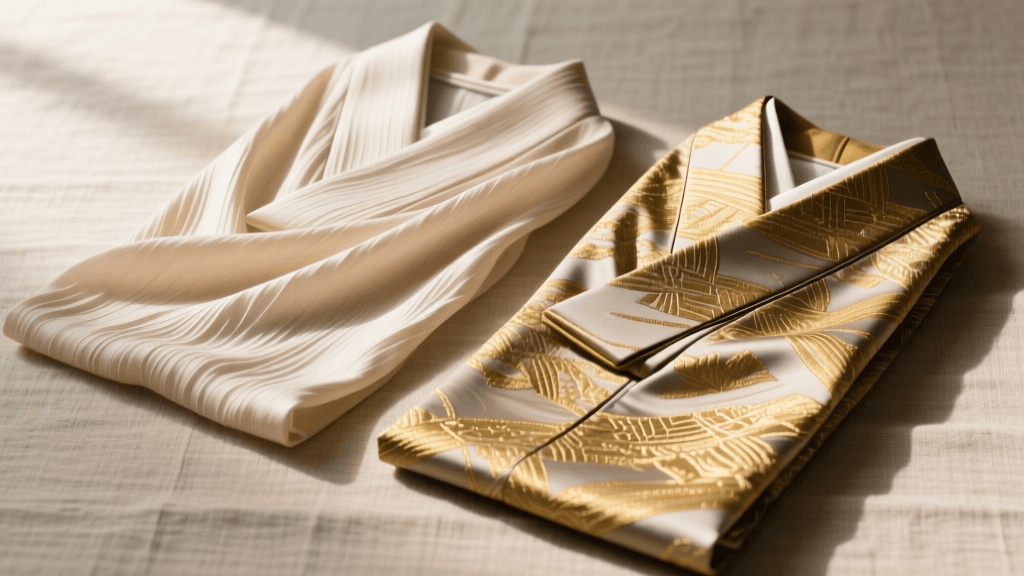
If Tango Chirimen is the fluid canvas, Nishijin-ori is the architectural masterpiece. Produced in the Nishijin district of Kyoto, this brocade is characterized by its use of pre-dyed threads (yarn-dyed) and incredibly complex, multi-layered weaving techniques. While it can be used for full garments like the lavish uchikake (wedding outer robe), it is most famously utilized for the obi (sash) and luxury accessories.
The Jacquard Loom and Pre-Dyed Mastery
The creation of Nishijin-ori involves over twenty highly specialized steps, divided among different artisans, from the thread twisting and dyeing to the design drafting and final weaving. The Victoria and Albert Museum's Asian textile archives frequently highlight Nishijin-ori for its unparalleled structural complexity, noting how the integration of the French Jacquard loom in the late 19th century allowed Kyoto weavers to scale their intricate patterns without losing artisanal integrity.
In a Nishijin brocade, the pattern is not printed or dyed onto the finished fabric; it is woven directly into the structure using multiple shuttles carrying different colored and metallic threads. This results in a fabric that is thick, heavy, and structurally rigid, capable of holding the complex knots and folds of a formal obi sash without collapsing.
Sustainability and Modern Metallics in 2026
Historically, Nishijin weavers used threads wrapped in genuine gold and silver leaf applied to washi (Japanese paper). In 2026, while traditional kimpaku remains available for heirloom commissions, many weavers have adopted advanced metallic yarns made from recycled precious metals and sustainable cellulose bases. These modern threads offer the same breathtaking luminescence but are more resistant to the humidity and oxidation that plagued vintage obis, ensuring that a 2026 Nishijin-ori Fukuro obi will last for generations with minimal tarnishing.
Head-to-Head Comparison: 2026 Market Data
When budgeting for a kimono ensemble in 2026, it is crucial to understand how these fabrics are sold and priced. Kimono silk is traditionally sold in a tanmono (a narrow bolt of fabric roughly 36cm wide and 12 meters long), while obis are sold in specific pre-measured widths and lengths.
| Feature | Tango Chirimen (Crepe) | Nishijin-ori (Brocade) |
|---|---|---|
| Primary Garment Use | Kimono body (Tomesode, Furisode, Komon) | Obi sashes (Fukuro, Maru), Uchikake, Haori |
| Weaving Technique | Highly twisted weft, flat warp, post-weave boiling | Pre-dyed yarns, complex Jacquard multi-shuttle weave |
| Weight & Drape | Medium weight, fluid, elegant drape | Heavyweight, rigid, structural, holds stiff folds |
| 2026 Avg. Price (USD) | $350 - $650 per Tanmono (raw silk bolt) | $2,500 - $8,000+ per Fukuro Obi |
| Surface Texture | Pebbled (shibo), matte luster | Smooth, raised brocade patterns, high metallic luster |
| Formality Level | Dictated by the dye/pattern applied post-weave | Inherently formal to ceremonial |
How to Choose the Right Silk for Your 2026 Wardrobe
Selecting between these textiles is rarely an 'either/or' decision for a full ensemble; rather, it is about understanding how they interact. A complete formal kimono outfit relies on the synergy between the two.
Consider the Formality and Season
If you are commissioning a Furisode (long-sleeved kimono for unmarried women) for a 2026 Coming of Age Day ceremony in January, you will want a heavy-weight Tango Chirimen. The fabric's fluid drape will allow the long sleeves to swing gracefully, while its thickness provides necessary winter insulation. This must be anchored by a Nishijin-ori Fukuro Obi. The rigidity of the brocade is required to tie the elaborate fukura-suzume (sparrow) bow, which would collapse if made from soft crepe silk.
Conversely, if you are building a wardrobe for everyday cultural events, tea ceremonies, or gallery openings, you will lean heavily on lighter-weight Tango Chirimen garments featuring subtle Komon patterns. For these occasions, you might pair the kimono with a softer, less formal silk obi, reserving the heavy Nishijin brocades strictly for weddings and high-tea ceremonies.
Drape vs. Structure
When shopping for vintage or modern resale pieces online in 2026, always check the fabric designation. If a listing describes a kimono as 'Nishijin silk,' it is likely a stiff brocade garment meant for very specific ceremonial use, or it is actually an obijime/obiage accessory. True kimono bodies require the bias-stretch and drape of Chirimen to wrap comfortably around the body's natural contours using the traditional oshashori (waist fold) technique.
Caring for Heritage Textiles in the Modern Era
The maintenance of these distinct weaves requires different approaches. Tango Chirimen, despite its wrinkle-resistant texture, is highly susceptible to water spotting. If caught in a sudden 2026 summer downpour, a Chirimen kimono must be taken to a professional cleaner specializing in maruarai (traditional Japanese water washing) rather than standard Western dry cleaning, which can strip the silk of its natural moisture and flatten the shibo texture.
Nishijin-ori, on the other hand, is remarkably durable but vulnerable to friction and moisture-induced metallic tarnishing. Because the metallic threads are often woven on the surface, storing a Nishijin obi requires wrapping it in acid-free tatou paper and ensuring the storage environment maintains a strict 50% humidity level. Modern ozone-cleaning technologies available at specialized Kyoto ateliers in 2026 can safely lift oils and odors from brocades without agitating the delicate metallic yarns.
Conclusion
As the kimono continues to evolve from everyday historical wear to a celebrated global symbol of textile artistry, the choice of fabric dictates the soul of the garment. Tango Chirimen offers the breathable, dyeable, and fluid foundation necessary for the kimono's iconic silhouette, while Nishijin-ori provides the structural, opulent anchor that elevates the ensemble to ceremonial heights. By understanding the distinct mechanics, market values, and care requirements of these two legendary silks, you can curate a traditional Japanese wardrobe that is as historically grounded as it is perfectly suited for the modern era.