Tang vs Ming Dynasty Court Hanfu: Evolution & Sizing Guide
The Evolution of Chinese Court Fashion: Tang vs. Ming
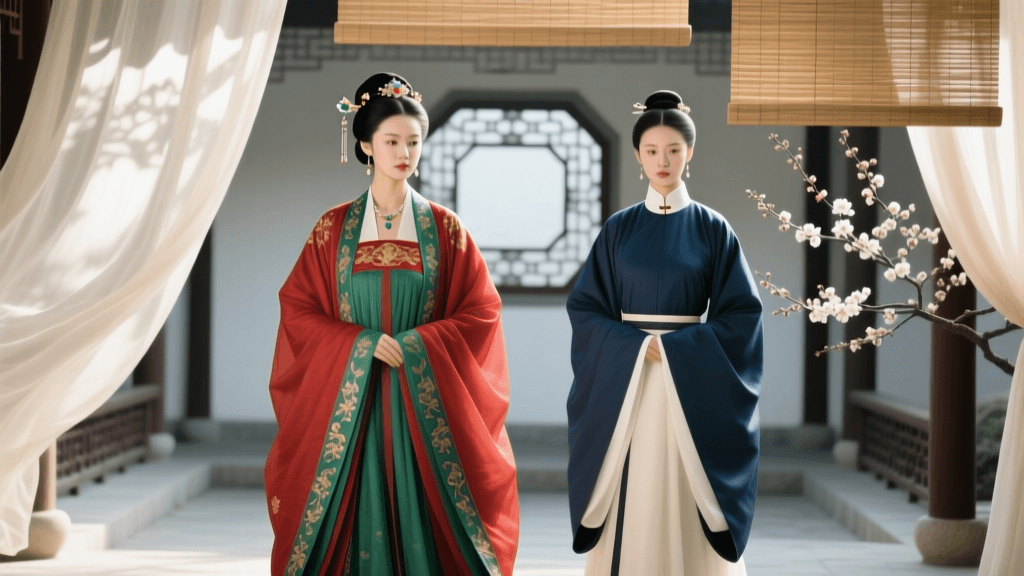
The contemporary Hanfu revival has sparked a global renaissance in traditional Chinese clothing, moving beyond mere costume and into the realm of living cultural heritage. For enthusiasts and historians alike, the evolution of court fashion provides a fascinating lens through which to view China's socio-political shifts. Two of the most influential and visually distinct periods in Chinese sartorial history are the Tang (618–907 CE) and Ming (1368–1644 CE) dynasties. While the Tang era is celebrated for its cosmopolitan opulence and flowing silhouettes, the Ming dynasty is revered for its structured elegance, modesty, and highly codified court dress.
Understanding the transition between these two dynasties is essential for anyone looking to accurately source, tailor, and wear traditional court Hanfu today. This guide explores the historical evolution of these garments and provides a comprehensive, actionable framework for modern collectors and wearers.
The Tang Dynasty: Cosmopolitan Opulence and Flowing Silhouettes
The Tang Dynasty is often regarded as the golden age of Chinese arts, culture, and international trade. The Silk Road brought an influx of foreign ideas, textiles, and aesthetics to the capital of Chang'an. According to the Metropolitan Museum of Art, Tang court fashion was characterized by its boldness, vibrant colors, and relatively relaxed silhouettes compared to later dynasties.
Women's court fashion during this period was dominated by the Qixiong Ruqun (chest-high skirt ensemble). This consisted of a high-waisted skirt tied above the bust, paired with a lightweight, short-sleeved or long-sleeved top (Ru). To complete the look, court ladies draped a Pibo (a long, flowing silk stole) over their shoulders and arms, creating an ethereal, fairy-like silhouette. The fabrics were predominantly lightweight silks, such as Luo (gauze) and Juan (tabby silk), often featuring large, circular floral motifs and foreign-inspired geometric patterns.
For formal court occasions, high-ranking women and imperial consorts wore the Daxiushan (large-sleeved robe), an expansive, floor-sweeping garment with sleeves that could measure over a meter in width. The aesthetic prioritized volume, movement, and a display of wealth through the layering of translucent, brightly dyed silks.
The Ming Dynasty: Structured Elegance and the Mamianqun
Following the collapse of the Mongol-led Yuan Dynasty, the Ming Dynasty sought to restore Han Chinese cultural and political orthodoxy. This ideological shift was deeply embedded in the empire's sumptuary laws and court fashion. The Ming aesthetic moved away from the revealing, high-waisted silhouettes of the Tang, favoring modesty, structure, and intricate textile craftsmanship.
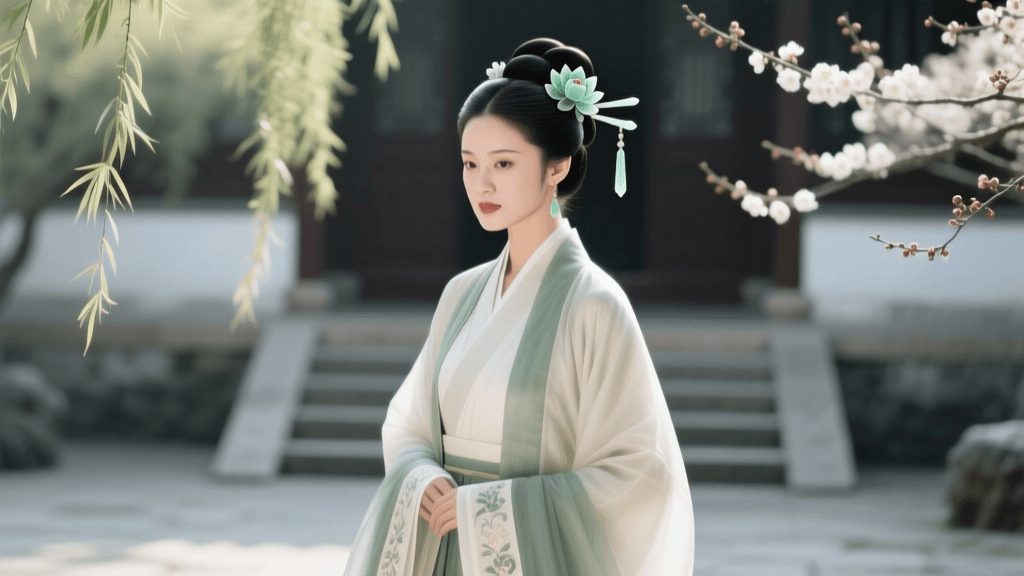
The defining ensemble for Ming women was the Aoqun (jacket and skirt). The top garment (Ao) featured a standing collar (Liling) or a round collar, with side or front closures secured by intricate knotted buttons or metal clasps. The sleeves were typically cut in the iconic Pipa (lute) shape—narrower at the wrist and wider at the armhole, often featuring stark white contrasting cuffs known as Huwan.
The lower half of the ensemble was the legendary Mamianqun (horse-face skirt). This wrap-style skirt featured flat front and back panels (the "horse faces") with heavily pleated sides. The flat panels were prime real estate for displaying Zhijin (gold-woven) patterns, intricate brocades, and auspicious motifs like dragons, phoenixes, and cloud collars. As reported by China Daily, the Mamianqun has experienced a massive resurgence in modern times, bridging the gap between historical accuracy and contemporary high fashion.
"The Tang dynasty was a period of unprecedented cosmopolitanism, reflected in the flowing, unrestrictive silhouettes of court women, while the Ming dynasty sought to re-establish Han orthodoxy through structured, modest, and highly codified garments."
Comparative Chart: Tang vs. Ming Court Fashion
| Feature | Tang Dynasty (618–907 CE) | Ming Dynasty (1368–1644 CE) |
|---|---|---|
| Primary Silhouette | High-waisted, voluminous, flowing | Structured, modest, tailored fit |
| Collar Style | Cross-collar (Jiaoling), low-cut necklines | Standing collar (Liling), round collar, high necklines |
| Sleeve Cut | Daxiushan (massive, floor-dragging wide sleeves) | Pipa sleeves (curved, tapered at wrist with white cuffs) |
| Skirt Type | Qixiong (chest-high tie skirt), Poqun (multi-panel) | Mamianqun (horse-face wrap skirt with flat panels) |
| Textiles & Motifs | Lightweight gauze, large floral medallions, silk road motifs | Heavy brocade, Zhijin (gold weaving), auspicious beasts |
Practical Guide: Sourcing, Sizing, and Styling Modern Court Hanfu
Transitioning from historical research to building a personal collection of court-grade Hanfu requires precise knowledge of traditional tailoring and modern e-commerce mechanics. Unlike Western clothing, traditional Chinese garments rely on flat-pattern cutting, meaning the fit is dictated by fabric width, arm span, and precise length measurements rather than complex darts and curves.
1. Taking Accurate Measurements for Traditional Tailoring
To purchase authentic Hanfu, you must discard standard Western sizing (S, M, L) and focus on exact centimeter measurements. Keep a soft measuring tape handy and record the following:
- Bust, Waist, and Hips: Measure the fullest parts. For Ming Aoqun, the jacket is tailored to the bust and waist, while the Mamianqun is sized strictly by the waist and hips.
- Arm Span (Yi Chang): Stretch your arms out horizontally and measure from fingertip to fingertip. Traditional Hanfu sleeves are cut based on arm span. A standard historical sleeve requires an arm span measurement of at least 1.5 to 2.2 meters to achieve the proper drape.
- Skirt Length (Qun Chang): For a Mamianqun, measure from your natural waist (where the skirt will sit) down to your ankle bone. For a person who is 165 cm tall, the ideal Mamianqun length is typically between 98 cm and 103 cm. If the skirt is too long, you will trip on the heavy pleats; if too short, it loses its courtly elegance.
2. Sourcing Authentic Court-Style Hanfu
The highest quality court-style Hanfu is produced by specialized heritage brands in China, primarily available via Taobao and Tmall. When searching for Ming court styles, look for brands like Minghuatang (renowned for museum-grade accuracy and premium silk brocades) and Shiyang. For Tang dynasty styles, brands like Zhongzheng Hanfu and Chunxiao Hanfu offer excellent interpretations of Qixiong Ruqun and Daxiushan.
International Buyers: Since most authentic brands do not ship directly overseas, you will need to use a shopping agent (such as Superbuy, CSSBuy, or Sugargoo). You paste the Taobao product link into the agent's platform, they purchase the item, receive it at their domestic warehouse, provide quality check photos, and then ship it internationally via DHL, EMS, or ePacket.
3. Budgeting and Timing Your Purchases
Court-grade Hanfu is an investment in textile artistry. The cost varies wildly based on the material and weaving techniques used:
- Entry-Level ($40 - $90 USD): Made from polyester chiffon, jacquard, or cotton-linen blends. Ideal for beginners, casual wear, and photoshoots. Tang Qixiong sets usually fall in this range.
- Mid-Tier ($150 - $350 USD): Features silk blends, high-quality rayon, and accurate historical patterns. The Mamianqun in this tier will have crisp, heat-set pleats and detailed woven motifs.
- High-End / Museum Grade ($400 - $1,500+ USD): Crafted from 100% mulberry silk, Xiangyunsha (mud-dyed silk), or authentic Zhijin (gold-leaf woven brocade). Brands like Minghuatang charge premium prices for their Aoqun sets due to the complexity of the loom work and historical accuracy.
Pro-Tip on Timing: The Hanfu market operates heavily on pre-orders (Yushou). A high-end Ming dynasty skirt might have a 45 to 90-day production window. To get the best prices and access to ready stock, time your purchases around China's massive e-commerce festivals: 6.18 (June 18th)11.11 (Singles' Day on November 11th)
Conclusion
Whether you are drawn to the ethereal, wind-swept grace of the Tang Dynasty's Daxiushan or the dignified, gold-woven structure of the Ming Dynasty's Mamianqun, understanding the historical context and technical requirements of these garments elevates the experience of wearing them. By mastering the nuances of traditional measurements, sourcing from heritage-focused artisans, and respecting the distinct silhouettes of each era, modern wearers can authentically resurrect the majesty of Chinese court fashion.