A Guide to Vintage Shibori, Yuzen, and Kasuri Textiles
Introduction to Japan's Master Dyeing Arts
Japan’s traditional dyeing arts represent centuries of meticulous craftsmanship, chemical innovation, and profound aesthetic philosophy. For collectors, vintage enthusiasts, and practitioners of traditional Asian fashion, understanding the nuances of these techniques is essential. Among the myriad of methods developed over the Edo period and beyond, three stand out for their distinct visual signatures and technical complexity: Shibori, Yuzen, and Kasuri. Whether you are sourcing a vintage kimono, restoring an antique obi, or simply looking to incorporate authentic Japanese textiles into your home decor, recognizing the hallmarks of these dyeing methods will elevate your appreciation and guide your care practices.
To truly master the identification and preservation of these garments, one must look beyond the surface patterns and understand the physical manipulation of the fibers. The Metropolitan Museum of Art's Asian Art Department frequently highlights how Japanese artisans transformed simple resist-dyeing into a high art form, utilizing regional materials and specialized tools to create textiles that are as much a record of engineering as they are of design.
Shibori, Yuzen, and Kasuri: A Comparative Guide
Before diving into the specific care and sourcing of these textiles, it is crucial to understand how they differ in execution, appearance, and material preference. The following table provides a structured comparison to help you quickly identify the technique used on a vintage piece.
| Technique | Resist Method | Visual Characteristics | Best Fabric Base | Avg. Vintage Cost (USD) |
|---|---|---|---|---|
| Shibori | Physical binding, stitching, folding, or clamping | Organic, blurred edges, geometric or fluid patterns, often monochromatic indigo | Silk, Hemp, Cotton | $40 - $300+ |
| Yuzen | Chemical/Paste resist (rice bran paste) and hand-painting | Highly detailed, multi-colored, pictorial motifs, crisp white outlines | Silk (Crepe, Rinzu, Chirimen) | $150 - $1,500+ |
| Kasuri | Pre-dyed yarn resist (binding threads before weaving) | Fuzzy, blurred edges on geometric or figurative patterns, integrated into the weave | Cotton, Ramie, Hemp | $50 - $400 |
Shibori: The Art of Shaped Resist Dyeing
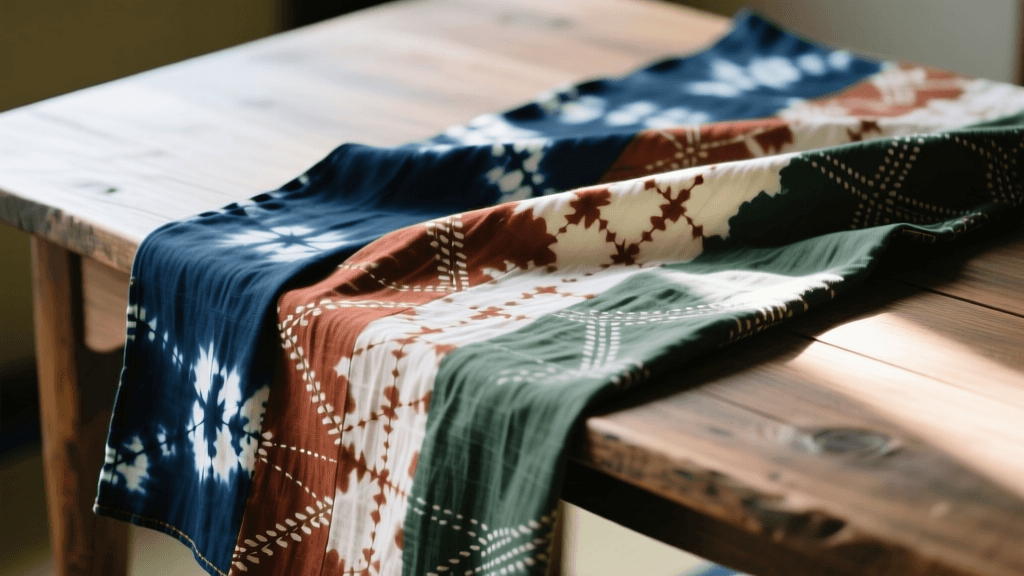
Shibori encompasses a vast family of resist-dyeing techniques that rely on the physical manipulation of cloth. Unlike tie-dye in the West, which often relies on simple tying, Japanese shibori includes highly specialized methods such as kanoko (fawn-spot tying), miura (looped binding), kumo (spiderweb pleating), and arashi (pole-wrapping). The most iconic shibori textiles are dyed in natural indigo (ai-zome). The fermentation process of the indigo leaves (sukumo) requires an alkaline reduction vat, typically maintained at a pH of 9 to 11. When the bound fabric is submerged and then exposed to oxygen, the yellow-green dye oxidizes into a deep, colorfast blue. Collectors should look for the characteristic three-dimensional texture of the fabric; authentic hand-tied shibori will retain a slight puckering even after decades of wear and pressing.
Yuzen: Precision Paste-Resist Painting
Developed in the late 17th century by Miyazaki Yuzensai, the Yuzen technique revolutionized Japanese fashion by allowing for pictorial, multi-colored designs on silk. The process begins with sketching a design on the fabric using a fugitive blue pigment (aobana). Artisans then apply a thick, waterproof rice-bran paste (itome-nori) along the outlines. This paste acts as a dam, preventing dyes from bleeding into adjacent areas when colors are hand-painted within the boundaries. After steaming to set the dyes, the paste is washed away in cold running water—a poetic process historically known as yuzen-nagashi. When examining a vintage Yuzen kimono, look for the crisp, undyed white lines that separate vibrant color fields, a hallmark of authentic hand-applied paste resist. Regional variations, such as Kaga Yuzen, favor a specific five-color palette (deep purple, ochre, green, indigo, and crimson) and realistic, nature-inspired motifs.
Kasuri: The Beauty of Pre-Dyed Yarns
While Shibori and Yuzen dye the woven cloth, Kasuri (the Japanese equivalent of Ikat) dyes the yarns before they are woven. Bundles of cotton or hemp yarn are tightly bound with thread in specific patterns to resist the indigo dye. When these yarns are eventually warped and woven on a loom, the dyed and undyed sections align to form a pattern. The hallmark of authentic Kasuri is its slightly blurred or 'fuzzy' edges, caused by the microscopic shifting of the yarns during weaving. The Smithsonian National Museum of Asian Art notes that Kasuri was historically the fabric of the working classes, prized for its durability and the fact that the pattern is woven completely through the fabric, making it reversible and highly resistant to fading from friction.
Practical Care and Maintenance for Vintage Textiles
Preserving vintage Japanese textiles requires an understanding of their specific material vulnerabilities. Silk Yuzen pieces are highly sensitive to water spotting and UV degradation, while cotton Kasuri and indigo Shibori can suffer from dye transfer and fiber embrittlement if stored improperly.
Washing and Spot-Cleaning Guidelines
- Indigo Shibori: Never wash vintage indigo in warm water or with alkaline detergents, as this will strip the dye. If washing is absolutely necessary, hand wash in cold water (maximum 30°C / 86°F) using a neutral pH detergent formulated for delicate fibers. Submerge for no more than 3 minutes.
- Yuzen Silk: Avoid water entirely. Water will cause the silk to shrink and the hand-painted dyes to bleed. Rely on professional dry cleaners who specialize in Asian garments, or use a specialized silk-foam spot cleaner on a hidden hem to test for colorfastness.
- Cotton Kasuri: These are the most robust. They can be hand-washed in cool water with a mild soap. Do not wring the fabric; instead, press the water out gently to maintain the structural integrity of the woven pattern.
Drying and Storage Best Practices
Never hang vintage kimono or haori on standard wire or wooden hangers for long-term storage; the weight of the wet or heavy fabric will distort the shoulder seams and cause irreversible stretching. Instead, roll or fold the garments using acid-free, unbuffered tissue paper to prevent hard creases from breaking the silk fibers.
Pro-Tip: Store your most valuable Yuzen and Shibori silks in a traditional Japanese Paulownia wood box (kiri-bako). Paulownia is naturally hygroscopic, meaning it expands to seal out moisture during humid summers and contracts to allow airflow during dry winters, creating a perfect microclimate for silk preservation.
For cotton Kasuri, unbleached cotton storage bags are ideal. Avoid storing any natural dyed textiles in direct contact with cedar wood, as the natural oils in cedar can transfer to the fabric and cause stubborn yellow or brown stains over time.
Sourcing Authentic Vintage Pieces
Building a collection of authentic Shibori, Yuzen, and Kasuri garments requires knowing where to look and what to pay. The secondary market for Japanese textiles is vast, but it is also saturated with modern, mass-produced imitations.
Where to Buy
For collectors traveling to Japan, the Toji Flea Market in Kyoto (held on the 21st of every month) and the Otsuka Antique Market in Tokyo are premier destinations for finding raw tanmono (fabric bolts) and vintage kimono at wholesale prices. Internationally, reputable online dealers and specialized auction houses are safer bets than general marketplaces, as they provide detailed condition reports. Institutions like the Victoria and Albert Museum's Asian Collections serve as excellent digital references to compare motifs, weaving structures, and dye quality when verifying the authenticity of a piece online.
Cost Expectations and Valuation
Pricing varies wildly based on condition, complexity, and the artisan's signature. A standard, unlined cotton Kasuri yukata or kimono from the mid-20th century typically ranges from $50 to $150. Hand-tied silk Shibori haori jackets, which require hundreds of hours of labor to tie and dye, generally start around $150 and can exceed $500 for pieces featuring complex kanoko (fawn-spot) micro-tie work. Yuzen kimono represent the highest tier of investment; a vintage, hand-painted Kyo-Yuzen kimono with gold leaf (surihaku) embroidery and a recognized artisan seal can easily command $800 to $3,000 or more on the collector's market.
Conclusion
The world of Japanese dyeing arts is a testament to the harmony between human ingenuity and the natural world. Whether you are drawn to the organic, watery depths of indigo Shibori, the vibrant, painterly precision of Yuzen, or the rustic, geometric charm of woven Kasuri, each textile tells a story of immense labor and cultural heritage. By learning to identify the subtle hallmarks of these techniques and adhering to strict, material-specific care protocols, collectors and enthusiasts can ensure that these masterpieces of Asian tradition survive to inspire future generations.