Tai Chi Practice Wear: Choosing the Perfect Traditional Uniform
The Philosophy Behind Tai Chi Clothing
Taijiquan, universally known as Tai Chi, is far more than a sequence of graceful movements; it is a profound internal martial art that harmonizes the mind, body, and spirit. Often described as 'meditation in motion,' the practice requires deep concentration, fluid transitions, and a grounded stance. According to Harvard Health Publishing, Tai Chi improves balance, reduces stress, and enhances overall physical function, making it a highly recommended practice for all ages. However, to fully immerse oneself in the art and allow the unobstructed flow of Qi (vital energy), the garments worn during practice play a crucial, often overlooked role. Traditional Tai Chi practice wear, or 'Tai Chi Fu,' is specifically engineered to provide maximum mobility, regulate body temperature, and honor the cultural heritage of Chinese martial arts.
Anatomy of the Traditional Tai Chi Uniform
A standard Tai Chi uniform typically consists of two primary pieces: a tailored top and specialized martial arts trousers. Unlike modern athletic wear, which relies on synthetic compression, traditional Tai Chi garments prioritize drape, breathability, and structural ease.
The Top: Tangzhuang and Mandarin Collars
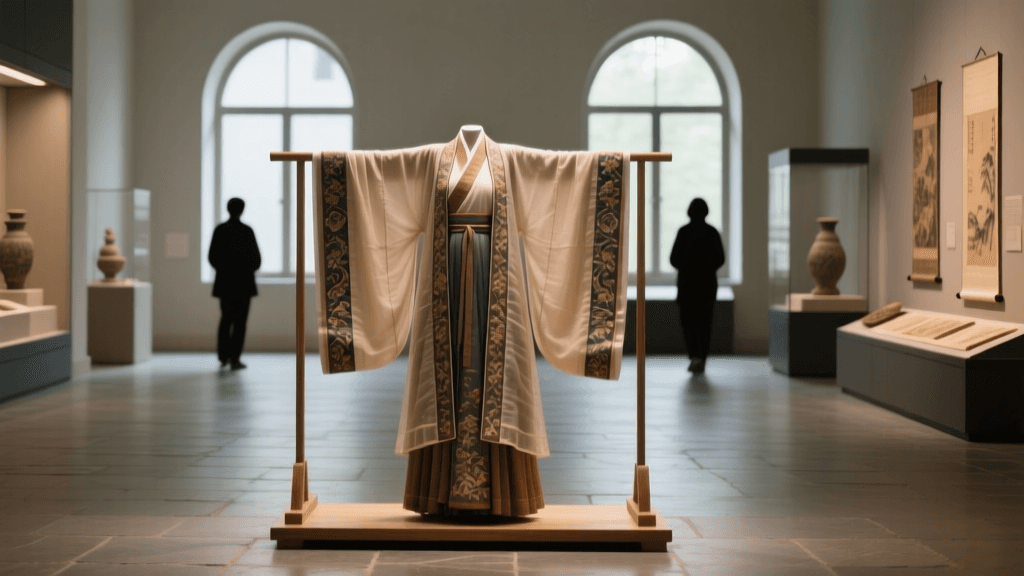
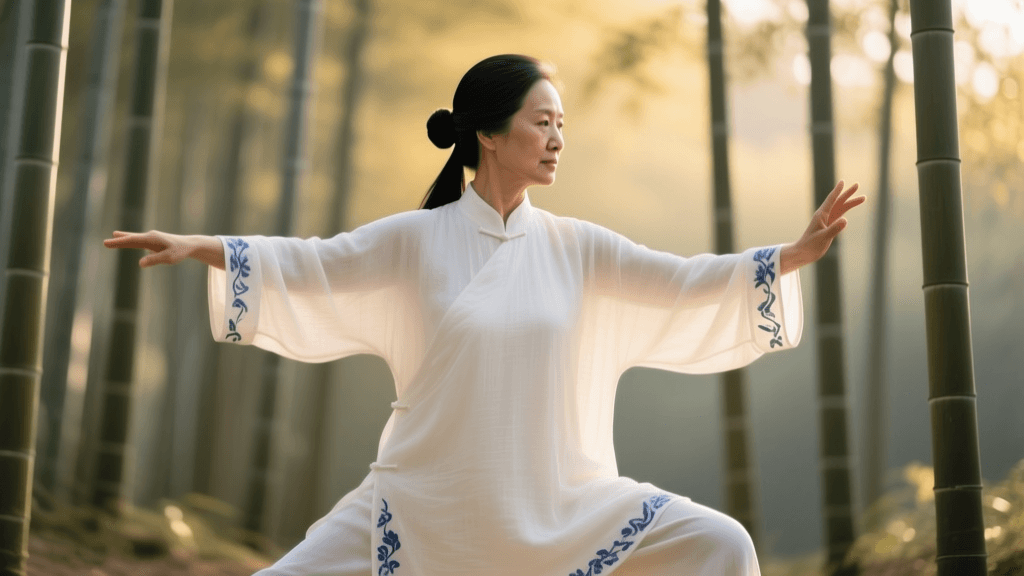
The traditional Tai Chi top is heavily influenced by the Tangzhuang (Tang suit) and the classic Mandarin collar jacket. The collar stands upright, framing the neck without restricting the flow of breath or the alignment of the cervical spine. The front is usually secured with traditional Pankou (frog buttons) made from knotted fabric, which lie flat against the chest to prevent irritation during arm crossings and chest-opening movements. The sleeves are cut wide and slightly tapered at the wrist, allowing for unrestricted circulation while performing sweeping arm movements like 'Cloud Hands.'
The Bottoms: Drop-Crotch and Wide-Leg Trousers
The most critical component of the uniform is the trousers. Tai Chi requires deep stances, such as the Ma Bu (Horse Stance) and Gong Bu (Bow Stance). Standard pants will bind at the thighs and knees. Tai Chi trousers feature a 'drop-crotch' or gusseted design, providing an extra 4 to 6 inches of fabric in the seat and inner thigh. The legs are wide and taper gently at the ankle, often secured with a cotton tie or elastic cuff to prevent the fabric from catching on the heel during weight shifts.
Fabric Selection: A Comparative Guide
Choosing the right fabric is essential for comfort and performance. The National Center for Complementary and Integrative Health (NCCIH) notes that Tai Chi is a low-impact, mindful exercise, meaning the clothing should feel like a second skin rather than a heavy burden. Below is a comparison of the most popular fabrics used in high-quality Tai Chi practice wear.
| Fabric Type | Weight & Drape | Breathability | Avg. Cost (USD) | Best Use Case |
|---|---|---|---|---|
| 100% Mulberry Silk | 19 Momme, highly fluid | Excellent | $120 - $250 | Competitions, indoor forms, demonstrations |
| Cotton-Linen Blend | Medium weight, structured | Very High | $45 - $85 | Daily outdoor practice, summer training |
| Bamboo / Ice Silk | Lightweight, cooling drape | Exceptional | $60 - $110 | Hot climates, intense sweating sessions |
| Heavyweight Cotton | Thick, durable, matte | Moderate | $40 - $70 | Winter layering, rugged outdoor training |
Precise Measurements for Martial Arts Mobility
When purchasing or tailoring Tai Chi practice wear, standard Western sizing often falls short. To ensure your garments support rather than hinder your martial arts mobility, pay close attention to the following measurements:
- Inseam: Measure from the crotch to the ankle bone. Tai Chi pants should end exactly at the ankle bone (typically 28 to 32 inches) so they do not drag under your heel during stepping exercises.
- Rise (Drop Crotch): The front rise should be at least 14 to 16 inches. This extra depth is what creates the 'harem' effect, allowing you to drop into a deep Horse Stance without the waistband pulling down.
- Thigh Circumference: Add 4 to 6 inches of ease to your actual thigh measurement. If your thigh is 24 inches, seek pants with a 28 to 30-inch thigh circumference.
- Shoulder & Chest: The top should have a 'drop shoulder' seam that falls 1 to 2 inches past your natural shoulder line, ensuring the fabric doesn't pull when you raise your arms above your head.
Color Symbolism in Traditional Practice Wear
In traditional Chinese culture, colors are deeply tied to the Five Elements (Wu Xing) theory, which also underpins the internal mechanics of Taijiquan. While modern practitioners wear a variety of colors, traditionalists often select their practice wear based on these elemental associations:
- White (Metal): Represents purity, clarity, and the lungs. White is the most common color for beginners and is widely worn during morning practice to reflect the rising sun and promote mental clarity.
- Black (Water): Associated with the kidneys, deep internal power, and the storage of Jing (essence). Advanced practitioners and masters frequently wear black to symbolize depth, groundedness, and the absorption of knowledge.
- Navy Blue / Indigo (Wood): Connected to the liver, growth, and the smooth flow of Qi. It is an excellent choice for practitioners focusing on flexibility and the expansive movements of the Yang style.
- Earth Tones / Ochre (Earth): Represents stability, digestion, and centering. Ideal for practitioners working heavily on their root and balance.
Footwear: Grounding Your Stance
Your connection to the ground is the foundation of Tai Chi. Running shoes with thick, cushioned, or elevated heels disrupt your proprioception and alter your spinal alignment. The gold standard for Tai Chi footwear is the classic Feiyue or Warrior martial arts shoe. These shoes feature a zero-drop, flat rubber sole that allows the toes to splay and the practitioner to feel the subtle shifts in weight from the heel to the ball of the foot. Priced affordably between $15 and $30, canvas Feiyue shoes offer the perfect balance of grip on wooden floors and flexibility for pivoting on the heel. For outdoor practice on concrete or rough terrain, consider a leather-soled Tai Chi shoe, which provides slightly more durability while maintaining the essential flat profile.
Seasonal Layering for Outdoor Practice
Many dedicated Tai Chi practitioners train outdoors in parks year-round to connect with nature. Adapting your traditional wear for the seasons is vital. As highlighted by the Mayo Clinic, the slow, focused movements of Tai Chi require deep breathing and relaxation, which can be compromised if the body is shivering or overheating.
Winter Layering: Avoid bulky synthetic jackets. Instead, layer a thermal silk undershirt beneath your cotton Tai Chi top. Silk is an incredible natural insulator that traps body heat without adding restrictive bulk. Over your uniform, wear a traditional quilted Chinese vest (Ma Gua) which keeps the core warm while leaving the arms completely free for form practice.
Summer Ventilation: Opt for the Bamboo or Ice Silk blends mentioned in the fabric table. These materials wick moisture away from the skin and dry rapidly. Ensure your trousers have a loose cotton drawstring rather than tight elastic, which can trap heat and restrict blood flow at the waist.
Garment Care and Maintenance
Proper care extends the life of your practice wear and maintains the integrity of the natural fibers. Mulberry silk uniforms must be hand-washed in cold water using a pH-neutral detergent specifically designed for delicates. Never wring silk; instead, roll it in a clean towel to absorb excess water and lay it flat to dry out of direct sunlight. Cotton-linen blends can be machine washed on a gentle cycle, but they should be air-dried to prevent the linen fibers from shrinking and losing their structured drape. Ironing should be done on a low-heat setting, preferably with a pressing cloth, to maintain the crispness of the Mandarin collar and the Pankou frog buttons.
Conclusion
Investing in high-quality, properly fitted Tai Chi practice wear is an investment in your martial arts journey. The right uniform removes physical distractions, allowing you to focus entirely on your breath, your alignment, and the continuous flow of your forms. By understanding the nuances of fabric selection, precise tailoring, and cultural symbolism, you honor the rich traditions of Taijiquan while optimizing your physical practice for years to come.