Tang to Ming Court Fashion: Hanfu Evolution and Buyer's Guide
The Evolution of Chinese Court Fashion: From Tang Opulence to Ming Grandeur
The history of traditional Chinese clothing, broadly known as Hanfu, is a visual tapestry of shifting philosophies, cosmopolitan exchanges, and dynastic power. For modern enthusiasts and historians alike, understanding the evolution of court fashion from the Tang (618–907 AD) to the Ming (1368–1644 AD) dynasties offers profound insights into China's cultural metamorphosis. According to the Encyclopedia Britannica, Hanfu is not a monolithic garment but a dynamic system of dress that evolved alongside China's socio-political landscape. Today, the global Hanfu revival movement has sparked a demand for historically accurate, dynasty-specific court replicas. This guide explores the stylistic shifts between these pivotal eras and provides actionable advice for sourcing, measuring, and commissioning authentic court-style garments.
The Tang Dynasty: Cosmopolitan Opulence and the Silk Road
The Tang Dynasty is universally celebrated as a golden age of Chinese art, culture, and global trade. Court fashion during this era was characterized by bold silhouettes, vibrant colors, and an openness to foreign influences from Central Asia and Persia. As noted by The Metropolitan Museum of Art, the Silk Road facilitated an influx of exotic textiles, motifs, and tailoring techniques that profoundly impacted the Tang imperial wardrobe.
Key Garments of the Tang Court
- Qixiong Ruqun (Chest-High Skirt): The defining silhouette for Tang court women. The skirt was tied high above the bust, creating an elongated, flowing lower body while allowing for expansive, draped upper garments.
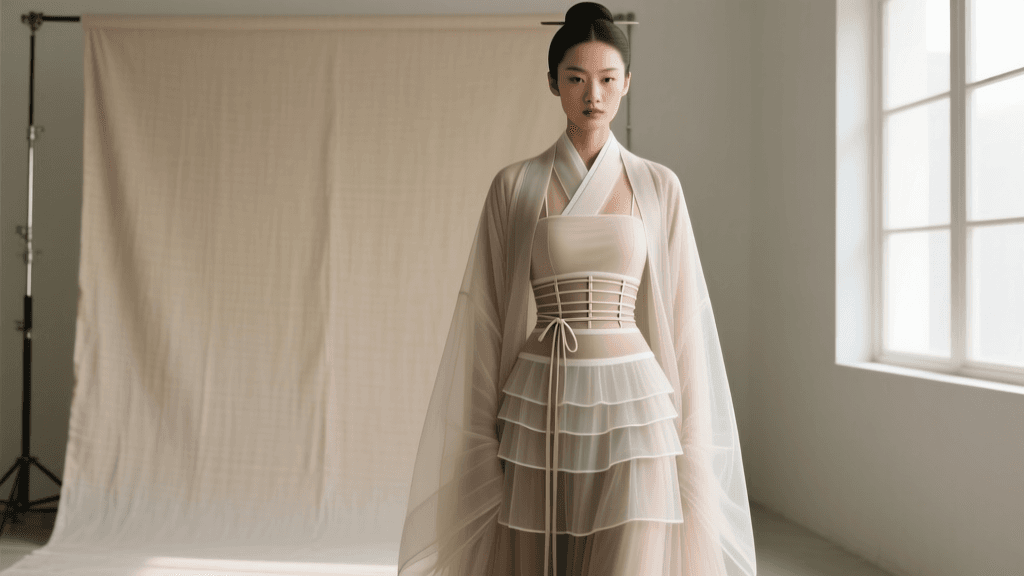
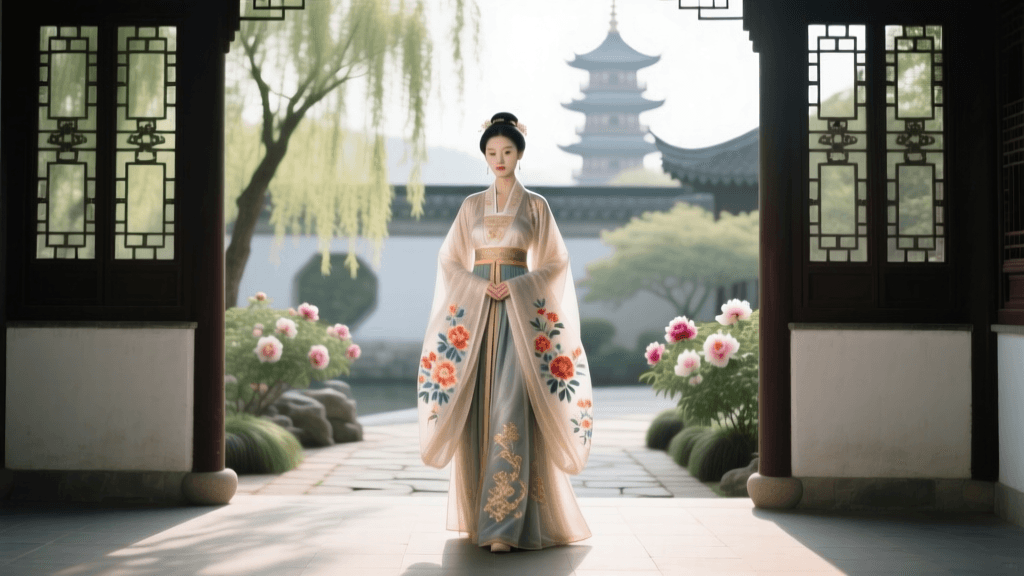
- Daxiushan (Large-Sleeve Robe): Worn by high-ranking noblewomen and imperial consorts, these sheer, sweeping robes featured sleeves that often measured over a meter in width, signaling a life of leisure and aristocratic status.
- Banbi (Half-Sleeve Jacket): A short-sleeved layering piece often adorned with intricate roundels and floral brocades, reflecting Sogdian and Persian textile influences.
The Tang aesthetic celebrated volume and movement. Fabrics were lightweight silks, gauzes, and sheer luos, designed to drape fluidly and catch the breeze, often dyed in striking pomegranate reds, saffron yellows, and deep purples.
The Song Dynasty Interlude: Neo-Confucian Minimalism
Before reaching the structural grandeur of the Ming, court fashion transitioned through the Song Dynasty (960–1279 AD). Influenced by the rise of Neo-Confucianism, which emphasized modesty, restraint, and intellectual refinement, the voluminous silhouettes of the Tang were replaced by slender, straight lines. The Beizi (a long, open-front overcoat with narrow sleeves) became the staple of elite women's wardrobes. Colors shifted to muted, earthy tones like celadon, pale lotus pink, and ink blue, reflecting a philosophy that prized inner virtue over outward ostentation.
The Ming Dynasty: Structured Grandeur and the Mamianqun
The Ming Dynasty marked a deliberate return to Han Chinese traditions following the Mongol-led Yuan Dynasty. Ming court fashion was highly regulated, deeply symbolic, and structurally complex. The Met Museum's Heilbrunn Timeline of Art History highlights the Ming era's advancements in textile weaving, particularly the development of complex silk brocades and the strict sumptuary laws that dictated who could wear specific motifs, such as the imperial dragon or the python.
Key Garments of the Ming Court
- Mamianqun (Horse-Face Skirt): A marvel of structural tailoring, this wrap-around skirt featured flat front and back panels (the "horse faces") flanked by intricate, overlapping knife pleats. It allowed for ease of movement while maintaining a rigid, formal silhouette.
- Aoqun (Jacket and Skirt Ensemble): Unlike the Tang chest-high tie, the Ming jacket (Ao) was worn over the skirt, fastened at the right shoulder with intricate metal or jade buttons. Collars evolved from cross-collars to the iconic standing collar (Liling) in the late Ming.
- Fengguan (Phoenix Crown): The ultimate symbol of Ming courtly and bridal status, adorned with kingfisher feathers (tian-tsui), pearls, and gold filigree.
Comparative Analysis: Tang vs. Ming Court Silhouettes
Understanding the structural differences between these dynasties is crucial for collectors and buyers seeking historical accuracy.
| Feature | Tang Dynasty (618–907 AD) | Ming Dynasty (1368–1644 AD) |
|---|---|---|
| Waistline | High-waisted (tied above the bust) | Natural waist (jacket worn over the skirt) |
| Sleeve Shape | Extremely wide, sweeping, and open | Tapered at the wrist with structured cuffs (Pisou) |
| Skirt Structure | Fluid, gathered, and draped | Structured, flat panels with sharp knife pleats |
| Textile Weight | Lightweight gauze, sheer silk, chiffon | Heavy silk brocade, velvet, woven gold (Zhuanghua) |
| Collar Style | Low, open, exposing the décolletage | Cross-collar or high standing collar (Liling) |
Practical Buyer’s Guide: Commissioning Dynasty-Accurate Hanfu
For those looking to purchase or commission authentic court-style Hanfu, navigating the modern market requires specific knowledge of measurements, fabric grades, and artisan production cycles. Mass-market costumes often conflate dynasty traits; therefore, sourcing from specialized ateliers is essential.
1. Sizing and Measurements
Hanfu relies on flat-pattern cutting, meaning garments are sized by width and length rather than modern Western bust/waist/hip contours.
- For Tang Qixiong Ruqun: Measure your upper bust (above the bust line). The skirt's top circumference must be at least 1.5 times your upper bust measurement to ensure it wraps securely without gaping. Skirt length is measured from the armpit to the ankle bone (typically 110–125 cm depending on height).
- For Ming Mamianqun: Measure your natural waist. The skirt length should be calculated as your total height minus 40 cm to ensure it grazes the ankle bone without dragging. For historical accuracy, request 2.5 cm to 3 cm wide knife pleats; modern commercial versions often use 5 cm pleats to save fabric.
2. Fabric Selection and Costs
The cost of Hanfu varies wildly based on textile authenticity and weaving techniques.
- Entry-Level ($40–$120): Polyester jacquards and chiffon. Suitable for casual wear and photography, but lacks the drape and historical weight of court garments.
- Mid-Tier ($150–$400): Silk-cotton blends, mulberry silk, and linen. Brands like Shixiang offer excellent Song and Tang replicas in this range with accurate botanical embroidery.
- Court-Replica Tier ($800–$2,500+): Authentic Zhuanghua (woven gold) silk brocades and heavy velvets. Ateliers like Ming Huatang and Zhongzheng Hanfu specialize in Ming court replicas, utilizing traditional loom techniques to recreate rank badges (Buzi) and woven dragon motifs. These are investment pieces meant for formal ceremonies.
3. Timing and the Pre-Order Cycle
Authentic Hanfu ateliers rarely hold stock of high-end court garments. They operate on a seasonal pre-order batch system (known as Yushou).
- Batch Timings: Spring batches typically open for pre-orders in late February, while Autumn/Winter batches open in August.
- Production Time: Expect a 45 to 90-day manufacturing window for woven brocades and hand-embroidered collars.
- Shipping: International EMS or DHL from China takes an additional 15–20 days. Plan your commissions at least four months ahead of any formal event or historical reenactment.
"To wear Hanfu is not merely to put on a costume; it is to drape oneself in the philosophy, aesthetics, and technological triumphs of the ancestors who wove the silk." — Modern Hanfu Restoration Society
Conclusion
The journey from the windswept, cosmopolitan gauzes of the Tang court to the heavy, structured brocades of the Ming imperial wardrobe illustrates a civilization continuously redefining its identity. For today's collectors, cultural ambassadors, and fashion historians, investing in dynasty-accurate Hanfu is a tangible way to preserve these ancient sartorial technologies. By understanding the precise measurements, textile requirements, and artisan cycles detailed in this guide, you can confidently navigate the market and acquire garments that truly honor the legacy of Chinese court fashion.