Hanfu Undergarments: Layering Guide & Structural Basics
The Unseen Foundation of Traditional Chinese Dress
When we admire the sweeping sleeves and intricate embroidery of traditional Hanfu, it is easy to focus solely on the magnificent outer robes. However, the true elegance, structural integrity, and comfort of Hanfu rely entirely on its foundational layers. In traditional Chinese clothing, the concept of layering is not merely about warmth or modesty; it is a profound reflection of cultural philosophy, separating the 'inner' (nei) from the 'outer' (wai). Understanding Hanfu undergarments and structural basics is essential for anyone looking to wear these garments authentically and comfortably.
Historically, the layering system protected expensive outer silks from body oils and sweat while providing the necessary volume to create the iconic Hanfu silhouette. According to the Victoria and Albert Museum, the evolution of Chinese dress has always maintained a strict adherence to layered modesty and structural balance, ensuring that the garments drape correctly over the body. Today, whether you are attending a traditional festival or participating in a Hanfu photoshoot, mastering the base layers will transform your experience from cumbersome to effortless.
The Core Layering System: Nei, Zhong, and Wai
The traditional Hanfu ensemble is built upon a three-tier layering system. Each tier serves a distinct functional and aesthetic purpose.
1. Neiyi (内衣) - The Innermost Layer
The Neiyi is the intimate apparel worn directly against the skin. In ancient times, this included garments like the 'dudou' (a diamond-shaped belly cover tied around the neck and back) or simple linen shifts. Today, modern Hanfu wearers often substitute historical Neiyi with contemporary, breathable camisoles, tube tops, or seamless slip shorts. The primary goal of the Neiyi is moisture-wicking and friction reduction, ensuring that the rougher textures of middle layers do not irritate the skin.
2. Zhongyi (中衣) - The Middle Layer
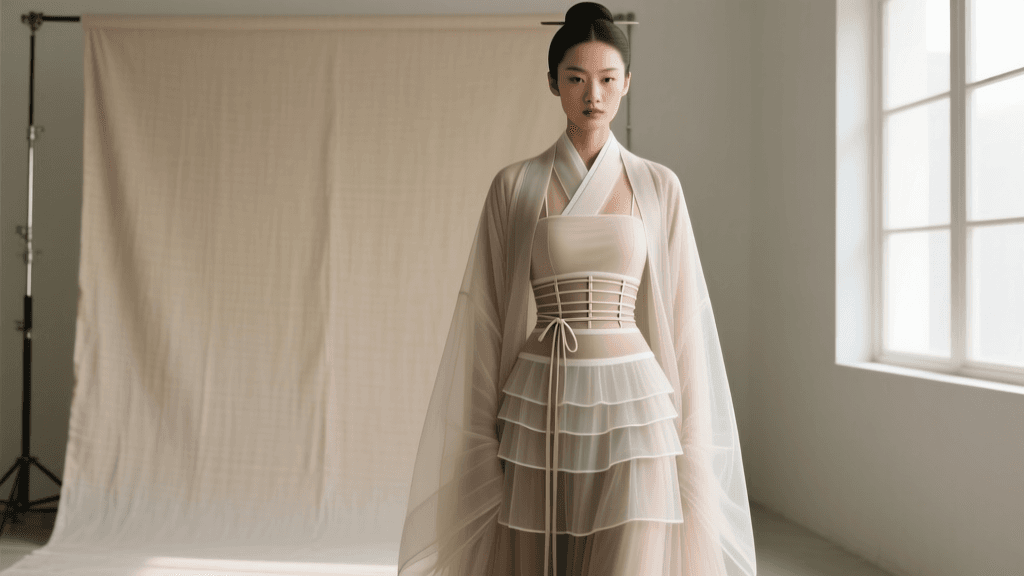
The Zhongyi is the most critical structural undergarment in the Hanfu wardrobe. It acts as a barrier between the body and the outer garments (Waiyi). A standard Zhongyi set consists of a cross-collar top and matching trousers or a skirt. It is almost always white or off-white, providing a crisp, clean contrast at the collar and cuffs when layered beneath darker outer robes. The Zhongyi also adds necessary volume, preventing the outer silk layers from clinging awkwardly to the body.
3. Waiyi (外衣) - The Outer Layer
This encompasses the visible outer robes, skirts, and jackets, such as the 'ruqun' (blouse and skirt) or 'shenyi' (deep robe). The Waiyi is where the artistic expression, seasonal fabrics, and social markers of traditional Chinese clothing are displayed.
Essential Undergarments: Sizing and Specifications
When purchasing or tailoring a Zhongyi set, specific measurements and structural details must be observed to maintain historical accuracy and physical comfort.
- The Collar (Jiaoling Youren): The Zhongyi must feature a cross-collar that wraps right-over-left. The collar height should be approximately 4 to 5 centimeters, sitting neatly beneath the outer garment's collar without choking the wearer.
- Sleeve Construction: Unlike the massive 'wide sleeves' (guangxiu) of formal outerwear, Zhongyi sleeves are typically narrow or straight-cut (zhixiu). This prevents the under-layer from bunching up inside the outer sleeves, which can restrict arm movement and cause overheating.
- Bottoms (Zhongku vs. Zhongqun): 'Zhongku' refers to the middle trousers, while 'Zhongqun' refers to the middle skirt. For active movement or wearing under pants-based Hanfu (like the 'kuzhe'), Zhongku is preferred. Modern Zhongku feature a standard closed inseam, whereas historical versions often utilized a split-crotch design for ease of use in ancient latrines. Expect to pay between $15 and $35 USD for a high-quality cotton Zhongyi set from specialized e-commerce vendors.
Structural Basics: Ties, Belts, and Securing the Garment
One of the most defining structural characteristics of Hanfu is the complete absence of buttons, zippers, or toggles in traditional designs. The entire garment is secured using a system of fabric ties (xi and dai). Mastering these ties is crucial for keeping the undergarments secure throughout the day.
The Tie System (Xi)
A standard Zhongyi top features two sets of ties. The 'inner ties' (nei xi) are located on the inside of the garment, securing the left front panel to the right side seam. The 'outer ties' (wai xi) are on the outside, securing the right front panel over the left hip.
How to Tie a Secure Hanfu Knot
- Align the Collar: Pull the inner left panel across your chest, ensuring the collar sits flat against your collarbone.
- Secure the Inner Ties: Tie the inner strings at your right ribcage using a standard square knot. Ensure it is tight enough to support the collar but loose enough to allow deep breathing.
- Wrap the Outer Panel: Bring the right panel over the left. The edge should align perfectly with the side seam of your body.
- Fasten the Outer Ties: Tie the outer strings at your left waist. For added security, especially if wearing heavy outer skirts, use a 'double-loop' knot or tuck the trailing ends of the ties into the waistband of your Zhongku.
Once the Zhongyi is secured, an outer belt or sash (dai) is often added at the waistline to anchor the Waiyi (outer skirt or robe) and define the silhouette, a style heavily documented in Ming Dynasty portraiture as noted by the Metropolitan Museum of Art.
Fabric Choices for Base Layers
Because the Zhongyi sits close to the body and absorbs perspiration, fabric choice is paramount. The UNESCO Intangible Cultural Heritage archives highlight the historical mastery of Chinese textile production, but not all traditional fabrics are suitable for modern under-layers. Below is a comparison chart of the best fabrics for Hanfu base layers.
| Fabric Type | Historical Context | Modern Application | Best Season | Estimated Cost (USD) |
|---|---|---|---|---|
| Ramie (Xia Bu) | Used by commoners and scholars for summer wear due to its cooling properties. | Excellent for hot weather Zhongyi; highly breathable but prone to wrinkling. | Summer | $25 - $45 |
| Cotton Voile | Introduced later in Chinese history; became a staple for everyday under-layers. | The modern standard for Zhongyi; soft, washable, and provides good opacity. | Spring / Autumn | $15 - $30 |
| Silk Charmeuse | Reserved for nobility; worn as a luxurious, frictionless base layer. | Best for formal winter events under heavy brocade; requires delicate hand-washing. | Winter | $60 - $120 |
| Bamboo Blend | Not historically accurate, but a modern textile innovation. | Superior moisture-wicking and anti-bacterial properties; ideal for modern Neiyi. | All Seasons | $20 - $35 |
Modern Adaptations and Practical Care Tips
While historical accuracy is a noble pursuit, modern Hanfu enthusiasts frequently adapt their undergarments for contemporary lifestyles. It is entirely acceptable, and often recommended, to wear modern seamless undergarments beneath the Zhongyi. For women, a well-fitted, neutral-colored bralette or a strapless corset top provides necessary support that the traditional Zhongyi lacks. For men, modern boxers or compression shorts worn beneath the Zhongku prevent chafing during long days at cultural festivals.
Proper care of your base layers will extend the life of your entire Hanfu collection. Because the Zhongyi absorbs the brunt of body oils and sweat, it must be washed after every wear. Cotton and bamboo blends can typically be machine-washed on a gentle, cold-water cycle and air-dried. Ramie should be hand-washed to prevent the fibers from breaking, while silk charmeuse requires a specialized pH-neutral detergent. Always iron your Zhongyi on a medium setting, paying special attention to the collar and cuffs, as these are the only parts of the undergarment that will be visible when fully dressed.
Conclusion
The beauty of Hanfu is deeply rooted in its structural foundations. By investing time in selecting the right Zhongyi, understanding the intricate tie systems, and choosing appropriate seasonal fabrics, you ensure that your traditional garments drape beautifully and feel comfortable. The undergarments are the silent heroes of the Hanfu ensemble, bridging the gap between ancient aesthetics and modern wearability. Whether you are stepping into a museum exhibition or walking through a modern city street, a properly layered Hanfu allows you to carry the weight of history with grace and confidence.