Tang Dynasty Hufu: The Silk Road Influence On Hanfu
The Cosmopolitan Wardrobe: Introduction to Tang Dynasty Hufu
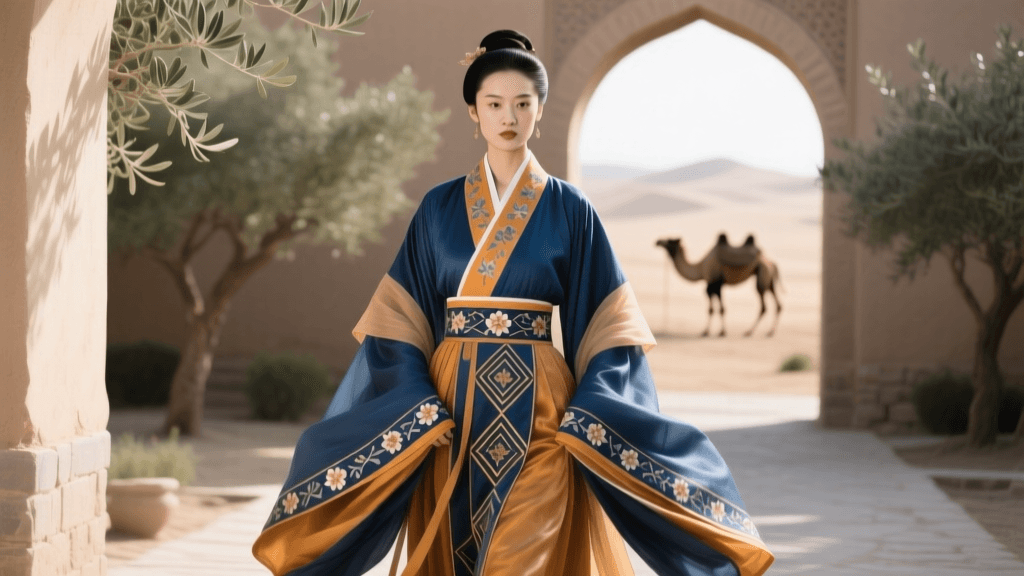
During the Tang Dynasty (618–907 CE), the capital city of Chang'an (modern-day Xi'an) was the most populous and cosmopolitan metropolis in the world. As the eastern terminus of the Silk Road, it attracted merchants, diplomats, and artisans from across Central Asia, Persia, and the Byzantine Empire. This unprecedented cross-cultural exchange profoundly impacted Chinese material culture, most notably in the realm of fashion. The resulting sartorial phenomenon was known as Hufu (胡服), or 'foreign dress.'
Unlike the flowing, wide-sleeved, and cross-collared garments of traditional Hanfu (such as the Ruqun or Shenyi), Hufu was characterized by its practicality, tailored fit, and equestrian origins. It was heavily influenced by the Sogdians—an Eastern Iranian people who were the premier merchants of the Silk Road—as well as by Turkic nomads and Sassanian Persians. Today, the revival of Tang Dynasty Hufu offers modern Hanfu enthusiasts a fascinating glimpse into an era where globalization was woven into the very fabric of daily life.
Key Cross-Cultural Garments of the Silk Road
The integration of foreign dress into the Tang wardrobe was not merely a fleeting trend; it became a staple for both men and women, particularly among the aristocracy and the military. Several key garments define the Hufu aesthetic.
The Yuanlingpao (Round-Collar Robe)
The Yuanlingpao is perhaps the most iconic garment of the Tang Dynasty. While it eventually became a standard official robe in later Chinese dynasties, its origins are deeply tied to Central Asian nomadic and Sogdian tunics. It features a circular collar that fastens on the right shoulder, a departure from the strict 'right-over-left' cross-collar (jiaoling youren) mandate of traditional Hanfu. The sleeves were often tapered or bound at the wrists to prevent them from catching on horseback or in the wind, a direct adaptation from steppe-riding cultures.
The Fanlingpao (Lapel Robe)
A direct descendant of Sogdian and Persian caftans, the Fanlingpao features a folded lapel collar that exposes the inner lining or an undergarment. This garment was highly popular in the early to mid-Tang period and is frequently depicted in tomb murals and ceramic figurines of the era. The lapel could be worn open for a relaxed, cosmopolitan look, or buttoned up to the neck to mimic the standard round-collar robe.
Kuapao (Crotch-Trousers) and Leather Boots
Traditional Han clothing often relied on long, flowing skirts or wide-legged, open-crotch trousers worn under robes. Hufu introduced structured, closed-crotch trousers (Kuapao) tucked into knee-high leather boots. This ensemble was essential for horseback riding and playing polo, a sport imported from Persia that became wildly popular among Tang nobility.
Banbi (Half-Sleeve Jacket)
The Banbi is a short-sleeved or half-sleeved jacket worn over long-sleeved robes or blouses. Originating from Central Asian layering techniques designed to accommodate fluctuating desert temperatures, the Banbi became a beloved layering piece for Tang women, adding visual depth and contrasting textures to their outfits.
Women in Hufu: A Cross-Gender Fashion Revolution
One of the most remarkable aspects of Tang Dynasty fashion was the widespread adoption of male Hufu by women. Driven by the relatively liberal social attitudes of the era and the influence of powerful female figures like Empress Wu Zetian and Princess Pingyang, aristocratic women frequently donned round-collar robes, trousers, and boots. This cross-gender dressing was particularly common for outdoor activities, travel, and equestrian sports, symbolizing a bold departure from the restrictive gender norms of previous and subsequent dynasties.
Textiles and Motifs: The Woven Language of Trade
The Silk Road did not just transport garments; it transported the technology and aesthetics of textile production. Tang weavers adopted the Western technique of samite (a weft-faced compound twill), which allowed for more complex, vibrant, and durable patterns compared to traditional Chinese warp-faced silks.
Motifs also underwent a dramatic transformation. Traditional Chinese auspicious symbols (like dragons and phoenixes) were joined by exotic Sassanian Persian and Central Asian designs. The most famous of these is the pearl roundel—a circular border of pearls enclosing confronting animals (such as boars, peacocks, or lions). These motifs were originally associated with Zoroastrian and Persian royal iconography but were eagerly adopted by Tang weavers to create luxurious brocades that signaled the wearer's worldly sophistication and access to international trade networks.
Data Table: Traditional Hanfu vs. Silk Road Hufu
| Feature | Traditional Hanfu (e.g., Ruqun / Shenyi) | Silk Road Hufu (e.g., Yuanlingpao / Kuapao) |
|---|---|---|
| Collar Style | Cross-collar, right over left (Jiaoling Youren) | Round-collar or folded lapel (Fanling) |
| Sleeve Shape | Wide, flowing, and open at the wrist | Tapered, bound, or fitted at the wrist |
| Lower Body | Flowing skirts or wide open trousers | Fitted crotch-trousers tucked into boots |
| Primary Motifs | Clouds, dragons, phoenixes, floral scrolls | Pearl roundels, confronting beasts, geometric vines |
| Functional Origin | Agrarian society, courtly rituals, indoor life | Equestrian nomads, Silk Road travel, polo |
Actionable Guide: Sourcing and Tailoring Hufu Today
For modern Hanfu enthusiasts, historical reenactors, or cultural fashion designers, acquiring an authentic Tang Dynasty Hufu requires specific knowledge of sourcing, measurements, and textiles. Here is a practical guide to building your Silk Road wardrobe.
1. Sourcing and Search Terms
While mainstream Hanfu shops often focus on Ming or Song dynasty garments, specialized ateliers cater to the Tang aesthetic. When searching on platforms like Taobao or AliExpress, use the following precise Mandarin search terms to filter out generic costumes:
- 唐制圆领袍 (Tang System Round-Collar Robe - Yuanlingpao)
- 唐代翻领袍 (Tang Dynasty Lapel Robe - Fanlingpao)
- 唐制半臂 (Tang System Half-Sleeve - Banbi)
- 联珠纹锦 (Pearl Roundel Brocade - for authentic textile patterns)
Reputable historical reproduction brands and research groups, such as Zhuangsu Fuyuan (Historical Dress Restoration), occasionally release limited batches of highly accurate Tang Hufu based on tomb mural analysis.
2. Crucial Measurements for Tailoring
If you are commissioning a custom Yuanlingpao or Fanlingpao, standard Western suit measurements will not suffice. Provide your tailor with the following specific metrics:
- Shoulder Width: Measured across the back. For a historically accurate dropped-shoulder look, add 4-6 cm to your natural shoulder width.
- Sleeve Length: Measured from the nape of the neck to the wrist. Tang sleeves often extend slightly past the wrist bone when the arm is resting.
- Hem Circumference: This is the most critical metric for the drape. A genuine Tang round-collar robe requires a massive hem width to create the proper A-line silhouette and allow for riding. Request a hem circumference of 280 cm to 320 cm (approx. 110 to 125 inches).
- Calf Circumference: If ordering Kuapao (trousers), ensure the calf is tailored snugly (add only 2-3 cm of ease to your actual calf measurement) so they tuck cleanly into leather boots without bunching.
3. Fabric Selection and Cost Expectations
The choice of fabric dictates both the historical accuracy and the price of your garment.
- Ready-to-Wear / Synthetic Blends: Mass-produced polyester or cotton-linen blend Hufu on e-commerce platforms typically cost between $45 and $120 USD. These are suitable for casual wear or introductory cosplay but lack the structural drape of historical silk.
- Mid-Range Silk and Brocade: Garments made from real mulberry silk, crepe, or modern jacquard brocades range from $180 to $350 USD. Look for 'pearl roundel' jacquard weaves to capture the Sassanian influence.
- Custom Historical Samite / Silk Brocade: Commissioning a robe from a specialized atelier using historically reconstructed weft-faced compound twill (samite) or heavy silk brocade will cost between $400 and $850+ USD. The high cost reflects the complex weaving process and the sheer yardage required for the wide hem.
4. Timing and Production Lead Times
If you are ordering custom-woven brocade or bespoke tailoring, you must account for significant lead times. Traditional silk weaving and hand-finishing (such as stitching the round collar binding) take time. Expect a production window of 30 to 45 days, plus international shipping. If you need a garment for a specific cultural festival, historical convention, or photoshoot, place your commission at least three months in advance.
Conclusion
The story of Tang Dynasty Hufu is a testament to the power of the Silk Road as a conduit for cultural exchange. By adopting the practical, tailored, and vibrantly patterned garments of Central Asia and Persia, the Tang Chinese created a unique sartorial synthesis that defined a golden age of cosmopolitanism. For today's garment enthusiasts, wearing a Yuanlingpao or a pearl-roundel brocade robe is not just an act of historical revival; it is a celebration of the ancient, interconnected world.
Authoritative Sources and Further Reading
To deepen your understanding of Silk Road textiles and Tang Dynasty history, consult the following resources:
- The Metropolitan Museum of Art's Heilbrunn Timeline of Art History provides an excellent overview of the trade networks that facilitated these textile exchanges. Read more at The Silk Road (Met Museum).
- The UNESCO Silk Roads Programme offers extensive research on the movement of goods, including textiles and clothing, across the Eurasian continent. Explore the UNESCO Silk Roads Initiative.
- For a detailed look at the Sogdian merchants who were the primary vectors of Hufu fashion into China, read the Smithsonian Magazine's feature: The Sogdians Were the Silk Road's Greatest Merchants.