Edo Period Kosode: History, Evolution, and Antique Kimono Collecting
The Historical Shift: From Heian Layers to Edo Elegance
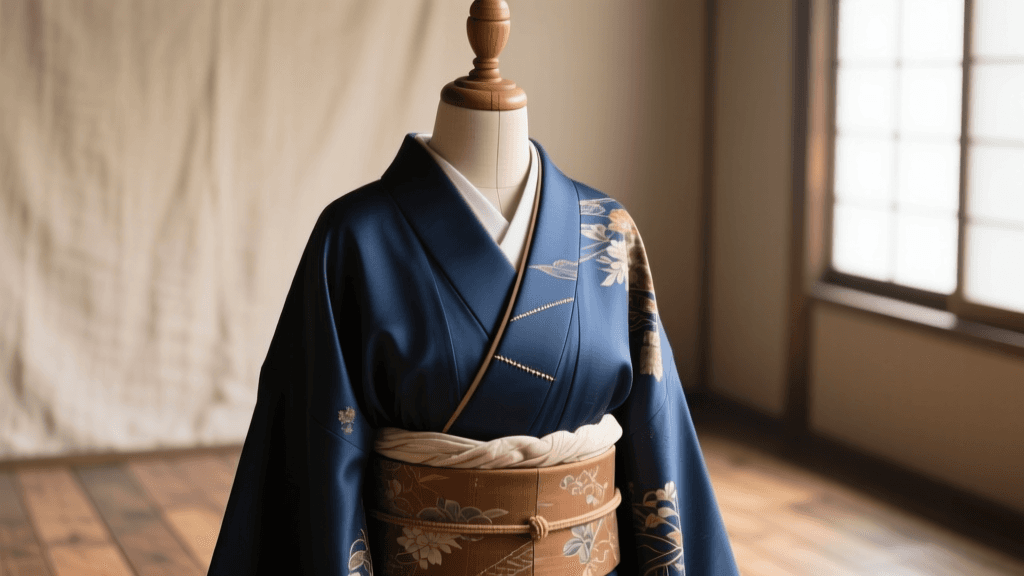
To understand the Edo period kosode, one must first look back to the Heian period (794–1185). The Heian aristocracy favored the jūnihitoe, a spectacularly heavy, twelve-layered ensemble that prioritized courtly aesthetics and color-matching over mobility. As political power shifted from the imperial court to the samurai class during the Kamakura (1185–1333) and Muromachi (1336–1573) periods, practicality became paramount. The kosode—originally a plain silk undergarment worn beneath the Heian robes—emerged as the primary outer garment for both men and women.
By the time the Tokugawa shogunate established the Edo period (1603–1867), the kosode had evolved into a canvas for extraordinary artistic expression. According to the Metropolitan Museum of Art, the Edo period saw the garment transition from a simple, unadorned layer into a highly regulated, socially communicative piece of art. Strict sumptuary laws dictated who could wear specific colors, patterns, and fabrics, leading commoners to develop hidden luxuries and sophisticated dyeing techniques to express their wealth and taste without violating the law.
Defining the Edo Period Kosode: Techniques and Aesthetics
The term kosode translates literally to "small sleeve," referring to the narrow wrist opening compared to the wide, open sleeves of earlier court garments. During the Edo period, several revolutionary textile techniques were born or perfected:
- Yuzen Dyeing: Invented by Miyazaki Yuzensai in the late 17th century, this paste-resist dyeing technique allowed for highly detailed, painterly designs that resembled fine art scrolls.
- Shibori: Intricate tie-dyeing methods, such as kanoko shibori (fawn-spot tie-dye), required thousands of hand-tied knots to create textured, three-dimensional patterns.
- Nuihaku: A luxurious combination of embroidery and applied gold or silver leaf, often used for Noh theater costumes and the garments of high-ranking courtesans.
The Victoria and Albert Museum notes that these techniques transformed the kosode into a walking billboard of the wearer's aesthetic sensibility, seasonal awareness, and social standing. Motifs were deeply symbolic, referencing classical literature, poetry, and the fleeting nature of the seasons.
Data Table: Heian Jūnihitoe vs. Edo Kosode
Understanding the structural and functional differences between these two iconic garments is crucial for collectors and historians alike.
| Feature | Heian Jūnihitoe (794–1185) | Edo Kosode (1603–1867) |
|---|---|---|
| Primary Function | Courtly ceremonial layering | Everyday and formal outerwear |
| Sleeve Structure | Wide, open, unattached panels | Small wrist opening, attached pouch sleeves |
| Weight | Up to 20 kg (44 lbs) | 1.5 kg to 3 kg (3.3 to 6.6 lbs) |
| Fastening Method | Layered tying, no wide obi | Secured with a narrow obi tied at the front or side |
| Modern Market Cost | Custom reproduction: $8,000–$25,000+ | Antique original: $2,000–$15,000+ |
Actionable Guide: Sizing and Measuring Antique Kimono
One of the greatest challenges for modern collectors is sizing. Historical Japanese garments were not made in standardized sizes; they were custom-tailored to the individual. Furthermore, Edo and early Meiji period garments are generally shorter and narrower than modern kimono. When evaluating an antique kosode or early kimono, you must understand three critical measurements:
- Yuki (Center Back to Wrist): Measured from the center of the back seam, across the shoulder, and down to the wrist. Antique yuki typically ranges from 115 cm to 128 cm. Modern wearers often require 135 cm to 145 cm. Actionable Tip: If the yuki is too short, the garment can still be worn elegantly as an open layer over a modern turtleneck or paired with a haori (jacket) to obscure the sleeve length.
- Mitake (Back Length): Measured from the base of the collar down the center back to the hem. Historical mitake is often between 100 cm and 115 cm. Unlike Western dresses, kimono length is adjusted by folding the excess fabric at the waist under the obi (the ohashori fold). If the mitake is shorter than your hip-to-floor measurement, the garment must be worn without the fold, which is acceptable for casual or avant-garde styling but incorrect for formal tea ceremony attire.
- Sodehaba (Sleeve Width): The horizontal width of the sleeve panel. Edo period sleeves are notably narrower (approx. 30-32 cm) compared to the sweeping sleeves of the later Taisho and Showa eras.
Pricing, Authentication, and Market Sourcing
The antique kimono market is vast, but true Edo period (1603–1867) garments are rare, fragile, and highly prized. Most "antique" kimono found in vintage shops today actually date from the Taisho (1912–1926) or early Showa (1926–1989) periods. Here is a practical pricing and sourcing guide:
Market Pricing Breakdown
- Taisho/Early Showa Vintage (1912–1940s): $100 to $500 USD. These are widely available, structurally sound, and feature the large, bold, art-deco-inspired motifs popular with modern collectors.
- Meiji Period (1868–1912): $500 to $1,500 USD. Characterized by the introduction of synthetic aniline dyes (like vivid purples and reds) and Western-influenced motifs.
- Edo Period Fragments (1603–1867): $300 to $800 USD. Due to the degradation of silk over 200+ years, intact Edo garments are rare. Collectors often buy fragments or damaged pieces to frame as textile art.
- Intact Edo Period Kosode: $2,500 to $15,000+ USD. Museum-quality pieces featuring verified nuihaku or early yuzen work, often sourced through specialized auction houses.
Where to Source
For hands-on sourcing, the Toji Temple Flea Market (Kobo-san) in Kyoto, held on the 21st of every month, is a premier destination. Arrive by 5:30 AM to access the best textile dealers before the crowds. When authenticating, inspect the jigoku (the inner lining). Edo and Meiji linings were often made of spun silk or hemp, whereas later Showa linings use machine-woven synthetic blends. Additionally, check the condition of gold threads; historical gold leaf was applied to paper strips and wrapped around silk cores, which will flake and degrade differently than modern metallic polyester threads.
Archival Storage and Preservation
Preserving historical garments requires strict environmental controls. Institutions like the Kyoto National Museum emphasize the vulnerability of historical silk to light, humidity, and acidic materials. Follow these actionable preservation steps:
- Wrapping: Never store antique silk in plastic, which traps moisture and promotes mold. Wrap the garment in tatoushi, a specialized, acid-free, breathable Japanese paper.
- Storage Boxes: Invest in a kiribako (paulownia wood box). Paulownia naturally regulates humidity and contains tannins that repel insects. Ensure the box is lined with acid-free tissue.
- Folding Technique: Use the traditional hon-datami folding method to ensure the garment rests on its seams rather than the delicate dyed panels, preventing permanent creases and fiber breakage.
- Environment: Maintain a relative humidity (RH) of 45% to 55% and a stable temperature around 18°C (64°F). Air the garments out in a shaded, dry room twice a year during the crisp, low-humidity days of late autumn.
Conclusion
The Edo period kosode is far more than a historical artifact; it is a masterclass in textile engineering, cultural expression, and aesthetic philosophy. For the modern collector, acquiring and preserving these garments requires a blend of historical knowledge, precise measurement, and meticulous care. By understanding the evolution from the heavy layers of the Heian court to the streamlined, painterly elegance of the Edo period, collectors can build meaningful archives that honor the unparalleled craftsmanship of Japan's dynastic past.