The Ultimate Guide to DIY Hanfu: Patterns, Fabrics, and Sewing Tips
The Renaissance of Traditional Chinese Garments
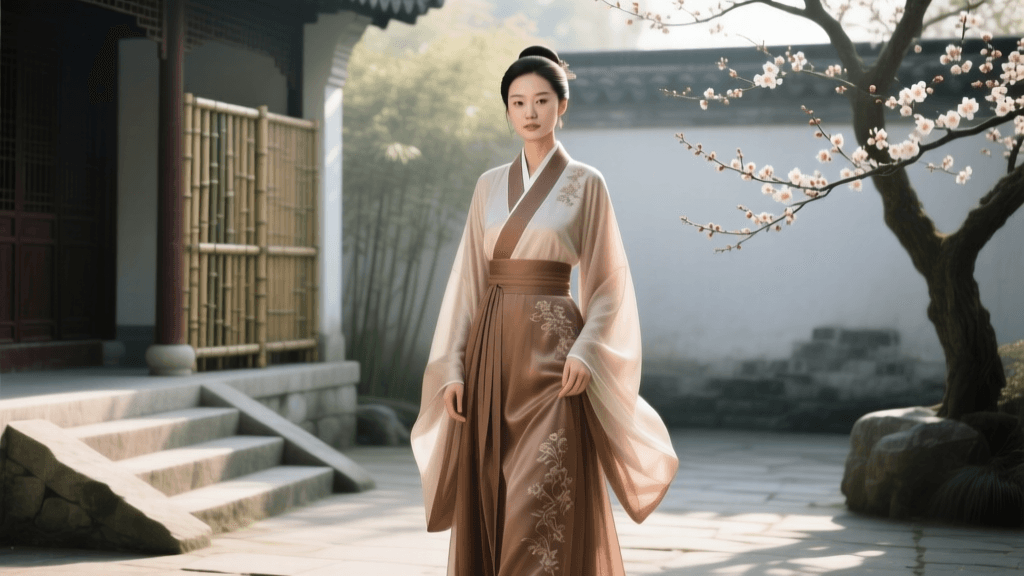
The global fascination with traditional Chinese clothing has sparked a massive revival in DIY fashion. Hanfu, the historical dress of the Han Chinese, is no longer confined to museum archives or cinematic dramas. Today, a vibrant community of makers and history enthusiasts are drafting their own patterns, sourcing authentic textiles, and sewing these garments from scratch. As noted by cultural historians, the modern Hanfu movement is deeply tied to a desire for cultural reconnection and identity among younger generations, transforming historical apparel into a living, breathing street fashion (Smithsonian Magazine).
For the home sewist, creating a Hanfu offers a unique departure from Western garment construction. It requires an understanding of flat-pattern drafting, geometric precision, and a deep respect for traditional fabric manipulation. This comprehensive guide will walk you through the essential patterns, fabric selections, and sewing techniques required to craft your own authentic Hanfu.
The Philosophy of Hanfu Pattern Drafting
Unlike Western tailoring, which relies heavily on darts, curved seams, and complex shaping to contour the body, traditional Hanfu pattern drafting is rooted in flat, geometric cutting. The garments are constructed from straight lengths of fabric, utilizing the natural drape and weight of the textile to create volume and movement. This approach historically minimized fabric waste, as the width of the loom dictated the dimensions of the pattern pieces.
The most defining characteristic of Hanfu is the Jiaoling Youren (crossed collar, right lapel). The left side of the garment always crosses over the right, a rule deeply embedded in traditional Chinese culture. When drafting your bodice pattern (the yi or ao), the front panels must be cut wide enough to wrap comfortably across the torso and tie at the side waist. The shoulder seam is typically dropped, extending past the natural shoulder line, which creates the elegant, sloping silhouette characteristic of historical Chinese dress.
Choosing the Right Fabric: A Comparative Guide
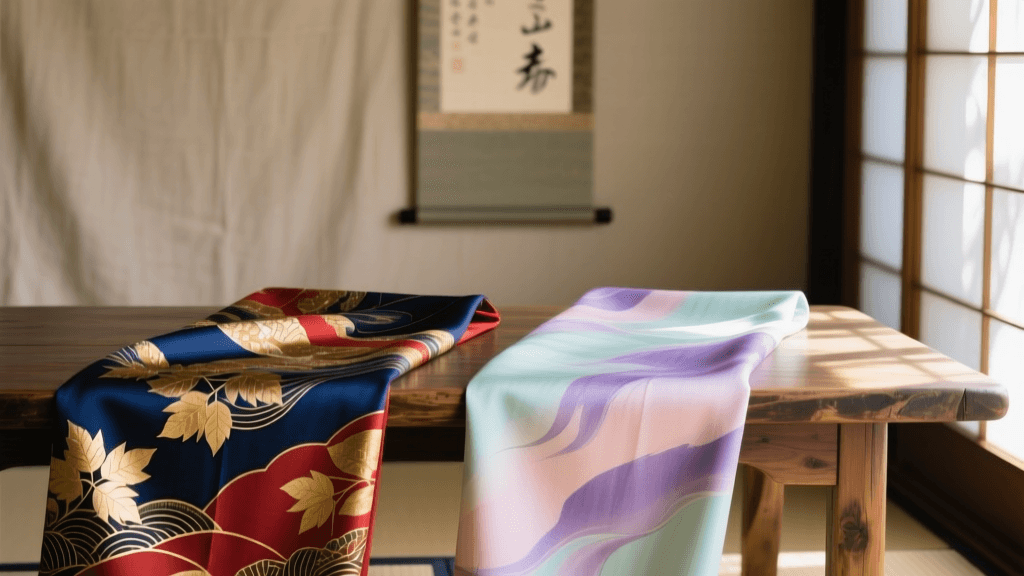
Selecting the appropriate textile is arguably the most critical step in Hanfu construction. The historical accuracy, drape, and comfort of your garment depend entirely on your fabric choice. Historically, silk was the premier fiber, with sericulture and silk weaving representing some of China's most closely guarded and revered ancient technologies (The Metropolitan Museum of Art). Today, the craftsmanship of Chinese silk remains a recognized pillar of global intangible cultural heritage (UNESCO).
Below is a comparison chart to help you select the best fabric for your specific Hanfu project:
| Fabric Type | Drape & Weight | Historical Accuracy | Estimated Cost (per yard) | Sewing Difficulty | Best Used For |
|---|---|---|---|---|---|
| Mulberry Silk (Charmeuse/Habotai) | Fluid, lightweight, luxurious | High (Aristocratic/Summer) | $25 - $50 | High (Slippery, frays easily) | Inner layers, summer Ruqun, formal wear |
| Silk Brocade (Zhuanghua) | Stiff, heavy, structured | High (Winter/Formal) | $40 - $80 | Medium (Requires heavy needles) | Winter Ao (jackets), Mamianqun skirts |
| Linen / Ramie | Crisp, breathable, textured | High (Everyday/Working class) | $15 - $30 | Low (Easy to cut and sew) | Everyday Ruqun, Shenyi, summer wear |
| Cotton Sateen | Soft, medium drape, opaque | Medium (Ming/Qing dynasty) | $10 - $20 | Low (Forgiving, stable) | Beginner projects, Aoqun sets |
| Polyester Chiffon | Sheer, flowy, synthetic | Low (Modern adaptation) | $5 - $12 | Medium (Requires French seams) | Pibo (stoles), modern fusion Hanfu |
Pro-Tip: Always pre-wash and dry your natural fibers (silk, linen, cotton) before cutting. Traditional garments are often cut with zero ease, and post-construction shrinkage can ruin the precise geometry of your collar and sleeves.
Essential Measurements for Hanfu
Forget the complex bust, waist, and hip measurements used in Western sewing. Hanfu relies on a completely different set of metrics based on the skeletal frame and desired volume. To draft a basic Ruqun (a top and skirt ensemble), you will need the following measurements:
- Shoulder Span: Measure from the tip of one shoulder bone to the other, then add 4-6 cm for the traditional dropped-shoulder effect.
- Arm Length (Tongxiu): Measure from the center back of your neck, over the shoulder, down to your wrist. For historical wide sleeves (guangxiu), extend this measurement 10-20 cm past the wrist to allow for elegant draping.
- Sleeve Width: Decide on your sleeve style. Narrow sleeves (zhaiyou) are typically 25-30 cm wide, while formal wide sleeves can range from 50 cm to over 80 cm in circumference.
- Bodice Length: Measure from the base of the neck (nape) down to your natural waist or high hip, depending on whether you are making a short top (ru) or a longer jacket (ao).
- Skirt Length: Measure from your natural waist (or underbust, for high-waisted Qixiong Ruqun) down to the floor, subtracting 2 cm for hem clearance.
Mastering the Mamianqun (Horse-Face Skirt)
The Mamianqun is a staple of Ming Dynasty fashion and a highly sought-after DIY project. It is a wrap skirt characterized by two flat, unpleated panels (the 'horse faces') at the front and back, connected by deeply pleated side panels. Constructing one requires precise mathematical planning rather than complex curved drafting.
Pleating Math and Construction
To create a standard Mamianqun, you will need approximately 3 to 4 meters of fabric, depending on your waist size and desired pleat depth. The skirt is constructed from two identical rectangular panels that overlap.
- Calculate the Flat Panel: The front and back flat panels should each measure roughly half of your waist circumference plus 2 cm for ease.
- Calculate the Pleated Section: The remaining fabric on each panel is folded into knife pleats. A standard pleat depth is 4 cm to 6 cm. You will need 4 to 6 pleats per side panel.
- Waistband Attachment: The waistband (yaolan) is cut from a sturdy cotton or linen, measuring your full waist circumference plus 40 cm for the wrap-around ties. The skirt panels are basted, pleated, and then sandwiched into the waistband.
When sewing the pleats, use a clapper and heavy steam to press the folds flat. Because the Mamianqun relies on gravity and overlapping tension to stay closed, securing the top edge of the pleats with a tight, reinforced straight stitch is vital to prevent the skirt from sagging during wear.
Step-by-Step Sewing Techniques
Sewing Hanfu requires specific seam finishes to ensure the garment looks beautiful from both the inside and the outside, as traditional garments are often unlined or feature open sleeves that reveal the inner seams.
1. The French Seam for Sheer and Lightweight Fabrics
When working with silk habotai or chiffon, raw edges must be enclosed. Sew your pieces together with wrong sides facing, using a scant 1/4 inch seam allowance. Trim the allowance down to 1/8 inch, press, and then fold the fabric so the right sides are together. Sew a second seam at 3/8 inch, completely encasing the raw edge. This provides a clean, durable finish that mimics historical hand-sewn edge treatments.
2. Flat-Felled Seams for Structured Fabrics
For linen, cotton, or brocade jackets, the flat-felled seam provides structural integrity and a clean interior. Sew right sides together, trim one seam allowance shorter than the other, fold the longer allowance over the shorter one, and topstitch it flat against the garment body.
3. Attaching the Crossed Collar (Ling)
The collar is the most challenging aspect of Hanfu construction. The collar band is typically cut on the straight grain, measuring about 6-8 cm wide (which folds down to 3-4 cm finished).
- Pin the collar to the neckline, starting from the center back and working your way down the front lapels.
- At the center front V-neck point, clip the seam allowance carefully to allow the fabric to pivot without puckering.
- Hand-baste the entire collar before machine stitching to prevent the slippery silk or linen from shifting. A gaping collar is the most common mistake for beginners; taking the time to hand-baste ensures a crisp, flat finish.
Essential Tools for the Hanfu Sewist
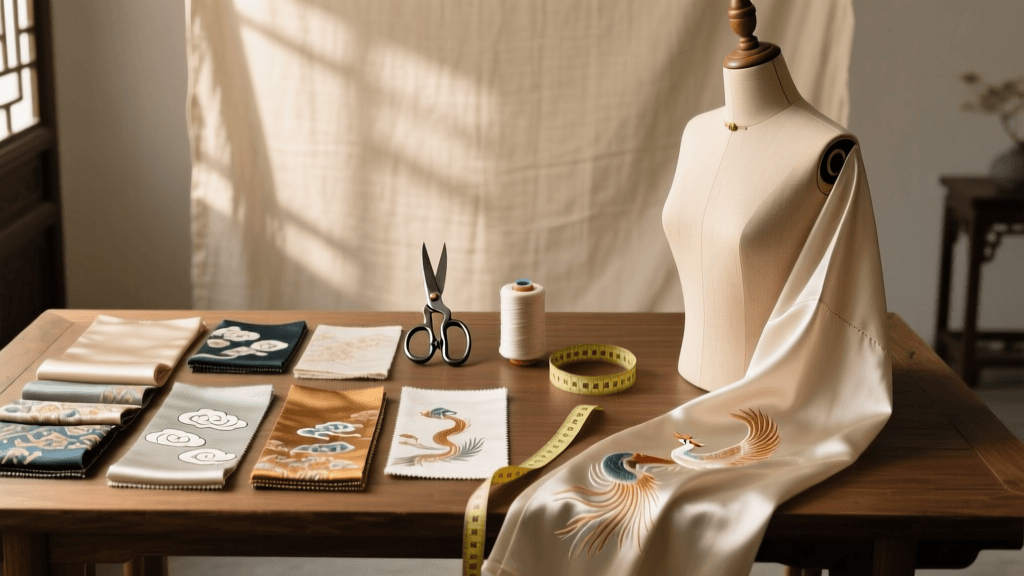
To achieve professional, historically respectful results, equip your sewing station with the following specialized tools:
- Microtex / Sharp Needles: Standard universal needles will snag silk and leave visible holes in high-thread-count brocades. Use size 70/10 for lightweight silks and 80/12 for heavier linens and brocades.
- Silk Pins: Extra-fine, long glass-head pins are essential for securing delicate fabrics without causing runs or permanent distortion.
- Pattern Weights and Rotary Cutters: Because Hanfu pieces are large, rectangular, and often cut from slippery fabrics, pinning paper patterns can distort the grainline. Use heavy metal weights and a sharp rotary cutter on a large mat for perfectly straight, grain-accurate cuts.
- Tailor's Clapper: A wooden clapper is non-negotiable when pressing natural fibers. It traps steam in the fabric, allowing you to flatten bulky seams and set sharp pleats in linen and silk without scorching the textile.
Conclusion: Embracing the Craft
Sewing your own Hanfu is an exercise in patience, geometry, and cultural appreciation. By moving away from the body-contouring habits of Western tailoring and embracing the flowing, structural elegance of traditional Chinese flat-pattern drafting, you unlock a completely new way to interact with textiles. Whether you are pleating a Ming Dynasty Mamianqun from heavy brocade or stitching a delicate, sheer summer Ruqun from mulberry silk, the process connects you to centuries of sartorial heritage. Take your time with your measurements, respect the grainline, and let the natural drape of the fabric guide your hands.