Kaga Yuzen vs Kyo Yuzen: Japan's Regional Silk Dyeing Guide
Japan’s traditional silk dyeing techniques represent a pinnacle of global textile artistry, with the Yuzen method standing as the most revered. Originating in the late 17th century, Yuzen allows for intricate, painterly designs on silk, free from the structural constraints of weaving. However, as the craft spread across the archipelago, it adapted to local tastes, climates, and social hierarchies. Today, the two most prominent regional variations are Kyo Yuzen from Kyoto and Kaga Yuzen from Kanazawa (Ishikawa Prefecture). Understanding the nuances between these regional powerhouses is essential for collectors, kimono enthusiasts, and cultural historians alike.
According to the Victoria and Albert Museum, the evolution of Japanese textiles is deeply intertwined with regional merchant classes and samurai domains, which dictated the aesthetic boundaries of local artisans. Let us explore the distinct characteristics, technical processes, and practical buying considerations of Japan’s premier regional silk dyeing traditions.
Kyo Yuzen: The Kyoto Aristocratic Standard
As noted by the Kyoto City Tourism Association, Kyo Yuzen was born in the cultural epicenter of Japan, catering to the Imperial Court, aristocrats, and the flourishing geisha districts of Gion and Pontocho. The aesthetic of Kyo Yuzen is inherently opulent, stylized, and expressive. It frequently incorporates auspicious motifs such as cranes, pine trees, and courtly carriages, reflecting the refined tastes of the Kyoto elite.
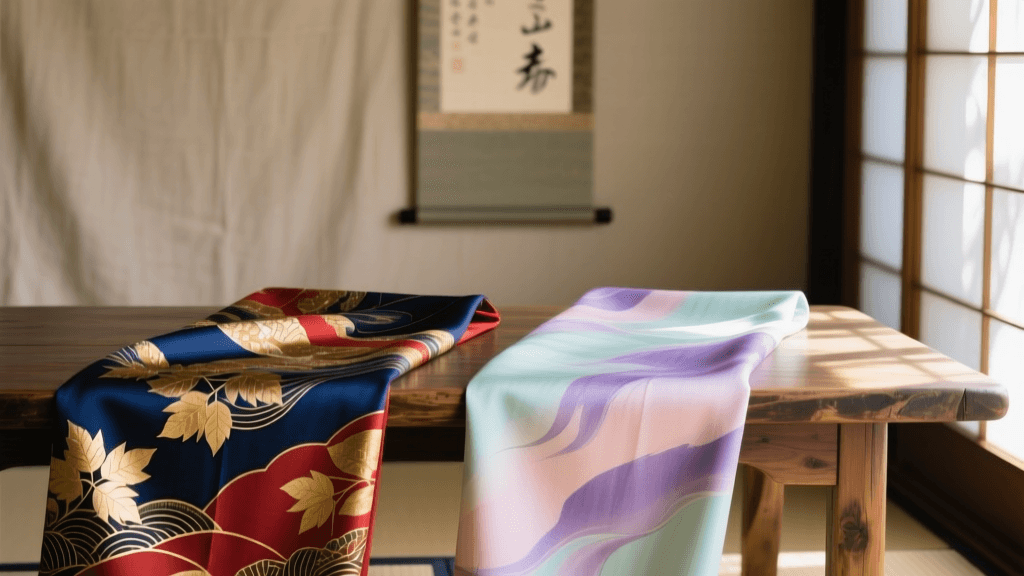
What truly sets Kyo Yuzen apart is its embrace of mixed media. Artisans routinely combine hand-painted resist dyeing with lavish embellishments, including surihaku (gold and silver leaf application), shishu (silk embroidery), and shibori (intricate tie-dyeing). The color palette is vast and vibrant, utilizing high-contrast combinations designed to catch the eye in the dimly lit teahouses and grand temples of the ancient capital.
Kaga Yuzen: The Kanazawa Samurai Aesthetic
In contrast, Kaga Yuzen developed in Kanazawa, the castle town of the powerful Maeda clan. The Kanazawa City Tourism Association highlights that this regional style was heavily influenced by the samurai class and the region’s deep reverence for the natural world. Kaga Yuzen is defined by its strict adherence to the Kaga Gosai (the five traditional colors of Kaga): indigo, ochre, purple, grass green, and astringent persimmon.
Unlike its Kyoto counterpart, Kaga Yuzen strictly forbids the use of gold leaf or embroidery. The beauty of the garment must be achieved purely through the mastery of dye. The motifs are highly realistic, focusing on local flora, birds, and landscapes. A signature hallmark of authentic Kaga Yuzen is the depiction of mushikui (insect-bitten leaves), a philosophical nod to the wabi-sabi aesthetic and the transient, imperfect beauty of nature. Furthermore, Kaga artisans are famous for Kaga-bokashi, a painstaking technique of color gradation that fades from the edge of a motif toward its center, giving petals and leaves a striking three-dimensional depth.
Regional Comparison: Kyo vs. Kaga Yuzen
To easily distinguish between these two regional traditions, refer to the comparison chart below:
| Feature | Kyo Yuzen (Kyoto) | Kaga Yuzen (Kanazawa) |
|---|---|---|
| Historical Patronage | Imperial Court, Aristocrats, Geisha | Samurai Class, Wealthy Merchants |
| Color Palette | Vibrant, diverse, high-contrast | Kaga Gosai (5 muted, natural tones) |
| Motifs | Stylized, auspicious, geometric, courtly | Realistic botanicals, landscapes, nature |
| Embellishments | Heavy use of gold leaf, embroidery | None; relies purely on dyeing skill |
| Signature Technique | Shibori tie-dye integration, gold dusting | Kaga-bokashi (intricate color gradation) |
The Art of Resist Dyeing: Technical Differences
Both regional styles utilize itome-nori, a rice-paste resist technique that allows for incredibly fine, thread-like outlines. However, the environmental factors of each prefecture play a crucial role in the final product. In Kanazawa, the soft, pure water of the Asano and Sai rivers is ideal for the rigorous washing process required to remove the rice paste and excess dyes without damaging the delicate silk. This abundant water source is a primary reason Kaga Yuzen’s subtle gradations and deep, rich colors are so highly prized.
In Kyoto, the harder water and different mineral composition historically required artisans to adapt their washing techniques, often relying on the Kamo River during specific seasonal temperatures to achieve the crisp, bright finishes characteristic of Kyo Yuzen.
Practical Buying Guide: Measurements, Costs, and Timing
For collectors and buyers looking to invest in regional Yuzen, understanding the practicalities of the garment market is vital.
Measurements and Fabric
Authentic Yuzen is painted on a tanmono (standard kimono bolt). A traditional tanmono measures approximately 36 centimeters (14 inches) in width and 12 to 13 meters (39 to 42 feet) in length. When purchasing vintage or antique regional Yuzen, always verify the yuki (sleeve-to-sleeve span) and mitake (back length). Older garments from the early Showa or Taisho periods may be tailored for shorter statures (often around 145-150 cm in height) and will require significant, sometimes impossible, alterations for modern wearers.
Costs and Investment
Hand-painted Yuzen is a luxury investment. Prices vary wildly based on the artisan’s rank and the complexity of the design:
- Entry-Level Komon (repeating everyday patterns): Start around ¥150,000 to ¥250,000 ($1,000 – $1,700 USD).
- Formal Homongi (visiting wear): Range from ¥350,000 to ¥800,000 ($2,300 – $5,300 USD). Kyo Yuzen tends to be more expensive at this tier due to the added costs of gold leaf and embroidery.
- Masterpiece Tomesode or Furisode: Pieces crafted by certified Living National Treasures or master artisans can easily exceed ¥1,500,000 to ¥3,000,000 ($10,000 – $20,000+ USD).
Timing and Travel
To witness the craft firsthand and make direct purchases, timing your visit is key. In Kanazawa, plan your trip around the Kanazawa Kimono Festival in late October, where regional artisans hold exclusive exhibitions, and the Kaga Yuzen Kimono Center offers special regional sales. In Kyoto, the Gion Festival in July offers a chance to see the finest Kyo Yuzen tapestries, while the Jidai Matsuri in October showcases historical court garments. For custom commissions from a master dyer, expect a waiting period of 6 to 12 months and be prepared for multiple fittings.
Styling Your Regional Yuzen
Styling these garments requires an understanding of TPO (Time, Place, and Occasion). A Kyo Yuzen homongi with gold leaf is perfect for evening receptions, weddings, and formal tea ceremonies during the autumn or winter months. Pair it with a heavy, intricately woven fukuro obi featuring metallic threads to match the garment’s opulence.
Conversely, a Kaga Yuzen tsukesage or homongi featuring realistic botanical motifs is ideal for daytime events, outdoor garden parties, and cultural gatherings in the spring or summer. Because Kaga Yuzen lacks metallic embellishments, it pairs beautifully with a matte, hand-woven hakata ori or tsumugi obi, allowing the subtle Kaga-bokashi gradations to take center stage.
Conclusion
Whether you are drawn to the glittering, aristocratic flair of Kyoto’s Kyo Yuzen or the grounded, nature-inspired mastery of Kanazawa’s Kaga Yuzen, both regional traditions offer a profound window into Japan’s cultural history. By understanding the distinct measurements, costs, and aesthetic philosophies of these prefectural variations, collectors and enthusiasts can make informed decisions, ensuring these magnificent silk canvases are preserved and celebrated for generations to come.