Silk Road Style: Tang Dynasty Hufu and Cross-Cultural Fashion
The Silk Road's Sartorial Exchange
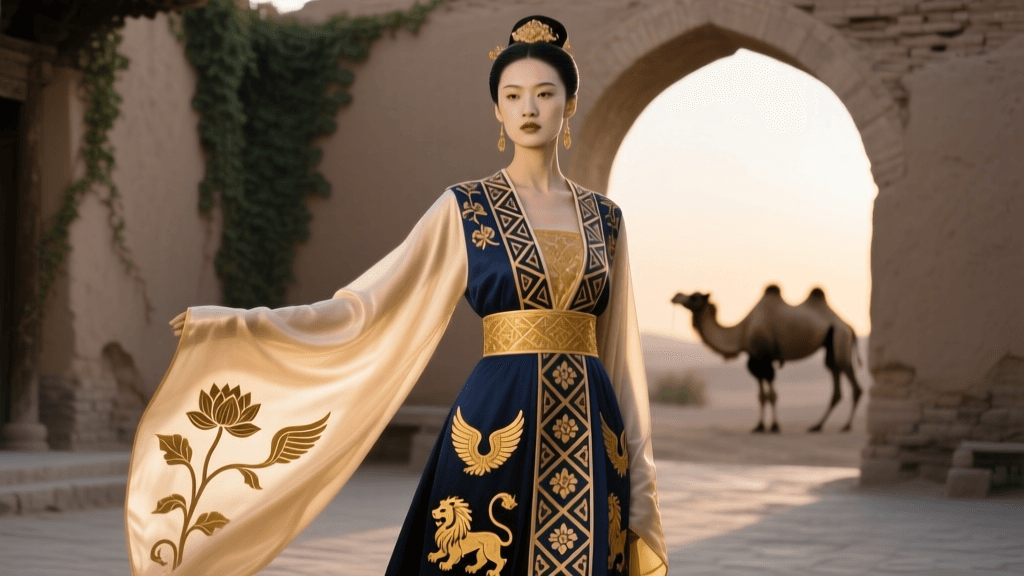
The Silk Road is historically celebrated as a vast conduit for spices, precious metals, and raw silk. However, one of its most profound and visible legacies was the exchange of sartorial culture. For modern enthusiasts of Asian traditional garments, understanding the cross-cultural pollination of historical trade routes offers a fascinating lens through which to view fashion. Nowhere is this more evident than in the Tang Dynasty (618–907 CE), a cosmopolitan golden age where the influx of foreign merchants, diplomats, and artisans radically transformed the Chinese wardrobe. Trade hubs like Dunhuang and Turpan served as vital waypoints where styles merged.
This era birthed the widespread adoption of Hufu (胡服), or "foreign clothing," which seamlessly blended Central Asian tailoring with Chinese aesthetic sensibilities. Today, the revival of these garments provides a unique opportunity to explore historical craftsmanship, textile trade, and the actionable steps required to source or recreate these cross-cultural masterpieces for modern wardrobes and historical collections.
Defining Hufu: Central Asian Tailoring in the Tang Court
Hufu literally translates to "barbarian or foreign clothing," a term historically used by the Han Chinese to describe the garments of nomadic tribes from the northern and western frontiers. During the Tang Dynasty, the capital city of Chang'an (modern-day Xi'an) was a bustling metropolis of over a million people, home to Sogdian merchants, Persian refugees, and Turkic mercenaries. The practical, equestrian-focused clothing of these groups quickly caught the attention of the Tang elite.
Unlike traditional Hanfu, which prioritized flowing silhouettes, wide sleeves, and intersecting right-over-left collars (jiaoling youren), Hufu was designed for mobility. It featured narrow sleeves, fitted bodices, lapels, and trousers tucked into riding boots. Remarkably, Hufu was not confined to men or foreign envoys; it became a high-fashion statement for Tang court women, who famously donned these garments to play polo, ride horses, and assert a bold, cosmopolitan identity. According to the UNESCO Silk Roads Programme, the integration of these foreign styles highlights the profound cultural permeability facilitated by the overland trade networks.
Structural Comparison: Traditional Hanfu vs. Tang Hufu
| Garment Feature | Traditional Hanfu (e.g., Ruqun) | Tang Hufu (e.g., Fanling Pao) |
|---|---|---|
| Collar Style | Cross-collar, right over left (Y-shaped) | Round collar or folded lapel (Fanling) |
| Sleeve Silhouette | Wide, flowing, often floor-length | Narrow, fitted, tapering at the wrist |
| Lower Garment | Flowing skirt or wide-leg trousers | Fitted trousers tucked into leather boots |
| Closure System | Fabric ties and sashes | Leather belts with metal buckles and buttons |
| Primary Function | Courtly, ceremonial, domestic elegance | Equestrian, martial, active outdoor pursuits |
Motifs and Textiles: Persian and Sogdian Influences
The cross-cultural exchange was not limited to garment silhouettes; it fundamentally altered Chinese textile production and motif design. Before the Tang Dynasty, Chinese silk weaving was dominated by warp-faced weaves. However, the arrival of Sogdian and Persian weavers introduced weft-faced compound twills, known in the West as samite. This technique allowed for larger, more intricate, and colorful patterns that became the hallmark of Tang luxury textiles, requiring complex modifications to indigenous drawlooms.
Two specific motifs highlight this Silk Road synthesis. The first is the lianzhu wen (pearl roundel), a border of pearls enclosing a central design, directly imported from Sasanian Persia. The second is duijin (confronting animals), featuring symmetrical pairs of horses, birds, or mythical beasts flanking a central Tree of Life. The Metropolitan Museum of Art's Heilbrunn Timeline notes that these motifs were so highly prized that Chinese weavers rapidly adapted their looms to replicate them for both domestic consumption and export back along the trade routes.
Practical Guide: Sourcing and Recreating Tang Hufu Today
For modern Hanfu enthusiasts, historical reenactors, and textile collectors, acquiring authentic or historically accurate Tang Hufu requires specific knowledge of measurements, fabric weights, and market terminology. The modern Hanfu movement has largely focused on Song and Ming dynasty garments, making high-quality Tang Hufu a niche but rewarding pursuit.
Key Garments, Measurements, and Terminology
- Fanling Pao (翻领袍 - Lapel Robe): The quintessential Hufu outer garment. When unbuttoned at the neck, it folds down into a lapel, revealing a contrasting inner collar. Actionable Measurement: Ensure the lapel fold is exactly 4-5 cm wide, and the sleeve cuff circumference tapers to 14-16 cm to allow for wrist mobility while maintaining a fitted silhouette.
- Hunuo (靴 - Riding Boots): Essential for completing the Hufu look. Traditional Tang boots were made of leather or heavy felt with upturned toes. Actionable Measurement: The boot shaft should measure 35-40 cm in height, sitting just below the knee, with a calf circumference tailored to your exact measurement plus 2 cm for tucking in linen trousers.
- DieXie Belt (蹀躞带 - Utility Belt): A leather belt featuring hanging straps originally used to carry nomadic tools and weapons. Sourcing Tip: Look for belts with brass or bronze replica Tang dynasty plaques. The belt width should be 3.5 cm, sitting firmly at the natural waist.
Sourcing, Costs, and Timing
Navigating the modern market for historical garments requires understanding the tiers of production. If you are sourcing from specialized makers on platforms like Taobao or Etsy, use specific search terms such as "唐制胡服" (Tang system Hufu) or "翻领袍" (Lapel robe).
- Ready-to-Wear (Mass Market): Typically made from polyester-cotton blends or lightweight rayon. These are suitable for casual conventions or photography. Cost: $40 to $85 USD. Timing: Ships within 3-7 days. Drawback: Lacks the structural drape of historical weaves.
- Custom Tailored (Mid-Tier): Made from 19-22 momme silk twill or cotton-linen blends with accurate historical patterning. Cost: $150 to $250 USD. Timing: 15-20 days for tailoring. This is the recommended tier for serious enthusiasts seeking durability and historical accuracy.
- Artisanal Brocade (High-End): Commissioning garments using authentic silk damask or replicated weft-faced compound twill (samite) with pearl roundel motifs. Cost: $350 to $600+ USD. Timing: 45-60 days. The extended timeline accounts for the custom weaving of the textile in specialized workshops in Suzhou or Hangzhou before tailoring begins.
When budgeting for a complete Hufu ensemble, allocate at least 20% of your total cost to accessories, as the metalwork on the DieXie belt and the leatherwork on the Hunuo boots are what truly elevate the garment from a simple robe to a historically accurate representation of Silk Road equestrian culture.
Preserving a Cross-Cultural Legacy
The story of Tang Dynasty Hufu is a testament to the fact that fashion has never existed in a vacuum. The garments worn in the courts of Chang'an were a physical manifestation of the Silk Road, weaving together the tailoring of the Central Asian steppes, the textile techniques of Persia, and the aesthetic refinements of China. As the National Museum of Asian Art frequently highlights in its exhibitions, these trade routes were conduits of human ingenuity and cultural synthesis. By understanding the precise measurements, historical motifs, and sourcing methods required to recreate Hufu today, modern wearers do more than simply dress up; they actively preserve a vibrant, cross-cultural legacy that continues to inspire global fashion.