Tang Dynasty Hanfu: Silk Road Cross-Cultural Fashion
The Cosmopolitan Wardrobe of Chang'an
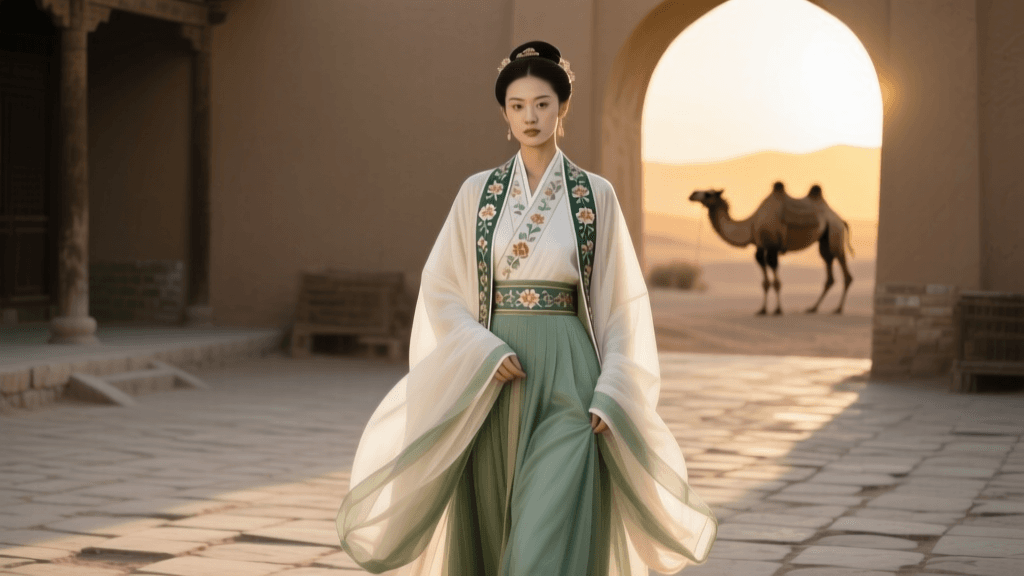
The Tang Dynasty (618–907 AD) represents a golden age of Chinese cosmopolitanism, driven by the bustling trade networks of the Silk Road. As the eastern terminus of this vast transcontinental route, the capital city of Chang'an (modern-day Xi'an) was a melting pot of cultures, hosting merchants, diplomats, and artisans from Persia, Sogdia, India, and the Turkic steppes. This unprecedented cross-cultural exchange profoundly influenced Tang Dynasty material culture, most notably in the realm of fashion and traditional garments.
Unlike the strict, insular sartorial codes of later dynasties, Tang fashion was remarkably fluid and receptive to foreign influences. According to the UNESCO Silk Roads Programme, the movement of goods and ideas along these routes resulted in a hybrid aesthetic where traditional Han Chinese silhouettes merged with Central Asian tailoring techniques and Sassanian textile motifs. For modern enthusiasts of the Hanfu revival movement, understanding and accurately recreating these Silk Road-influenced garments offers a fascinating glimpse into a globally connected ancient world.
Key Garments: Sogdian Lapels and Nomadic Collars
The integration of foreign clothing styles into the Tang wardrobe was not merely a matter of exotic novelty; it was a practical adaptation to the equestrian and martial lifestyles associated with the northern and western frontiers. Two garments stand out as prime examples of this cross-cultural synthesis.
The Fanlingpao (Lapel Collar Robe)
The Fanlingpao is a direct descendant of Sogdian and Persian riding coats. Characterized by its folded, lapel-like collar that exposes the inner lining, this robe was typically worn double-breasted and secured with a leather belt. The lapels could be folded back in warm weather or buttoned up to the neck in the cold, offering immense versatility. In Tang society, the Fanlingpao was widely adopted by both men and women, with women often wearing it as a symbol of martial prowess and cosmopolitan sophistication.
The Yuanlingpao (Round Collar Robe)
While the round-collar robe existed in earlier Chinese history, its Tang iteration was heavily modified by nomadic influences. The Tang Yuanlingpao featured a snug, circular neckline fastened with hidden fabric buttons on the right shoulder, and crucially, it incorporated side slits (known as quekua) that allowed for ease of movement while horseback riding. As noted by the Metropolitan Museum of Art's Heilbrunn Timeline of Art History, the round-collar robe became the standard daily attire for Tang officials and commoners alike, effectively bridging the gap between nomadic utility and Han Chinese courtly elegance.
Textiles and Motifs: The Sassanian Pearl Roundel
The cross-cultural influence extended beyond tailoring into the very fabric of Tang clothing. The Silk Road facilitated the import of advanced weaving techniques, such as weft-faced compound twill (samite), which allowed for more complex and vibrant patterns than traditional Chinese warp-faced silks.
The most iconic motif of this era is the lian-zhu-wen, or "pearl roundel." Originating from Sassanian Persia, this design features a circular border of pearl-like dots enclosing stylized animals such as boars, peacocks, or winged horses. According to the Metropolitan Museum of Art's overview of Silk Road textiles, Chinese weavers rapidly adopted and adapted these Persian motifs, blending them with indigenous auspicious symbols like the lotus and the dragon. When sourcing modern reproductions of Tang Hanfu, seeking out brocades featuring pearl roundels is essential for historical accuracy.
Comparison Chart: Tang Dynasty Silk Road Garments
| Garment Name | Cultural Origin / Influence | Key Structural Features | Modern Reproduction Cost (USD) |
|---|---|---|---|
| Fanlingpao | Sogdian / Persian | Folded lapels, double-breasted, narrow sleeves | $90 - $160 (Blend) / $300+ (Silk) |
| Yuanlingpao | nomadic / Turkic | Round collar, hidden right-shoulder buttons, side slits | $80 - $140 (Blend) / $250+ (Silk) |
| Banbi (Half-Sleeve) | Central Asian Layering | Short-sleeved jacket worn over long-sleeve undergarments | $40 - $75 |
| Diexie Belt | Nomadic Equestrian | Leather belt with metal plaques and hanging utility strips | $50 - $120 (Faux leather/alloy) |
Modern Revival: Sourcing and Styling Silk Road Hanfu
For modern practitioners looking to build a Tang Dynasty Silk Road wardrobe, navigating the market requires specific knowledge of terminology, measurements, and manufacturing timelines. Most high-quality Hanfu is sourced through Chinese e-commerce platforms like Taobao, utilizing shopping agents for international shipping.
Cost Estimates and Timing
When commissioning or purchasing off-the-rack Tang Hanfu, expect to pay between $80 and $150 USD for high-quality polyester-cotton blends or modern jacquard weaves, which are excellent for daily wear and summer events. For authentic silk brocades with historically accurate pearl roundel motifs, prices range from $250 to over $500 USD. Because many reputable Hanfu shops operate on a pre-order model to minimize waste, you must factor in a production time of 30 to 45 days, plus 10 to 15 days for international agent shipping.
Measurement and Fit Guide for Round-Collar Robes
Achieving the correct historical silhouette requires specific measurements that differ from modern Western tailoring. When ordering a Yuanlingpao or Fanlingpao, provide the following metrics to the seller:
- Chest Circumference: Measure around the fullest part of your chest. Actionable Tip: Add 12cm to 15cm of ease to this measurement to ensure the robe drapes correctly and allows for the layering of an inner Zhongyi (under-robe).
- Shoulder Width: Measure from the edge of one shoulder bone to the other. Tang robes often feature a slightly dropped shoulder seam; adding 2cm to your natural shoulder width provides an authentic, relaxed fit.
- Sleeve Length: Measure from the base of the neck, over the shoulder, down to the wrist bone. For a standard Tang fit, the sleeve should end exactly at the wrist bone, unlike the floor-dragging sleeves of later Ming Dynasty garments.
- Total Length: Measure from the prominent vertebra at the base of the neck down to the ankle bone. The robe should graze the top of the foot, allowing leather boots to be visible.
Styling the Silk Road Aesthetic Today
To fully embody the cross-cultural spirit of the Tang Dynasty, the garments must be styled with appropriate accessories and grooming. The Diexie belt is non-negotiable for a Fanlingpao; it cinches the waist and provides a rugged, equestrian silhouette. Pair the robe with dark leather riding boots and a Poutou (a stiffened, wrapped headcloth) for menswear, or a high topknot adorned with a gold or jade peony comb for womenswear.
Makeup for women should reflect the bold, cosmopolitan trends of the era, which were heavily influenced by Central Asian and Tibetan aesthetics. This includes the application of huadian (floral or geometric decals) on the forehead, bold crimson lip color, and sweeping, exaggerated eyebrow shapes. By combining historically accurate textiles with these precise styling elements, modern wearers can authentically celebrate the rich, interconnected history of the Silk Road through the living tradition of Hanfu.