Silk Road Echoes: Tang Dynasty Hufu and Sogdian Hanfu
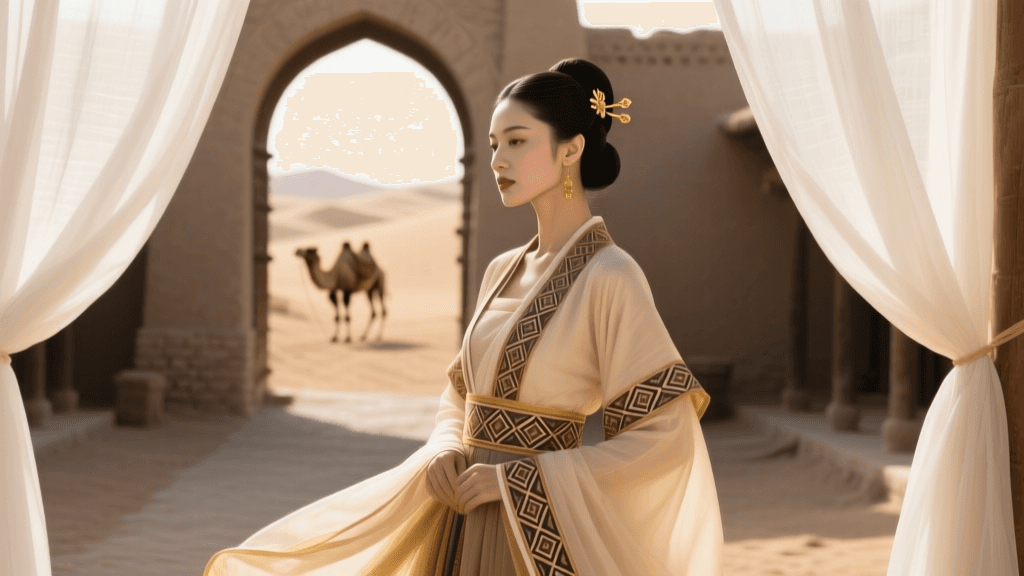
The Tang Dynasty (618–907 CE) represents the golden age of cosmopolitan exchange in Chinese history. At the heart of this cultural renaissance was the Silk Road, a vast network of trade routes that connected Chang’an (modern-day Xi’an) to the distant empires of Persia, Byzantium, and Central Asia. As merchants, diplomats, and artisans traversed these routes, they brought more than just spices and precious metals; they brought revolutionary fashion concepts. This cross-cultural pollination gave rise to Hufu (foreign dress), a style that profoundly influenced traditional Hanfu and left an indelible mark on Asian sartorial history. Today, the revival of Tang Dynasty Hufu offers modern enthusiasts a unique opportunity to wear history, blending Sogdian flair with Chinese elegance.
The Silk Road and the Birth of Tang Dynasty Hufu
Before the Tang Dynasty, traditional Han clothing (Hanfu) was dominated by the Shenyi (deep robe) and Ruqun (jacket and skirt), characterized by cross-collars, wide sleeves, and flowing silhouettes. However, the influx of Central Asian and Persian cultures via the Silk Road introduced practical, form-fitting garments suited for horseback riding and active lifestyles. The UNESCO Silk Roads Programme highlights how the movement of peoples across the Eurasian steppe facilitated a massive exchange of material culture, with textiles and clothing acting as primary markers of identity and status.
Sogdian merchants, the master middlemen of the Silk Road, were particularly influential in Chang’an. Their distinct attire—featuring fitted sleeves, lapelled collars, and leather boots—became wildly popular among the Tang elite. According to the Metropolitan Museum of Art, Sogdian art and textiles found in tombs across China reveal a society deeply enamored with foreign aesthetics. Tang nobles, including women who famously adopted male Hufu for polo and hunting, embraced these styles as symbols of worldly sophistication and imperial reach.
Key Garments: Decoding Sogdian-Inspired Hanfu
To understand the modern revival of Hufu, one must break down the core garments that defined the Tang cosmopolitan wardrobe.
1. The Yuanlingpao (Round-Collar Robe)
The Yuanlingpao is the quintessential Tang robe. While its round collar has roots in earlier Chinese dynasties, the Tang iteration heavily incorporated Sogdian tailoring. The most distinct feature is the fanling (folded lapel). By unfastening the top button, the round collar folds down into a V-shape, revealing the inner garment and mimicking the lapelled coats of Persian and Central Asian riders. The sleeves are notably narrower than traditional Hanfu sleeves, ending in fitted cuffs to prevent snagging during archery or horsemanship.
2. The Banbi (Half-Sleeve Jacket)
Originally a practical garment for laborers and soldiers, the Banbi evolved into a high-fashion layering piece. Worn over or under the Yuanlingpao, these short-sleeved jackets were often crafted from opulent, imported silks. The cross-cultural influence is evident in the vibrant, contrasting colors and geometric trims that bordered the garments, a direct nod to Central Asian weaving traditions.
3. Hufu Trousers and Pointed Boots
Unlike the flowing skirts of traditional Hanfu, Hufu required bifurcated garments. Striped trousers tucked into knee-high leather boots with upturned, pointed toes were essential. These boots, known as Xue, provided the necessary grip for stirrups and protected the shins during travel across the rugged terrains of the Silk Road.
Cross-Cultural Textiles: Pearl Roundels and Samite
The silhouette of Hufu was only half the story; the textiles were equally revolutionary. The Silk Road facilitated the trade of samite, a heavy, weft-faced compound twill silk that was highly prized in both Byzantium and Tang China. The British Museum's research on Silk Roads artifacts demonstrates how Sasanian Persian motifs, particularly the "pearl roundel" (a circle of pearls enclosing facing animals like rams, boars, or mythical beasts), were adopted by Chinese weavers.
When sourcing modern Hufu, look for fabrics that replicate this historical weight and motif. A high-quality modern reproduction will utilize jacquard-woven brocades with a minimum weight of 19 momme (approx. 72 g/m²) to mimic the drape and structure of historical samite, ensuring the robe holds its tailored shape rather than clinging to the body.
Practical Guide: Sourcing and Styling Modern Hufu Replicas
For modern Hanfu enthusiasts and historical reenactors, acquiring an accurate Tang Dynasty Hufu ensemble requires attention to specific measurements, fabric choices, and reputable makers.
Measurement Guide for a Tailored Yuanlingpao
Unlike traditional wide-cut Hanfu, Hufu requires precise tailoring. When ordering a custom Yuanlingpao from a specialized atelier, you must provide exact measurements to ensure the garment fits across the shoulders and chest without restricting movement.
| Measurement Point | How to Measure | Standard Ease Allowance |
|---|---|---|
| Chest / Bust | Measure around the fullest part of the chest. | Add 8–10 cm for layering. |
| Shoulder Width | Measure from the edge of one shoulder bone to the other. | Add 1–2 cm for structural drape. |
| Sleeve Length | Measure from the shoulder edge down to the wrist bone. | Subtract 2 cm for fitted cuffs. |
| Garment Length | Measure from the base of the neck to the mid-calf or ankle. | Depends on boot height (usually 110–125 cm). |
| Bicep Circumference | Measure around the widest part of the upper arm. | Add 4–6 cm for mobility. |
Budgeting, Sourcing, and Timing
Acquiring a historically informed Hufu ensemble involves navigating the modern Hanfu market, which ranges from mass-produced costumes to bespoke historical reconstructions.
- Entry-Level / Off-the-Rack ($80 – $150 USD): Brands on platforms like Taobao (e.g., Shi San Yu or Zhong Zheng) offer polyester-blend Yuanlingpao with machine-embroidered pearl roundels. These are excellent for casual conventions but lack historical drape. Expect shipping times of 10–15 days internationally.
- Mid-Tier / Semi-Custom ($180 – $300 USD): Makers utilizing jacquard brocades and proper fanling structuring. These often require a 20-day production window. Look for shops that specify Tang Hufu restoration or historical reconstruction.
- Bespoke / Museum-Grade ($400 – $800+ USD): Custom tailors using pure mulberry silk, natural plant dyes, and hand-woven trims. Production takes 45–60 days. This tier is recommended for serious collectors and historical interpreters.
Styling and Accessorizing the Ensemble
To achieve an authentic Tang Dynasty Hufu look, the layering and accessories are just as critical as the main robe.
- Base Layer: Wear a lightweight, cross-collar Zhongyi (inner shirt) in white or off-white linen. This protects the outer silk from sweat and provides a crisp contrast at the folded fanling neckline.
- Headwear: Men should pair the Yuanlingpao with a Putou (black gauze cap) featuring stiffened side wings. Women adopting the male Hufu style often wore their hair in high, elaborate topknots adorned with gold combs, reflecting the gender-fluid fashion trends of the Tang court.
- Footwear: Authentic leather or high-quality faux-leather boots with a slight heel and pointed, upturned toes are mandatory. Avoid modern flat shoes, as they ruin the historical silhouette and the drape of the trousers.
- Belt: Use a leather Diexie belt (a utility belt with hanging straps originally used for carrying tools and weapons). A brass or copper buckle with geometric engravings will anchor the waist and emphasize the Sogdian equestrian influence.
Conclusion
The legacy of the Silk Road is woven directly into the fabric of Tang Dynasty Hufu. By embracing the fitted silhouettes, pearl roundel motifs, and equestrian practicality introduced by Sogdian and Persian travelers, modern wearers do more than just dress up; they participate in a living history of global exchange. Whether you are commissioning a bespoke silk Yuanlingpao or styling an accessible off-the-rack Banbi, understanding the cross-cultural roots of these garments elevates the experience from mere fashion to a profound celebration of Asia’s interconnected past.